
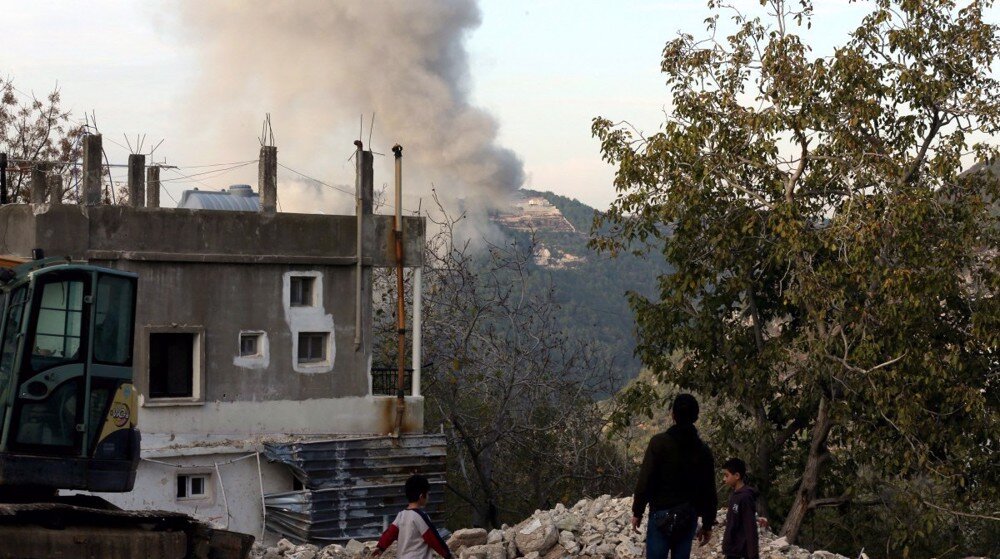
Lebanese media reported on Thursday that Israeli warplanes targeted civilian buildings and residences in the towns of Mijader and Mahruna in the southern governorate, as well as in the towns of Barashit and Jubaa in Nabatiyeh governorate.
No casualties were reported from the Israeli airstrikes, which destroyed homes in populated areas and displaced scores of Lebanese.
Shortly before the attack, Israeli military Arabic spokesman Avichai Adlai issued an evacuation warning to residents of the four towns on social media, Press TV reported.
The Israeli military claimed in a statement that it had “attacked several weapons storage facilities” belonging to the Hezbollah resistance movement.
The attack is the latest violation of the cease-fire agreement between Israel and Hezbollah that entered into force in November 2024, following a conflict that began with the Tel Aviv regime’s genocidal war in the Gaza Strip in October 2023.
Despite suffering heavy losses on the battlefield and killing more than 4,000 people in Lebanon, Israel failed to achieve its goals and was forced to accept a truce with Hezbollah.
On Wednesday, Lebanese and Israeli representatives held face-to-face talks for the first time in decades. The talks took place in the southern Lebanese town of Nakoura as part of the US-led ceasefire monitoring committee.
Lebanon has appointed Simon Karam, a former ambassador to Washington, as its civilian representative. Karam reportedly met with Israeli security official Uri Resnik during the session.
Lebanese President Joseph Aoun announced that the talks “paved the way for the next meeting” starting on December 19.
Meanwhile, Lebanese Prime Minister Nawaf Salam said Beirut was “far from normalizing diplomatic relations or economic ties” with Tel Aviv and said the talks were focused on “de-escalating tensions.”
MNA