
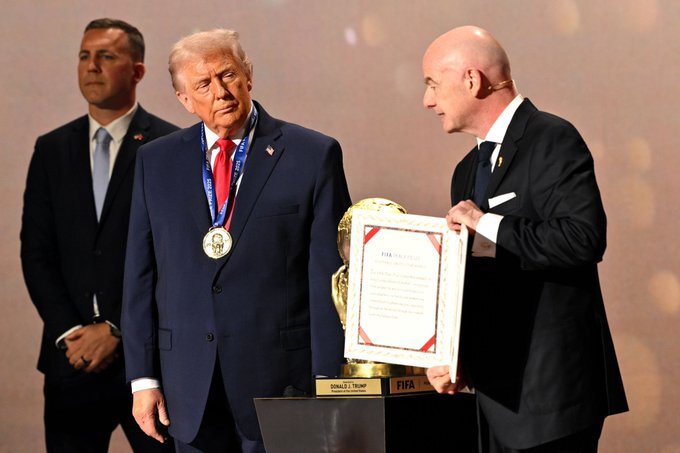
Last night, what was supposed to be an everyday scene celebrating the 2026 FIFA World Cup turned into a global topic for all the wrong reasons. FIFA President Gianni Infantino presented the first FIFA Peace Prize to U.S. President Donald J. Trump at the Kennedy Center in Washington, DC. At the ceremony, which was attended by soccer officials, diplomats and media from around the world, Trump was personally awarded the gold medal, while Infantino praised him as a true promoter of “world peace and unity.”
The announcement immediately sparked widespread criticism from international observers. Awarding the Peace Prize to a leader who has repeatedly intervened militarily, supported allied governments in conflicts and pursued policies often criticized as aggressive and selfish raises fundamental questions about the standards, neutrality and ethics behind FIFA’s new award.
Scene: Last night’s ceremony
The 2026 World Cup draw was intended to celebrate soccer’s ability to unite people across borders. But last night, in a dramatic moment, Mr Infantino came forward and praised President Trump as someone who would “unite the nation through dialogue, diplomacy and respect.”
In his short acceptance speech, President Trump called the medal “one of the greatest honors of my life,” and asserted that through his policies, “we have saved millions of lives.” The scene was broadcast live around the world, and the former president placed the medal around his neck, a theatrical gesture meant to reinforce his image as a world peacemaker.
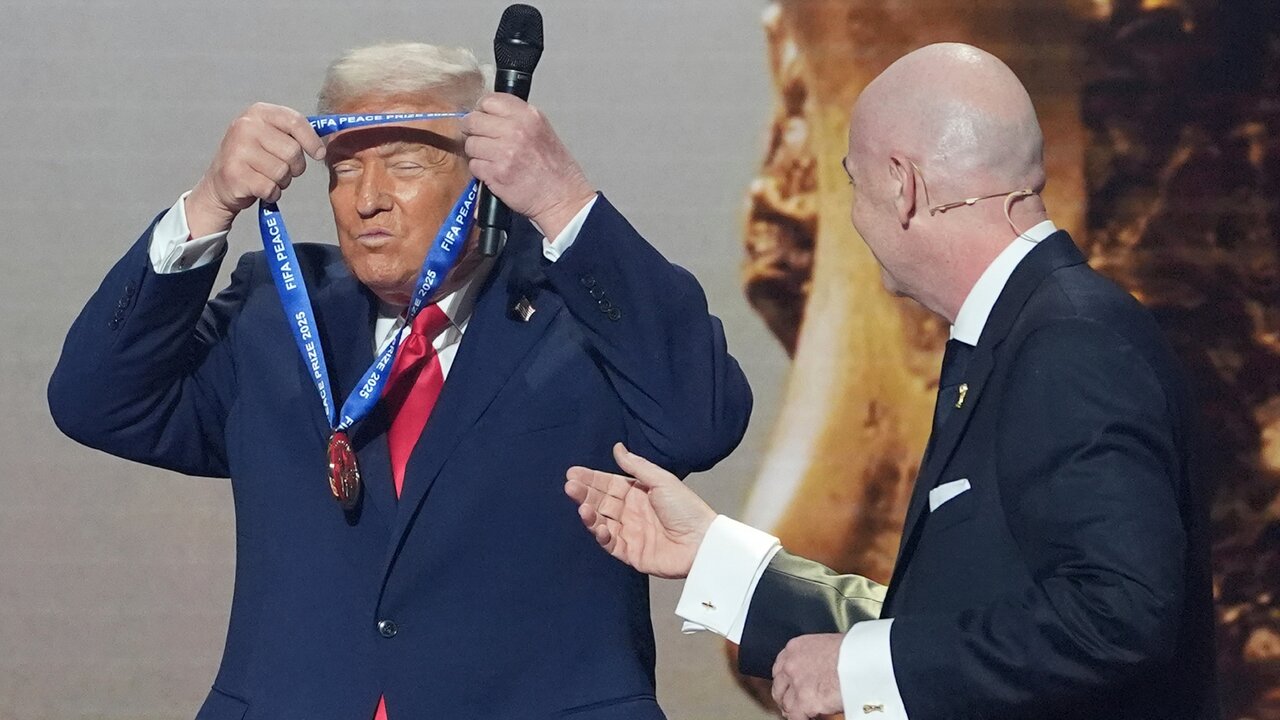
But the applause from some corners of the stadium did little to hide the obvious contradictions that critics quickly noticed. Trump won medals in front of the cameras, but his extensive record of policies and actions paints a different story.
Peace in words, war in practice: President Trump’s contradictions
During his time in office and since taking office, Mr. Trump has cultivated an image of himself as a mediator and negotiator, sometimes openly intervening in international disputes and often claiming credit for peace efforts. Notably, his last speech at the United Nations General Assembly (UNGA 2025) included a call for a cessation of hostilities in Gaza and a diplomatic resolution of the conflict. However, during the same period, his administration vetoed key resolutions aimed at cessation of hostilities, while the United States continued to provide military, financial, and logistical support to allies engaged in armed conflict.
This duality – “peace in rhetoric, war in action” – has been a recurring theme in President Trump’s political narrative. From covert operations in regions such as the Middle East and South America to continued drone strikes and military buildups, critics argue that despite his public advocacy of peacemaking, his hands have rarely been freed from war.
There are numerous documented examples of how U.S. policies under the Trump administration indirectly contributed to civilian casualties, displacement, and escalating regional tensions. Considering this, awarding him the Peace Prize seems not only ironic, but highly problematic.
FIFA’s controversial foray into politics
FIFA has historically been committed to maintaining political neutrality in football, but it is now at the center of international controversy. The awarding of the Peace Prize to someone as polarizing as Trump raises an urgent question: What are the selection criteria? Who serves on the committee? Were the decisions influenced by political connections or public relations considerations rather than a genuine contribution to peace?
No official documentation has been released to clarify these questions. In contrast, transparency and merit are core principles expected from organizations that award iconic international awards. FIFA’s move could set a dangerous precedent in which sports prestige can be used to disguise political reputations.
Instead of a unified celebration of sport, last night’s ceremony highlighted a clash between symbolic gestures and the harsh realities of global power politics.
President Trump’s love for awards and his image as a “peacemaker”
Donald Trump has long displayed an almost obsessive zeal for winning awards and public recognition. Throughout his business and political career, he has consistently pursued trophies, honors, and titles that strengthen his story of success and global significance.
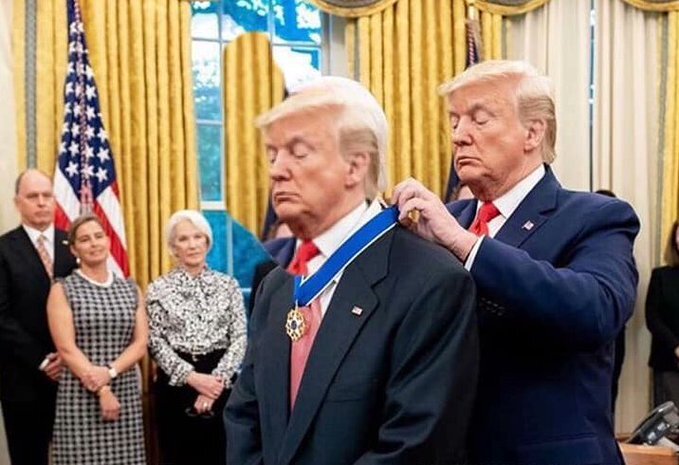
Last night’s FIFA Peace Prize may be one of the most striking examples of how global institutions bend to satisfy this obsession. By awarding Trump the first Peace Prize, FIFA not only recognized a man, but performed a dramatic act of obedience. Infantino’s praise and the ceremonial moment in which Trump hung the medal around his neck sent a clear message. The world’s most influential soccer organization is willing to embarrass itself for a photo shoot, sacrificing credibility and neutrality in the process.
In this spectacle, the medal became a symbol of FIFA’s humiliating attitude rather than honor. A world stage meant to celebrate sport and unity has instead highlighted the extent to which powerful individuals can bend international institutions to serve their personal vanities. In other words, FIFA did not just award the award, it engaged in an orchestrated act of obedience that strengthened President Trump’s desired image while compromising its own integrity.
international reaction
Within hours of the ceremony, media outlets around the world published critical articles highlighting the contradictions. Al Jazeera said the award “calls into question FIFA’s neutrality” and highlighted the contradiction between President Trump’s record and ideals of peace.
Human Rights Watch and other groups issued statements highlighting the discrepancies between the medal and his written support for military intervention.
On social media, viewers around the world expressed widespread skepticism and criticism, with many commenting on the stark irony of awarding a peace prize to a leader involved in conflict or military intervention.
Widespread impact on FIFA
FIFA’s decisions have a significant impact on the organization’s credibility. For decades, football has sought to uphold the principle that it is above politics. The dangers of awarding a peace prize to a politically divisive person include:
Undermining longstanding commitments to neutrality in sports.
undermine public confidence in governance and decision-making processes;
It sets a precedent in which symbolic recognition is granted based on political relationships rather than verifiable contributions to world peace.
Indeed, the move highlights the dangers of turning what should be an apolitical sporting extravaganza into a platform for political theater, merging diplomacy and entertainment at the expense of ethical considerations.
Conclusion: symbolism and reality
The sight of Donald Trump wearing a golden peace medal around his neck is impressive, but also deeply ironic. The work captures the fundamental tension between symbolism and reality, and is a dramatic celebration of peace for a man whose policies have repeatedly been linked to war and conflict.
For a global audience, this controversy serves as a warning about the power of image management in global institutions. FIFA may have intended to celebrate unity, but the unintended message is clear. that power and public perception can override historical and de facto accountability.
The long-term impact this ceremony will have on FIFA’s reputation remains to be seen. If the organization continues to mix sport and political spectacle, it risks alienating fans, partners and audiences around the world who expect football to remain a force for unity rather than political gamesmanship.
In the end, last night’s ceremony may be remembered not as a moment of celebration, but as a lesson in the dangers of confusing image with reality, and the high stakes of offering peace in a situation where peace is almost non-existent.
Reported by Mohadese Pakhravan