
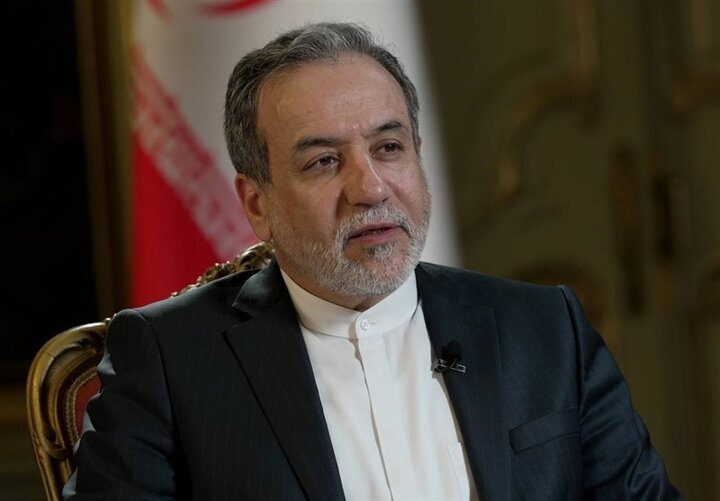
In an exclusive interview with Kyodo News, Araghchi said Iran’s nuclear facilities were “shelled, destroyed and severely damaged” in the attack, calling it “probably the biggest violation of international law” committed against a protected nuclear facility monitored by the International Atomic Energy Agency.
Araghchi also touched on the prospect of stalled nuclear negotiations with the United States, saying Iran would be open to diplomacy but only under conditions that guarantee a “fair and balanced” outcome. “It’s up to the United States,” he said.
Nuclear negotiations have stalled, with the United States under President Donald Trump wanting a complete halt to Iran’s uranium enrichment, a demand Tehran has rejected.
“There is no question that Japan has sufficient knowledge of how to improve the safety of its nuclear facilities, and it can share that knowledge with Iran,” he said, citing extensive work on environmental, medical and technical security measures after the nuclear crisis.
Japan experienced the atomic bombings of Hiroshima and Nagasaki by the United States in 1945 and the Fukushima Daiichi nuclear power plant accident in 2011.
Arraguchi stressed that the possibility of cooperation concerns technical safety rather than inspections, which are mandatory for the IAEA. “Cooperation with Japan on the technical aspects of these safety challenges will be very beneficial.”
He said Iran faces a complex security threat never experienced before, citing structural damage and possible radiation leaks after the June airstrike.
The Foreign Secretary said the attack exposed significant procedural gaps within the IAEA regarding how it inspects such facilities, as there is “no precedent for a peaceful nuclear facility being bombed”.
Earlier this year, Iran and the IAEA agreed during talks in Cairo to a framework for cooperation that sets out viable mechanisms for inspection and stabilization of sites affected by military operations.
But Aragushi said the 2015 nuclear deal was undermined by attempts by the United States and three European countries to reinstate past U.N. Security Council sanctions.
Regarding the future of nuclear negotiations with the United States, the minister said Iran was not satisfied with the prospect, citing its withdrawal from the 2015 nuclear deal and support for Israel’s recent attack on Iran.
He said: “If they change their approach and are ready for fair and mutually beneficial negotiations, we are ready to do the same. But negotiations are different from orders. For the time being, we are not convinced that they are ready for real serious negotiations.”
The 2015 nuclear deal placed strict limits on Iran’s enrichment activities in exchange for sanctions relief. After the U.S. withdrawal during the Trump administration’s first term in 2018, Iran expanded its nuclear activities in response.
Araguchi said the core problem is the United States’ unwillingness to recognize its rights to peaceful nuclear technology, including uranium enrichment, under the Treaty on the Non-Proliferation of Nuclear Weapons, to which Japan is also party.
He said Tehran was willing to accept restrictions on “enrichment levels” and types of centrifuges, adding that negotiations could move quickly if the United States takes a reciprocal approach by tolerating Iran’s peaceful nuclear program and lifting sanctions.
MNA