
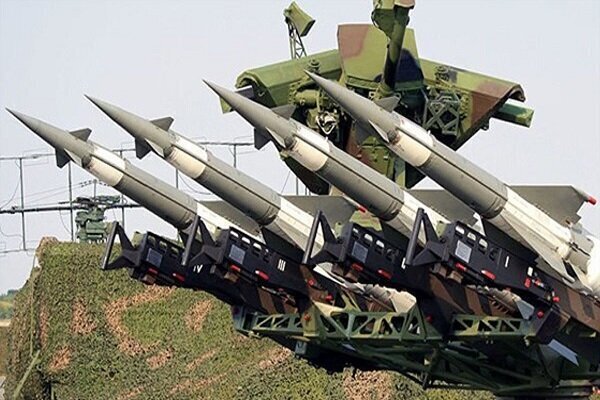
Recently, Yemen’s Ansarra announced its indigenous air defense systems during a massive air strike by the Israeli occupation regime on Yemen, launching dozens of missiles at Israeli fighter jets. The incident has faced a major shock for Zionists and their military theorists.
Islamic resistance in Yemen, leading the Sanaa government, will repeatedly declare that they will not compromise in protecting the rights and interests of the Palestinian people, and will vigorously oppose the campaign of crime and genocide committed by Zionists against them. In this context, Yemenis has repeatedly missile attacks on the Palestinian occupied areas, causing considerable waves of uncertainty to Zionists.
The Red Sea and Bab el Mandev Strait are also targeted by Ansarra fighters against ships that ignore the restrictions set out by Yemen’s resistance, particularly the prohibitions of movements that serve Israeli interests. In this framework, Ansarra paralyzed the occupied southern ports of Palestinians, and through its missile attacks, brought a crisis to the occupying regime, particularly the major airports at Ben Gurion. Nevertheless, the Zionist regime recently attacked strategic ports in Yemen, such as Hodeida Port and Rassa.
In particular, this attack was carried out using dozens of fighter jets, and amid this attack, the Ansarra fighters had a major impact on Israel. According to Yahiya Salee, a military spokesman for Ansarla Yemen, an Israeli fighter jet trying to enter Yemen’s airspace, it faced a considerable barrage of barrage from Yemen’s air defense systems that were trying to enter Yemen’s airspace. This situation has led to a considerable number of these jets prematurely escape from fears of being fired down Yemeni airspace and being defeated and returned to occupied Palestine.
The incident supports the claim that Yemeni Islamic resistance, in addition to developing indigenous missile capabilities and strengthening its ground and naval power, is actively involved in the field of air defense, aiming to make Yemeni airspace as unstable as possible for Zionion and its Allies. Previously, the Western intelligence agency had published various reports highlighting that Yemenis produces advanced weapons in underground tunnels and is completely self-sufficient in this regard.
Thus, new shocks from Yemen to the Israeli occupation regime show that the room for operation of the Zionist regime in the region is increasingly decreasing, leaving a limited option when facing the axis of resistance. From a broader perspective, this could play an important role in shaping the future political and strategic equations of the West Asia region.
The evidence and continued development of the region provide a strategic assertion that military power and weapons are one of the biggest necessities for various actors, as weaknesses in this sector can lead to significant losses by players. Beyond this, Yemen’s resilience, exhibited through recent features, shows that the resistance axis holds many cards that have not yet been regenerated.
Report by Saman Sofalger