
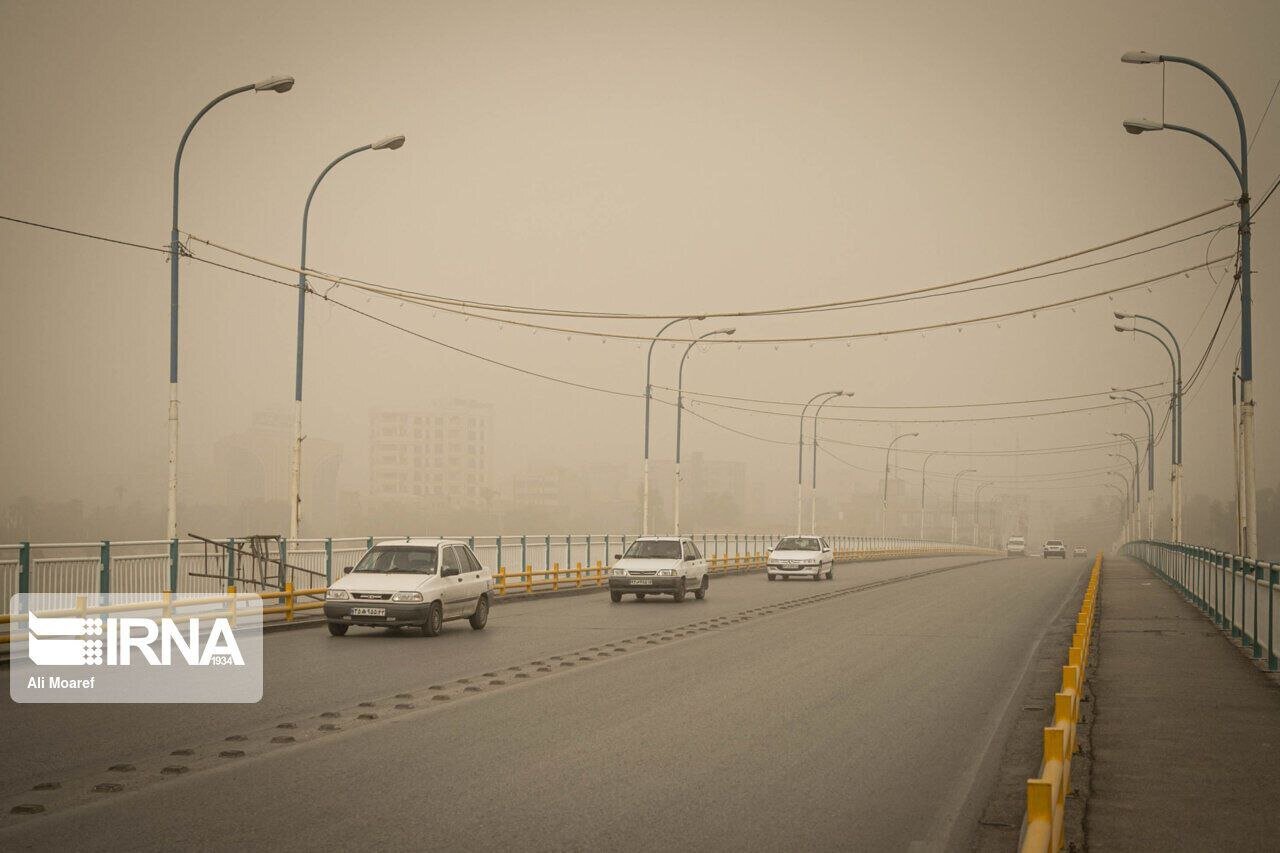
TEHRAN – In collaboration with other government agencies, the National Specialized Working Group on Sand and Sandstorms (SDSS) has approved a comprehensive plan to address SDSS.
At the 29th meeting of the National Specialized Working Group on SDSS Management held on Tuesday, the 150-page comprehensive plan was developed with cross-sectoral cooperation of 15 executive and government agencies, including ministries of agriculture, health, energy and transportation, and government agencies including natural resource management organizations, meteology organizations, IRRA organizations, ministries of agriculture, health, energy and transportation (DOE), and government agencies including ministries of the Environment (DOE).
The plan includes ten key strategies, hundreds of specific actions, performance indicators, implementation timelines, and responsible interagency institutional labor sectors.
In July, President Masoud Pezeshkian issued an order calling for the establishment of a specialized working group to address SDSS.
At a meeting held on July 13, the DOE presented reports on the risks of SDSS as a comprehensive and growing threat, and listed national plans and strategies to mitigate the impact of SDSS, the IRNA reported.
Emphasizing the importance of preserving the environment as an important issue in the country, the President ordered the establishment of a working group consisting of experts, academics, ministries and executive representatives, prepared and implemented operational plans to combat dust phenomena, and successfully conducted international experience.
Duststorm is a major environmental challenge that has negative impacts on food security, human health, and sustainable development processes at the national and local level.
Iran’s initiative in the fight against SDS
Located in arid, semi-arid regions, Iran is being adversely affected by climate change. Rising temperatures, lower precipitation, intensifying droughts, and frequent SDSS not only threatened ecosystems and biodiversity, but also put the country’s food security at risk by exacerbating soil erosion, expanding desertification and lowering agricultural productivity.
Below are the measures taken by the state to mitigate the harmful effects of SDSS:
Recognizing that sand and sandstorms on various scales and their negative impacts are issues of international concern, declared July 12 at the UN General Assembly of Iran’s initiative.
Additionally, the 6th United Nations Environment Parliament (UNEA-6), held from February 26th to March 1st, approved the resolution adopted at the International Summit on Response to Sand and Sandstorms in Tehran in September 2023.
Among other measures are close cooperation with specialized agencies, particularly the United Nations Development Programme (UNDP), the adoption of other programs focused on forecasting, early warning, improving national capacity, and developing innovative strategies to increase the resilience of the country’s top agenda.
Iranian researchers are using indigenous technology to mitigate and control the effects of sand and sandstorms in various states of the country as the frequency and intensity of sandstorms increases, and to mitigate and control the effects of SDS.
Below are several approaches being adopted to address SDSS which have a major impact on public health, the ISNA reports.
Development of non-oil and environmentally friendly mulch, nano and polymer mulch, indigenous early warning systems, air pollution warning apps, water resources with new technologies, wetland recovery, green belt plans, urban air purifiers.
Despite international sanctions and restrictions, Iran has been able to take measures in areas such as satellite surveillance, biomultiple and scientific desertification. However, financial support, extensive implementation and regional cooperation with neighboring countries is needed to ensure that they can pursue the path.
mt/mg