
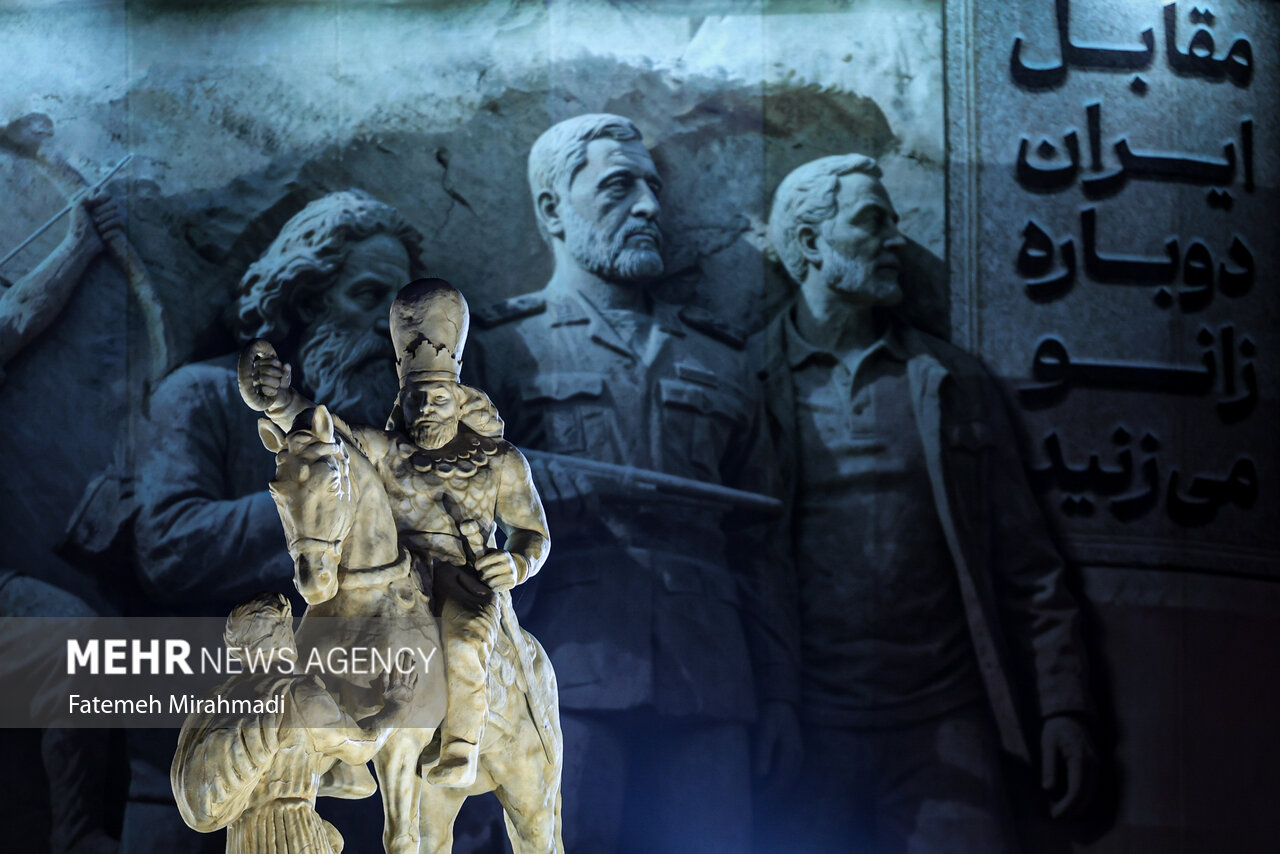
Recent cultural initiatives by the Tehran Beautification Organization, using Shapur’s historic defeat of Roman Emperor Valerian as a central narrative, have sparked renewed interest in the role of public art in the formation of national identity.
The campaign, titled “We Will Kneel Before Iran Again,” was launched with the aim of highlighting a moment of historical pride and strengthening collective confidence. At its center stands the iconic sculpture unveiled in Tehran’s Enherab Square. The artwork was inspired by Shapur II’s victory over Valerian and is designed not just as an urban installation, but as a visual representation of Iran’s longstanding resistance to foreign rule.
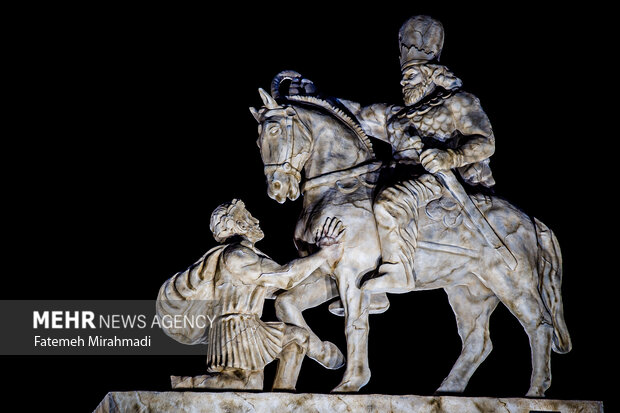
At a time when societies around the world are seeking to redefine their cultural and historical identities, this campaign is positioned as a cultural and artistic effort to revive themes of dignity, resilience and historical continuity in the national consciousness. By harnessing the power of public art, historical memory, and citizen participation, we aim to convey the idea of Iranian resilience in a way that resonates with everyday life.
The installation of this sculpture in a major city center marks the beginning of a broader effort to move historical narratives from textbooks to city squares and extend them into public spaces. The initiative aims to transform history from an academic subject to a shared lived experience, especially for younger generations who feel disconnected from traditional symbols of identity.
Beyond its artistic value, the campaign seeks to stimulate a broader national conversation about how history, identity, and collective memory intersect. When designed effectively and rooted in context, public symbols can serve as cultural tools that encourage reflection on the past while shaping our views on the present.
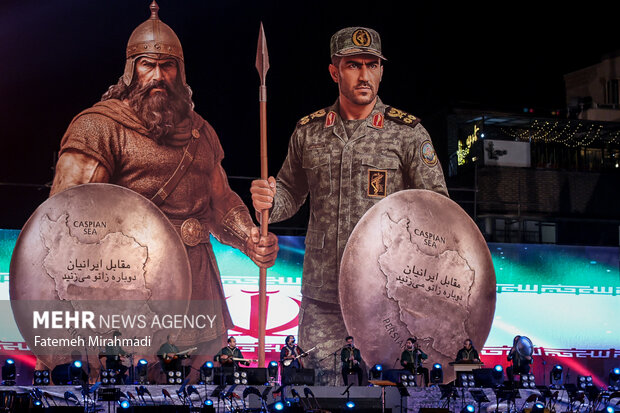
From a historical perspective, the campaign revisits a moment deeply embedded in Iran’s cultural memory: Shapur II’s occupation of Valerian, which is seen not only as a military victory but also as a symbol of Iran’s civilizational strength against the imperial powers. Presenting this episode through public art is seen as a way to strengthen self-confidence, especially in times of social and identity-related uncertainty.
From a sociological perspective, this initiative emerged at a time of economic pressure and media hype. In such situations, visible representations of historical resilience can play a role in restoring a sense of togetherness and belonging. These symbols take on meaning as they develop beyond mere decoration into common points of reference in everyday life, contributing to social trust and collective continuity.
Artistically, the campaign highlights the power of sculpture and visual symbolism in conveying complex concepts such as dignity, resistance, and identity. Public art naturally encourages interaction. People encounter public art on their commute to work, on their daily walks, or during social gatherings, forming implicit dialogues with the artwork and its message. The effectiveness of such works depends on both their aesthetic integrity and their ability to connect with the collective memory of the community.
Choosing the moment of Valerian’s defeat as a symbolic centerpiece was a deliberate artistic choice that relied on a historical event that conveyed a clear message of steadfastness. The campaign positions public art as a bridge between past and present by linking artistic expression with cultural heritage.
Ultimately, “You Will Kneel Before Iran Again” shows how historical stories can become tools for national unity when told through accessible art forms. This is more than just a beautification exercise, it creates a platform for social thinking about identity, perseverance, and Iran’s future. Its continuation, especially in regions with strong traditions of resistance, could deepen its cultural impact and widen the reach of its message on a national scale.
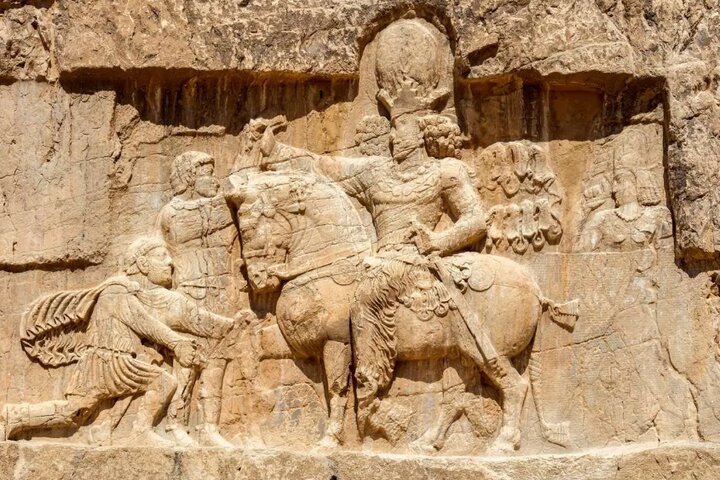
A petroglyph depicting the victory of Shapur over the Roman emperor is one of the surviving works of the Sassanid period, carved on a rock ledge in the Naqsh-e Rustam region, near the tomb of Darius the Great.
Reported by Mohadese Pakhravan