
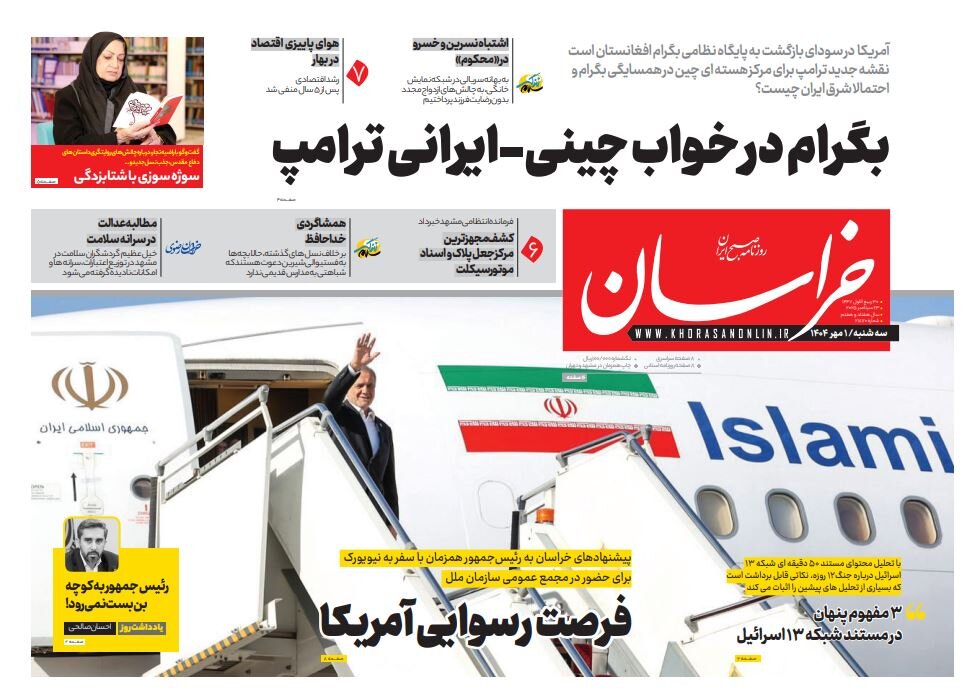
Tehran – In the memo, Horasan discussed the importance of the Supreme National Security Council statement in response to the invigoration of snapback sanctions by the European troika in Britain, France and Germany.
It writes: The best National Security Council statement in response to the launch of the snapback process is invaluable and admirable. There are some basic points in this text. First, it shows that the Islamic Republic has made decisions in a unified way and has a consensus among all the highest level officials. Second, the statement shows that the Ministry of Foreign Affairs is the most important institution in charge of foreign policy. But more important than these two issues is the strategic statement that “European actions will halt the path to cooperation with institutions.” This unified position in difficult situations is what we need today. If we actually practice what we said and break the estimation of the enemy, the situation will probably improve. In this respect, delay means succumbing to further pressure and deeper problems.
Etemad: A meaningful trip with aggressive diplomacy
In an interview with reformist political activist Mohammad Javad Hagshenas, Etemad covered President Masuud Pezeschkian’s visit to New York. Haghshenas said: Pezeschkian travel is one of the most important opportunities for the country and must be fully utilized. He warned that if the visit was merely ritual, it would not serve Iran’s interests. Iran needs dynamic and aggressive diplomacy to navigate the current crisis. It suits the timing, context and audience. This trip should be strategically planned and executed with the global stage in mind. The goal of the visit is to establish clear diplomatic capabilities in Iran. Pezeshkian is well positioned to promote regional integrity by fostering rational dialogue between its neighbours. Additionally, the UN provides a platform for direct and bilateral engagement with European leaders and members of the UN Security Council. A constructive discussion with European troikas can have meaningful results. By leveraging Iran’s existing regional strengths, Iran can increase its diplomatic weight and influence beyond new partnerships with countries such as Egypt, Saudi Arabia and Iraq.
Iran: What happens after I quit NPT?
In its analysis, the Iranian newspaper examined the potential consequences of the proposed withdrawal from the Nuclear Non-Proliferation Treaty (NPT). He wrote that such a move would not benefit Iran in the medium term. Ejecting the treaty will expose the country to serious consequences, including increased sanctions, increased international pressure, and even the threat of military conflict. Stimulating a diplomatic impasse and closing the path for dialogue will only deepen Iran’s isolation and intensify illegal pressure on its citizens. In contrast, President Pezeschkian’s visit to New York, along with the foreign policy team at the annual UN General Assembly, presents strategic opportunities. Neither fear of negotiation nor blind optimism will serve Iran’s interests. Navigating this delicate path requires diplomatic accuracy and vigilance. With wise and aggressive diplomacy, the presence of the president in New York could help ease international tensions and promote both regional and global cooperation. This appearance adds weight to the aftermath of the recent 12-day war and Iran’s subsequent defensive efforts.
sobh-e-no: Is it a guaranteed meeting with Trump?
In the article, Sobh-e-No dealed with the proposals of some citizens and political analysts that the New York visit provided an opportunity for a meeting between Iranian President Masoud Pezeshkian and the US President. By blindly trusting Western promises. Those who thought (John) Kelly’s signature was a guarantee and that the UN Security Council resolution (2231) made it impossible for the return of sanctions to occur, experienced their own opinions at the expense of the Iranian country. The experience and results of the JCPOA are bitter but valuable lessons for national policymakers. Currently, in a situation where snapback mechanisms are being activated and the country faces sanctions, we are witnessing the continuation of the same inefficient approach. This shows the assertion of repeating mistakes that cannot be learned from past experiences. If you were engaged to the US and walked and laughed with them, and maybe you could have achieved some kind of outcome, then that should have been felt over the past decade.