
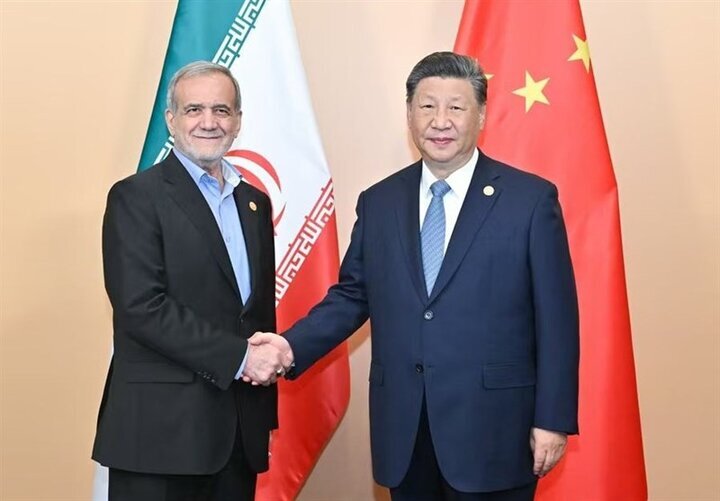
China is planning to host two major international events in the near future. This is the celebration of the Shanghai Cooperation Organization (SCO) Summit and the 80th anniversary of World War II. These events occur on the global order that once underpinned previous systems, its norms, and even equipment undergoing deep transformation driven by the fierce competition between major powers. The consequences of these shifts are keenly visible in a variety of regions where instability and conflict are becoming more pronounced, especially in Western Asia.
Contrary to this background, the Islamic Republic of Iran is determined to be involved at the highest level in these gatherings, underscoring its commitment to play a meaningful role in shaping the evolving international landscape. Therefore, the visit of Dr. Pezeshkian, president of Iran’s Islamic Republic, to China is extremely important not only from a global and regional dynamics perspective, but also in the broader trajectory of Iran-China bilateral relations.
The trip is expected to serve as a platform to convey Iran’s position, expectations and perspective on the future of global order and regional cooperation. These arguments are expected to mark the beginning of a new chapter in Iran-China relations, and both sides prepare to coordinate partnerships within a structured framework that explains the reality and orders of the modern world. Success in this respect depends on Iran’s ability to trust and convey four important messages to senior Chinese leaders.
1. The Iranian political system is rooted in general legitimacy and supported by both hard and soft power capabilities, and is too volatile by a combination of Israel-tuned terrorists or aviation businesses that are too resilient to be supported by targeted US strikes. The cause of Iran’s stability is endogenous and comes from a governance model based on its people and religious democracy.
2. Iran recognizes that the era of bipolar conflict and the once US-led paradigm of globalization has ended. A new phase has emerged. It is defined by intense strategic competition between major powers. Washington, a former self-proclaimed architect of the “Global Village,” has abandoned the norms and rules he once defended, and now pursues the preservation of hegemony through destructive and often violent obstacles. In contrast, the coalition of power and states advocates for a multipolar order and empowerment in the southern part of the world. In line with the establishment principles of the Islamic Revolution and the aspirations of its people, Iran is ready to play a positive and constructive role in moving forward with this vision.
3. With the active support of local partners, the US has transformed West Asia into a major area of conflict with multipolar blocs. Israel’s recent attack on Iran is part of this broader dynamic. Therefore, addressing repeated Israeli violations – genocide and cruelty in Gaza, continued violations of Syrian territorial integrity, persistent attacks on Lebanon, and territorial claims against other regional states are not considered purely regional concerns. The key global authority to support multipolar systems must recognize responsibility and respond accordingly.
4. The most pressing challenge to Iran’s long-term stability lies in its economic vulnerability, which has encouraged the US and Israel to escalate their destabilizing strategies. This weakness stems from Iran’s long-term lack of from the major global development corridors and its gradual elimination from the global value chain. Tehran is currently working to readjust its development strategy, relying on its domestic economic strengths, while in line with new international realities. Through a mutually beneficial development partnership with the Global South, Iran is seeking to secure its position within the emerging global framework. Despite sustained regional unrest and US-backed Israeli turmoil, Iran is determined to accelerate its path to modernising its economy.
In this context, Iran is prioritizing expanding multilateral cooperation through platforms such as BRICS and Shanghai Cooperation Agency, strengthening bilateral tributes with friendly, like-minded countries. There is a central problem now. What role does China assume in this new path chosen by Iran as one of the major powers of the Global South? Furthermore, will Beijing be prepared to engage in a serious and inclusive partnership with Tehran to pursue a multipolar world order that will enhance the status of the Global South?
MNA/