
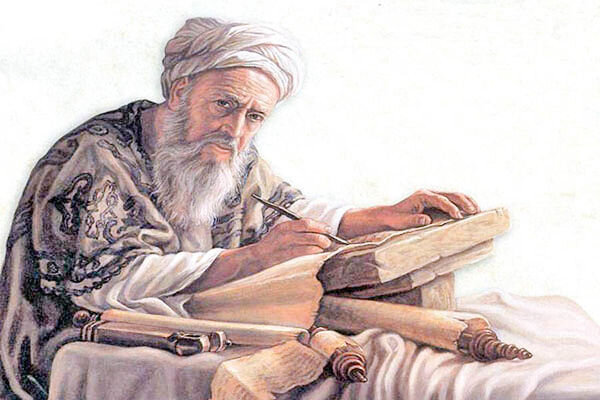
Today, September 4th marks the national anniversary of the glorious Iranian polymer Abu Reihan al-Birni.
Born in what is now Uzbekistan, Abu Reihan al-Birni embarked on a quest for knowledge and lived in Golgan, Iran.
He is celebrated as an astounding multidimensional figure in a variety of science fields, including mathematics, astronomy, medicine, history, and philosophy.
His contributions and scientific heritage continue to be some of humanity’s most precious treasures, thousands of years later.
Al-Biruni is recognized as the founder of comparative religion studies. In addition to his masterpieces in the methodology of science in the fourth and fifth centuries AH, important aspects of his thinking and scientific efforts revolve around the discussion of comparative religious studies.
Abu Rayhan Al-Biruni was more than a repository of knowledge. He was the process of discovering it. His commitment to truth, his respect for human dignity, and his infinite curiosity provide a timeless framework for building bridges across cracks in culture, religion and ideology.
When we face the global sector, his legacy encourages fear and assumptions to replace fear with evidence. By embracing the spirit of Al Birni, a scientist, humanist and global citizen, we can cultivate a more inclusive, informed, peaceful world, and prove that the pursuit of knowledge remains the most powerful unity of humanity.
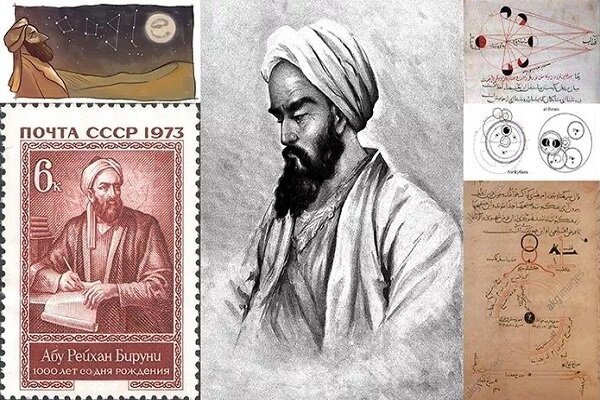
11th Century Polymas Light Pass Path for 21st Century Global Dialogue
On this day, we are not only commemorating historical figures. We celebrate timeless intellectual beacons. Abu Reihan al-Birni had a vast and contemporary methodology that transcended the millennium that his work separates us from him.
To grasp the scale of Al Birni’s genius, we must first understand the intellectual golden age in which he flourished. The AH (post Hijra) in the 4th and 5th centuries was an era of unprecedented academic enthusiasm within the Islamic and Iranian civilization.
This period produced other legendary figures that were used in Europe for centuries, such as the doctor and alchemist Zacharya al-Raj.
But Al Birni distinguished himself even among these giants. When others delve deeper into a single field, Al Birni mastered the connections between them.
He was a typical synthesizer. For example, his astronomical calculations were refined by his advanced mathematical theory and informed by his philosophical understanding of physics.
He approached knowledge as a vast, interconnected web. This holistic worldview was his biggest innovation, allowing him to see patterns and relationships that more professional scholars may have missed.
Al Birni wasn’t just studying the world. He tried to understand the underlying unity. Perhaps Al Biluni’s most surprising modern achievement was his establishment in the field of comparative religion.
When intercultural encounters were often defined by conquest and controversy, Al Birni chose the path of empathetic and objective investigation. His masterpiece, Tariq al-Hind (Indian History) remains a landmark of ethnography and religious studies.
His methodology is innovative and remains the gold standard for today’s researchers.
Before writing in a word, Al Birni studied Sanskrit for years. He believed that in order to understand the soul of culture, he needed to be involved in its main texts and speak to people in his own language.
He translated major Indian texts into Arabic. It was not appropriate, made wisdom accessible and made his analysis more accessible, and made it based on direct evidence rather than hearsay or bias.
Al-Biruni paused his judgment. He made detailed and detailed records of Hindu philosophy, cosmology and social habits, and strived to help Hindu scholars understand them, not through external theological lenses.
He challenged the views of prejudice at the time, claiming that understanding another faith did not weaken oneself, but expanded his understanding of God and human experience. He sought a common basis, identifying philosophical concepts of Hindu ideas, resonating with Greek and Islamic ideas, thereby sharing the intellectual heritage of humanity.
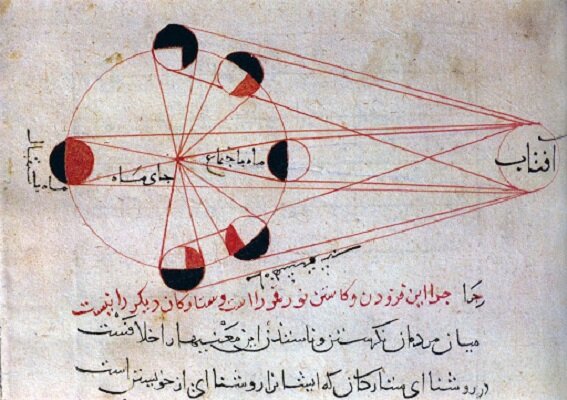
Arbilni’s contribution to hard science was monumental. He calculated the Earth’s radius with an error margin of just 1%. This is a feat of incredible accuracy of his time. He has written over 146 works, with only about 22 remaining alive.
Designing new equipment, editing astronomical encyclopedias, developing new calculation methods, detailed descriptions of minerals, creating sophisticated maps, writing drug copeias that document the properties of drugs and herbs of various cultures, as well as theorizing the speed of light and the nature of energy are some of his prominent hubs.
His driving force was his commitment to empirical evidence. He relied on observations, measurements, and repeatable experiments on pure deductions or accepted doctrines. This evidence-based approach is a very cornerstone of modern science and makes Albirni a pivotal figure in its history.
Lessons of Albirni in the 21st Century
Is scholars thousands of years ago so important today? Because the challenges he dealt with – the cultural sector, religious misconceptions, and the politicization of knowledge are the very challenges that define our present age.
The Al-Biruni heritage provides a powerful framework for navigating the interrelated world.
In an age of misinformation, Al Birni is a model of integrity. He teaches the value of going to sources, verifying information and expressing different perspectives of accuracy and fairness. His work is evidence of the idea that truth is seen through rigorous and ground investigations, not through echo chambers.
He illustrates interdisciplinary learning. The biggest issues we face – climate change, the public health crisis, and global inequality – will not be resolved in just one area. They need the integrative spirit of Al Birni, who can bring together data from geography, sociology, economics and ethics to form a complete picture.
On a personal level, Arbirni’s life is a call to intellectual curiosity and humility. He reminds us that engagement with a culture that is different from our own is not a threat, but an opportunity for enrichment. He urges us to move beyond stereotypes, ask questions, and listen deeply.
Reported by Tohid Mahmoudpour