
TEHRAN – Iran’s nuclear chief Mohammad Eslami announced that despite damage to Iranian facilities during the recent 12-day war, the country continues to make significant progress in its peaceful nuclear program.
Eslami, head of the Atomic Energy Organization of Iran (AEOI), spoke at the National Security and Foreign Policy Committee of the National Assembly and presented a comprehensive report on Iran’s latest nuclear achievements, reconstruction and fortification of the disaster-stricken areas, and recent visit to Russia.
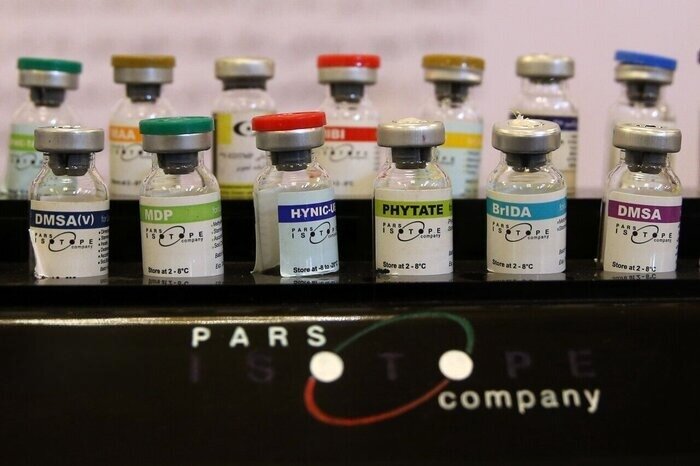
Eslami stressed that domestic production of radiopharmaceuticals has never been interrupted and will not be stopped under any circumstances, according to Ebrahim Rezaei, a spokesman for the commission. He said Iran’s radiopharmaceutical industry remains fully operational and continues to serve the needs of hospitals and research centers across the country.
Eslami explained that AEOI has been working to move beyond the research stage and into industrial-scale production so that nuclear technology can more directly benefit people’s lives and the national economy. He said that between 2022 and 2024, Iran achieved around 500 scientific and technological milestones, many of which had a tangible impact on healthcare, agriculture and industry.
The head of AEOI said the organization’s irradiation project has helped extend the shelf life of produce and prevented up to a third of produce from spoiling. He added that the technology has improved agricultural exports and productivity. To date, multiple irradiation centers with a total capacity of 500,000 tons have been established across the country, and there are plans to expand further.
Eslami also pointed to advances in plasma research, highlighting that plasma-based treatments have proven effective in healing diabetic wounds and treating breast cancer in women. He further said that AEOI has made great progress in cleaning up industrial waste and converting contaminated water into usable water, which he said are important achievements in environmental protection and sustainable development.
Iran and Russia to build 8 nuclear power plants
Referring to international cooperation, Eslami said Iran and Russia are implementing a protocol to build eight nuclear power plants. One of the power plants has already been completed, two are under construction, and five more with a total capacity of 5,000 MW are planned to be built in Hormozgan province.
He also criticized the International Atomic Energy Agency (IAEA) for failing to protect Iran’s sensitive information despite repeated warnings from the Iranian government. He clarified that while the AEOI oversees the technical aspects of Iran’s nuclear activities, the political aspects of the negotiations are managed by the Ministry of Foreign Affairs under the guidance of the Supreme National Security Council.
Members of the Congressional Committee praised AEOI’s efforts and reaffirmed their support for the continuation and expansion of Iran’s peaceful nuclear program. Both leaders emphasized the need for full and uncompromising implementation of the law suspending cooperation with the IAEA and continued scientific progress in nuclear technology.
A joint US-Israeli attack on Iranian territory in June caused significant damage to three Iranian nuclear facilities operating against peaceful targets.