
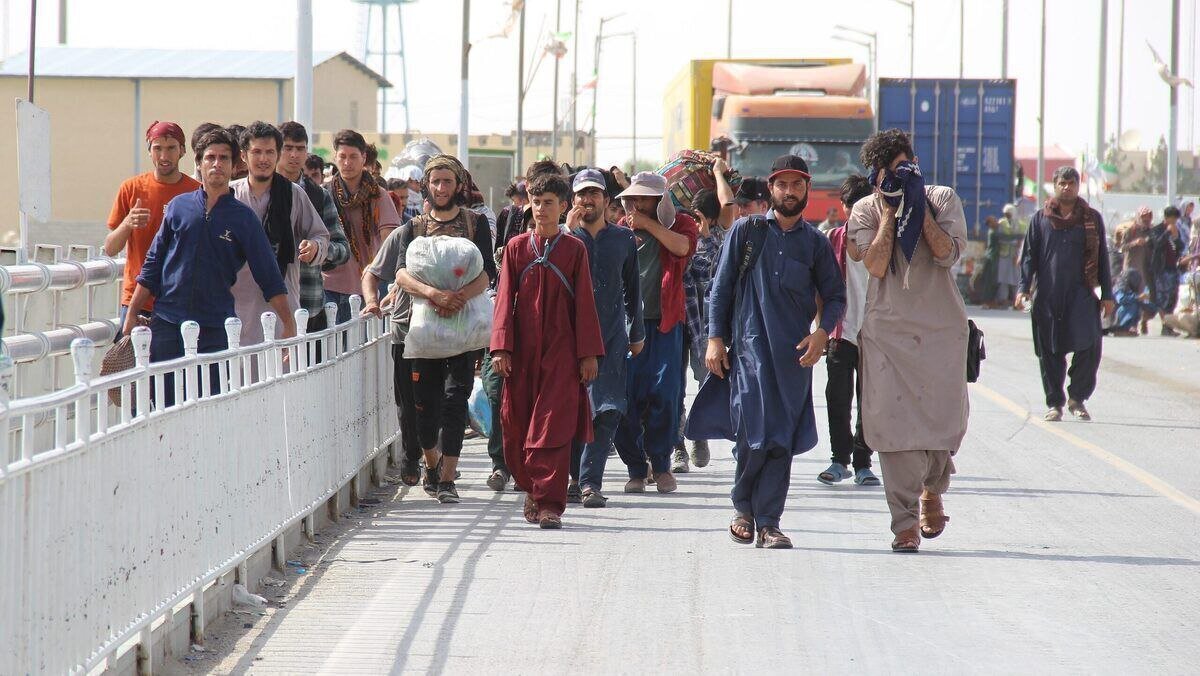
TEHRAN – Home Minister Escandar Momeni said that from the beginning of the current Iranian year on March 21, around 1.1 million illegal Afghan refugees have been sent back to their home country.
70% of them voluntarily left the country, Irna quoted Momeni as saying.
The number of undeported, undocumented Afghans has risen 4.5% compared to the same period last year, Mehr’s news agency cited police spokesman General Saeed Montazer-Al-Mahdi.
Police are also preventing illegal invasion of around 2,500 refugees into the country, officials added, stressing that foreigners are being treated with decisive dignity.
In July, Momeni said the country had no plans to deport documented and licensed refugees.
“Iran is not an anti-immigrant country because it has six million foreigners inhabited. We are deporting 2 million Afghans who are illegally living in Iran. These are the honorable people who have contributed to the country’s production.
According to the head of the National Immigration Agency at Nader Yar-Ahmadi, there was no residency and the type of services offered to documented Afghans living in the country.
On the contrary, as illegal citizens leave the country, they will benefit from more services, the IRNA reported.
Officials went on to say that the presence of illegal immigrants in any country poses many challenges and that in critical circumstances they will become the main suspects. Their presence has a negative impact on the economy, society and the security sector.
Services provided to refugees at borders
The Ministry of Health describes a wide range of services provided to refugees, particularly in the eastern South Holasan, northeastern Holasan Razabi and southeastern Sistan Balchestan province.
The services include establishing health camps, screening for infectious diseases and providing safe water and sanitation, the Ministry of Health website reports.
The Ministry of Health has established permanent and temporary camps to perform screenings and provides medical services such as injections, serotherapy and the treatment of acute patients.
Extensive screening for infectious disease and epidemic risk management, including syndrome screening for 14 infectious diseases, ongoing water and food sampling, and drinking water disinfection, is among other measures adopted by the Ministry.
Environmental hygiene, such as improving infrastructure, access to safe drinking water and sanitation facilities, and proper management of infectious waste in camps, is another part of the Ministry of Health’s efforts to ensure the prevention of contagious diseases, and monitor the environment to prevent infection of diseases such as malaria, krowl (EL TOR), and other similar diseases.
The Ministry of Health is doing its best to manage referrals, with an average of over 5,000 people receiving medical services during busy times. It also strengthened the camp’s capabilities in terms of HR, equipment, temporary beds, coordination and logistics support for the immediate provision of medicine, disinfectants, personal protective equipment and other important items.
mt/mg