
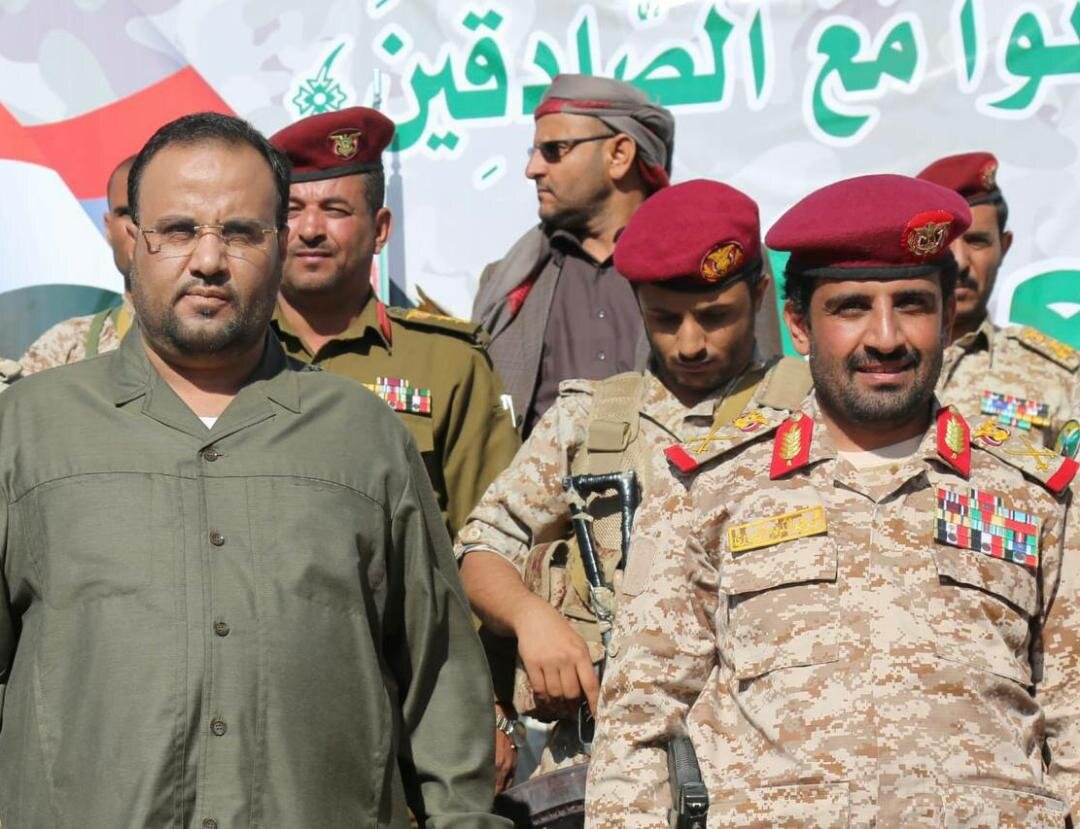
BEIRUT – The late Lieutenant General Mohamed Nasser al-Ghamari (Sayed Hashem) is one of the most prominent leaders in modern Yemeni history and a symbol of steadfastness in the face of American, Israeli and Saudi aggression in Yemen.
Al-Ghamali was more than just a military commander. He was a comprehensive school of faith, awareness, and strategic thinking, embodying the Qur’anic identity of the Ansarullah movement in word and deed, and ultimately earned him the honor of martyrdom.
Sayyid Abdul Malik Badr al-Din al-Houthi described him as “a great jihadist leader of integrity, sincerity and foresight, and an example of a faithful warrior who sold himself to God in search of God’s pleasure.”
In a eulogy delivered on Tuesday afternoon, Syed Al Houthi offered deep insight into the martyrs’ strategic contributions and enduring legacy.
One of al-Ghamari’s most distinctive characteristics was his transformative vision. Rather than concentrating on managing combat, he worked to build the nation’s military capabilities, including manufacturing weapons, developing missile and drone systems, and changing rules of engagement.
Mr. Sayed Al Houthi highlighted his commitment to achieving self-sufficiency in military production, reducing dependence on external resources and promoting long-term sustainability.
This vision demonstrated an understanding of the core principles of modern warfare. Technological and industrial independence can shift the balance of power even when faced with an adversary with superior financial and logistical resources.
Al-Ghamari’s efforts led to the emergence of an indigenous defense industry, a historic breakthrough for the Yemeni resistance.
From tactical precision to strategic endurance
Martyr al-Ghamari combined operational brilliance with strategic depth. He mastered the art of total warfare, balancing tactical planning with the management of long-term operations under siege and limited resources.
Syed al-Houthi described him as a leader who turned constraints into opportunities and achieved “significant leaps” in performance despite continued aggression. His approach reflected key operating principles.
Prioritize operations based on resources and threats.
Rather than dispersing forces, they concentrate and carry out effective attacks.
Maintaining continuity of logistics under lockdown.
Adapt terrain and natural elements to defensive assets.
These qualities reflected the tenets of creative resilience, where innovation replaces abundance and faith replaces fear. His leadership thus became a case study in asymmetric warfare, turning scarcity into a strategic advantage.
Human development and the formation of doctrine
Al-Ghamali’s focus extended beyond weapons to human capital. He invested in developing executives who were capable of independent thinking, advanced tactical planning, and leadership under pressure. He understood that machines don’t win wars; humans win them.
Mr. Sayed al-Houthi emphasized that Mr. al-Ghamali helped develop training and mobilization programs that produced a new generation of capable fighters, transforming military institutions into schools of resistance that continue to flourish.
His doctrine integrated training, moral education, and ideological beliefs to ensure military performance was sustained by faith and discipline rather than mere command.
Al Ghamali’s defensive vision was proactive rather than passive. He focused on establishing deterrence mechanisms through precision missiles, drones, and locally manufactured weapons, tools that provide strategic balance to Yemen on the battlefield.
This combination of resilience and offensive ability has reshaped the dynamics of the conflict. This gave the leadership control and influence, not only militarily but also politically, allowing the invaders to impose a new reality on Yemen that could not be easily reversed.
Sayyid Al Houthi emphasized that these advances are not a coincidence, but the result of institutional thinking, a methodology of continuous improvement rooted in faith, discipline and technical competency.
For al-Ghamari, the war was not an isolated military effort but part of a broader political mission. He viewed every operation as a means to protect sovereignty, preserve national dignity and strengthen Yemen’s political position.
His understanding of when to advance and when to hold reflected a rare strategic wisdom that balanced ambition with prudence.
This connection between the military and political planes ensured that each victory served a larger national purpose rather than a momentary tactical gain.
Faith as a foundation of strength
Sayyed Al Houthi emphasized that Al Ghamali’s strength is rooted in faith-based discipline. He cultivated moral commitment as the basis of combat preparation, turning spirituality into a weapon of endurance. The massive public and military eulogy at his funeral testifies to the depth of this moral influence.
Martyr al-Ghamali left behind not just a memory, but a living institution. His methodology, rooted in self-reliance, strategic innovation, and moral conviction, continues to guide Yemen’s path to independence and strength.
He created more than just weapons. He constructed a doctrine. He not only achieved victory, but formed a group of leaders and warriors who could ensure that the struggle for dignity and sovereignty never faded.