
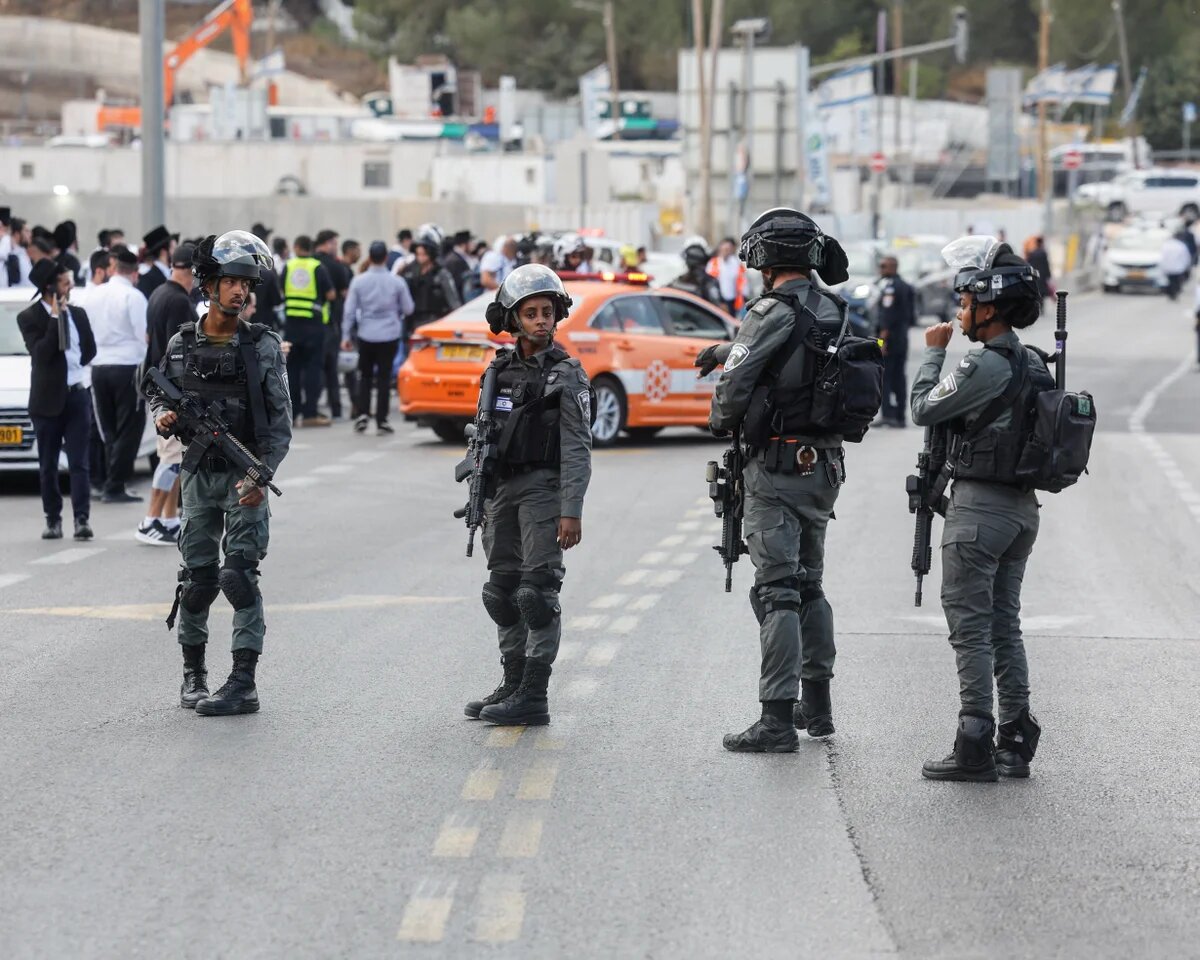
TEHRAN – At least six Israeli settlers have been killed and 17 people were injured on Monday after two Palestinian gunmen fired a bus at the junction of the Lamott settlement north of occupied Jerusalem (AL-QUDS).
Witnesses said one of the attackers got into a vehicle disguised as a ticket inspector before firing during morning rush hour.
Both gunmen from a village near Ramallah were reportedly killed at the scene, and Israeli forces were sealed off from roads and checkpoints between the West Bank and Jerusalem.
This is the city’s most important operation since 2023, highlighting the fierce outrage over Israel’s relentless land attacks, murders and apartheid policies.
Hamas welcomed the operation as “a natural response to the crimes of occupation and the repeated genocide against our people,” warning that Israel’s attacks on Gaza and threats to the Al-Aqsa Mosque “will not pass without punishment.” The Al-Kud brigade of the Palestinian Islamic jihad reflected this, calling it a “natural and legitimate response to the ongoing crime of Zionist enemies” on Palestinian lands.
A vast, illegal settlement under international law, Lamott spread across Palestinian lands beyond the green line of 1967, fragmenting communities and devouring resources essential to a sovereign Palestinian state.
Such infringements have been strengthened under Prime Minister Benjamin Netanyahu’s far-right coalition, and was formed in 2022 with Jewish supremacist figures such as Finance Minister Bezalel Smotrich and National Security Minister Itamar Ben Gwil.
Smotrich, who oversees the West Bank issue, recently announced plans to annex 82% of its territory, framing it as a counter to the global perception of the Palestinian state. Notorious for arming settlers and incite violence, Ben Gwyr is seeking more weapons among civilians who have exacerbated the attacks on Palestinians, which have surged since October 7, 2023.
Following the shooting of Ramot, they moved quickly to exploit the attack. Smotrich called for the Palestinian authority to be “wiped off the map” and reduced the villages of attackers’ homes to “abandoned ino,” reflecting the devastation Israel had inflicted on Gaza. Ben Gwil renewed the call for settlers to arm themselves, increasing the fear of vigilante violence against Palestinians in the West Bank.
For Palestinians, the aftermath is very familiar. Military raids, mass arrests, sealed checkpoints, and punitive house demolition usually follow such attacks. According to Al Jazeera, residents of the Aida refugee camp in Bethlehem and other parts of the West Bank explained the atmosphere of fear and uncertainty and reported the extent of the attack and retaliation.
Human rights groups have long criticised these tactics as collective punishment. This is a measure that targets the entire community, not the individual.
Attacks at Lamot are not isolated events, they are part of a long trajectory. Since October 2023, Israeli forces have been intensifying raids across the West Bank, with settlers’ violence against Palestinian farmers and villagers rising under Army protection. Analysts note that such attacks are often symptomatic of a choking occupation. It’s a collapse of the economy, checkpoints at every turn, and crushing daily military control.
Netanyahu spoke at the location of the shooting, vowed to “disastrous consequences” and declared that Israel was fighting “war on multiple fronts.” However, critics argue that his alliance, supported by the far right, is less interested in dealing with security than advances in annexist ambitions.
The Palestinians pretend to be what comes next – mourning the deaths in Gaza and the West Bank in fresh waves of sadness, and anticipating drastic retaliation where observers regularly warn when armed attacks thrust into the centre of Israel’s military occupation.