
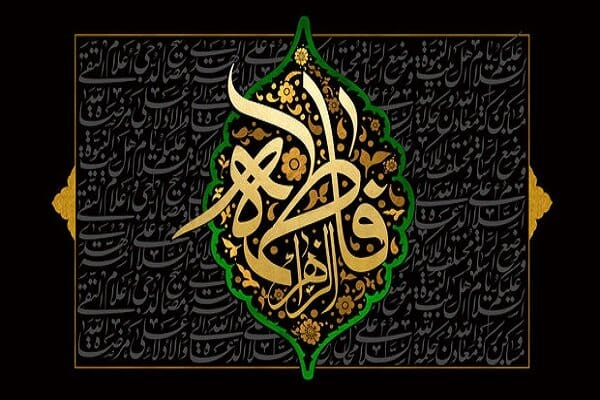
The faithful commander (peace be upon him) was not only saddened by the loss of his wife in this event. Rather, it is a reflection of divine sorrow and divine truth in the face of oppression, ignorance, and human disconnection from the truth of monotheism. Using an analytical and comparative approach, this article examines Alawite grief in three dimensions: theological, mystical, and anthropological, and shows that the faithful commander’s words, “Lord, have mercy” (peace be upon him) is a fully human cry against historical deviations from the path of revelation.
1. Introduction: In the history of Islam, Amir al-Muminin Ali (AS) is a figure who combines wisdom and love, justice and humility, epicness and sadness. Among all the moments of his life, the martyrdom of Hazrat Fatima Zahra (SA) and her heart-breaking grief is considered one of the deepest manifestations of humanity and servitude. From the perspective of Islamic philosophy and mysticism, this sadness is not only an emotional reaction, but also a reflection of the Imam’s existential truth. Because the Imam is a mirror that reflects God’s names and attributes, and his sorrows reflect God’s sorrows on earth.
2. Theological Analysis: The Imam’s Grief and Continuation as a Prophet: In the Shia tradition, Fatima (SA) is introduced as the “soul of the Prophet” and “part of his being.” Therefore, her martyrdom is actually a continuation of the plagues of the Prophet (S). By burying the body of Fatima (SA) at night and crying out “Lord, have mercy” during the Nahi al-Baragha sermon, the Commander of the Faithful (AS) is in effect having a painful conversation with God, the content of which is the continuation of the mission and the preservation of the truth of Islam. This grief, unlike ordinary human grief, is rooted in divine responsibility and is considered an aspect of the “trial of prophets and saints.”
3. Mystical Analysis: The Sadness of Alawi and the Truth of God’s Love: In the Islamic mystical school, Ali (AS) is the perfect human incarnation, and Fatima (SA) is the incarnation of divine truth and the manifestation of the name “Beauty.” The separation of the two on the outside symbolizes the separation of love from the beloved, but on the inside the eternal unity of the two remains as one light. Mystics say from this point of view:
“Ali’s love for Fatima is not physical love, but divine love manifested in human form.”
The cry of Ali (AS), Commander of the Faithful, is therefore the cry of a lover who turns to supplication when he sees the expression of divine beauty being suppressed.
4. Anthropological Analysis: Mourning and Human Dignity: In the sociology of religion, Ali’s (AS) reaction to the martyrdom of Fatima (SA) is a model of human dignity in the face of suffering. Although the Imam grieves, he remains patient and surrenders his oppression to God. His crying is not a sign of weakness, but of consciousness. In his famous sermon after the burial of Fatima (SA), the Imam said:
“My soul is trapped in a sigh, and I wish it would come out with a sigh.”
“My soul is trapped in my chest, and I wish it could just come out with a sigh.”
These words are the height of sadness, but also pure obedience to God’s ordinances.
5. Conclusion: The mourning of the Commander of the Faithful (AS) for the martyrdom of Fatima Zahra (SA) is not just an emotional event, but rather a full-fledged manifestation of God’s sorrow for the perfect human being. This sadness is the secret to keeping faith alive and testifying to the injustice between truth and falsehood. Ali’s (AS) cry, “Lord, have mercy” is actually the prayer of all those seeking truth against a history of oppression and neglect.
MNA