
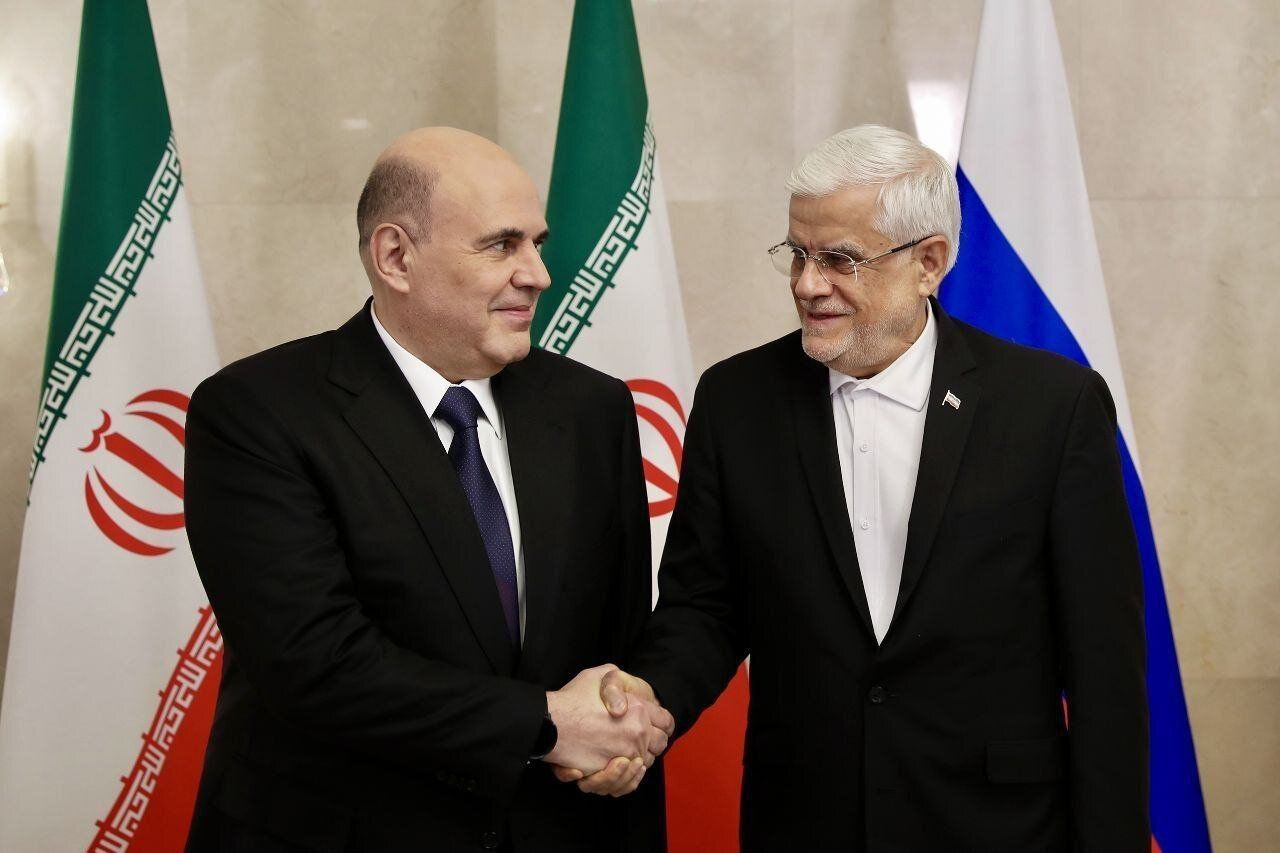
TEHRAN – Iran’s First Vice President Mohammad Reza Aref traveled to Moscow this week to attend the 24th session of the Shanghai Cooperation Organization (SCO) Summit of Governments, and used the visit to highlight Tehran’s commitment to strengthening ties with the Russian Federation.
Mr. Alev met with Russian Prime Minister Mikhail Mishustin on Monday and expressed satisfaction with the continued development of bilateral relations, praising in particular Russia’s diplomatic support in recent international issues, especially regarding the controversial snapback mechanism.
Mr. Aleph emphasized the strategic importance of the two countries’ joint participation in key regional and international organizations, including BRICS, the South African countries, and the Eurasian Economic Union. He emphasized that these organizations have great growth potential, saying, “These organizations have extraordinary capabilities, and cooperation between the two countries within this framework can add further momentum to cooperation.”
The Vice President also referred to the long-standing Treaty of Iran-Russia Comprehensive Strategic Partnership, saying it is essential for future cooperation. “This document will serve as a guideline for advancing bilateral relations to the highest level,” he asserted. Mr. Aref also mentioned the finalization of a new agreement focused on information security, noting the common threats that both countries face in cyberspace. He emphasized the urgent need to expedite the process of protecting critical infrastructure in both Iran and Russia.
Prime Minister Mishustin confirmed Russia’s mutual desire to strengthen ties with Iran and stressed that these relations will be built on the principle of good neighborliness. Mishustin pointed to the recent entry into force of the free trade agreement between Iran and the Eurasian Economic Union as a major step forward. “Implementation of this agreement is an opportunity to strengthen bilateral exchanges,” he concluded. Alev, who traveled to Moscow at the invitation of Mishustin, will hold further talks with officials from other participating countries during his stay in the Russian capital.
Another notable exchange on Monday was Iranian Foreign Minister Abbas Araghchi’s meeting with Russian Foreign Minister Sergei Lavrov. Lavrov reiterated that Iran’s nuclear program is peaceful and said Moscow and Tehran share similar views and continue to work closely together on the issue, as the IAEA board prepares to consider an anti-Iranian resolution submitted by Britain, France and Germany.
While confirming Iran’s continued cooperation with the United Nations nuclear watchdog, Araghchi rejected Western claims that a snapback mechanism had been triggered and called on the IAEA to maintain impartiality and avoid actions that could escalate tensions. He also emphasized the importance of regional dialogue and cooperation, citing recent consultations with neighboring officials. Foreign Minister Lavrov welcomed Iran’s diplomatic efforts in the region and signaled Russia’s readiness to deepen cooperation with Tehran.