
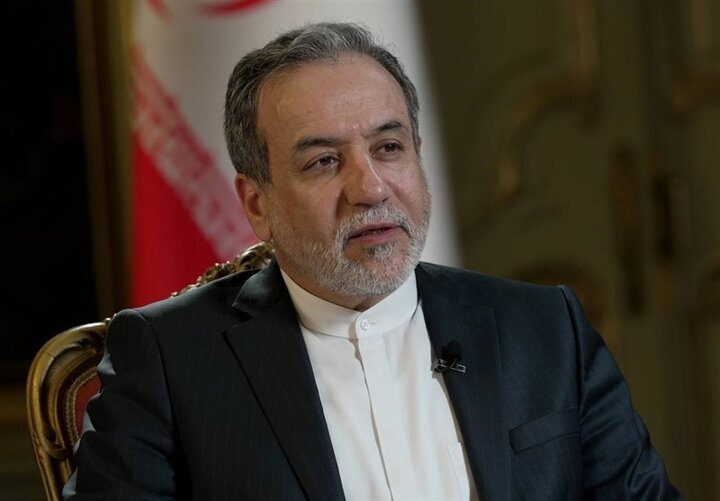
Speaking with reporters following the meeting in Cairo, Abbas Aragci said negotiations with the International Atomic Energy Agency (IAEA) on a new framework of cooperation were underway with the approval of Iran’s Supreme National Security Council (SNSC) and reached a stage where high levels of consultation were required to finalize the text.
He explained that both the decision to enter into both the consultation and provisions necessary to protect Iran’s position have been reviewed and approved by the SNSC.
According to the Foreign Minister, the most important feature of the final document is that it acknowledges the new reality and makes clear that cooperation between Iran and the IAEA can no longer proceed in old ways. Instead, he said the agreement requires that Iran’s legitimate security concerns be explicitly recognized and addressed.
Araghchi noted that the deal also supports the law passed by the Iranian parliament, providing that all cooperation must be implemented under the approval of the SNSC. The agreement added that its legal pathway is formally recognized as a framework for coordination between Iran and the IAEA.
“This new framework is in full line with some of the legislation approved by the Congress, taking into account Iran’s security concerns, recognizing Iran’s rights and defining a new form of cooperation with the institution,” Araguchi said. “All of these are our requests and are included in this Agreement.”
He also explained under the transaction that IAEA inspectors will not receive access beyond the ongoing arrangement at the Bushehr nuclear power plant, which was already granted access for fuel exchange under previous social media decisions. “The agreement itself does not create new access,” Araghchi said, saying future access will be subject to new negotiations based on Iran’s upcoming reports.
The Foreign Minister emphasized that the continuation of the agreement is conditioned in the presence of hostile measures against Iran, including an attempt to revive the UN Security Council resolution under the so-called snapback mechanism of the Joint Comprehensive Plan of Action (JCPOA).
Araguchi further emphasized that the deal, which reached Egypt’s participation and support, now has more weight and reliability. He hoped that the agreement paved the way for a diplomatic solution, provided that the other parties truly pursue diplomatic, not just words.
MNA