
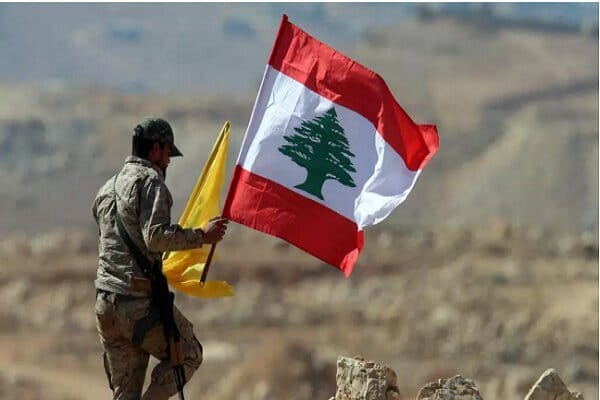
Lebanon’s Hezbollah resistance movement is at its most complex and sensitive moment in its political and military activities. The current situation in Lebanon and the region is heavily influenced by geopolitical competition and the redesign of the security order in West Asia by the United States and the Zionist regime. In such a situation, immature reactions and decisions could not only jeopardize the resistance movement’s position, but also threaten Lebanon’s internal stability. In recent months, the United States has used economic, political, and media tools to promote a “resistance disarmament project” through its military wing, the Zionist regime, as part of its so-called “regional peace” plan. However, Hezbollah has shown that by adopting actions based on wisdom and logical calculation, it can simultaneously defend two areas of deterrence against external enemies and avoid internal conflict.
rational actor model:
Graham Allison proposed three different models for analyzing the behavior of state actors. One of them is the rational actor model.
The rational actor model is defined by rational choice theory. Rational choice theory talks about making decisions that maximize an individual’s advantage. This includes the costs and benefits of wanting something.
Using cost and benefit analysis to create foreign policy works using the same logic of “minimum cost and maximum benefit.” Decision makers set goals, evaluate their relative importance, calculate the costs and benefits of each possible cause of action, and choose the one with the highest benefits and lowest costs.
In other words, this means that the choices made by decision makers are based on rational calculations using the logic that benefits must exceed costs. Such decisions would help states maximize their interests in an anarchic international system.
Intelligent deterrence against Israeli attacks
Since the ceasefire was established between Lebanon and the Zionist regime, Tel Aviv has violated the agreement more than 4,000 times, attacking Lebanese soil in the form of drone operations, air strikes, and targeted assassinations. The main purpose of these actions is to provoke Hezbollah into a massive response so that Israel can rely on Hezbollah to justify a major war. However, contrary to Israel’s expectations, Hezbollah was not trapped in this scenario. This can be called “tactical restraint,” a type of intelligent decision-making that does not allow resistance forces to redefine the battlefield as they wish while maintaining a defensive posture.
Sheikh Naim Qasem, secretary of the Lebanese Hezbollah resistance movement, stressed: “We are ready to defend, but we are not going to start a war. If a war is imposed on us, we will not allow the enemy to pass, even if we only have wooden planks.”
These words express the main spirit of Hezbollah’s actions: maximum defensive readiness coupled with refusal to start a conflict. Such an approach is a manifestation of rational decision-making at the level of state actors.
Disarmament and internal balance project
In addition to external military threats, Hezbollah faces increasing political pressure to disarm, pressure from the United States, the Zionist regime, and some Lebanese domestic forces. At the same time, the domestic situation is fragile due to the economic crisis, the collapse of the banking system, and partisan conflicts. In the meantime, any wrong actions or reactions by the Hezbollah resistance movement could serve as a pretext for causing internal conflict. However, Hezbollah has sought to prevent the issue from escalating into an internal crisis, relying on its historical legitimacy in fighting the occupation and emphasizing that its weapons are “instruments of national defense.” This action shows that Hezbollah maintains its principles of resistance while putting national responsibility on the agenda. In fact, the movement does not seek political advantage over Lebanon or the elimination of competitors, but rather focuses on maintaining the country’s stability and preventing social collapse.
Decision-making theory and the rational actor model’s position in foreign policy
To better understand Hezbollah’s actions, they can be viewed from the perspective of foreign policy decision-making theory. These theories do not focus solely on the structure of the international system, but study the behavior of state actors and their leaders in decision-making processes. One of the most important of these approaches is the rational actor model, first proposed by Graham Allison in his analysis of the Cuban Missile Crisis. According to this model, a state or political organization is seen as a “single actor” who, by calculating goals, options, and outcomes, makes decisions that yield the greatest expected benefit.
Main components of the rational actor model
Defining the problem: Actors need to accurately identify the nature of the crisis. Determine goals: Be clear about what benefits the decision is trying to achieve (survival, security, legitimacy, etc.). Present options: Identify all possible ways to address the problem. Evaluate results: Examine the costs and benefits of each option in the short and long term. Rational choice: Choose the option that provides the greatest utility and lowest cost.
This model assumes that decision makers are well-informed and act based on calculations and predictions of outcomes rather than emotional or ideological reactions.
Hezbollah as a wise and logical actor
Interpreting Hezbollah’s actions within this model, we can say that the resistance movement has made decisions in recent months based on rational and logical calculations.
Defining the problem: Hezbollah sees the current crisis not simply as a series of border clashes, but as a concerted effort to weaken the resistance movement and destabilize Lebanon. Determining goals: The primary goal is to maintain deterrence against external enemies while maintaining national stability and domestic legitimacy. Options: Among the various options: strong reaction, complete silence, and strategic action, Hezbollah chose “strategic action.” Assessing the results: This option is least likely to escalate the war and most likely to preserve the nation’s image. The final choice: The result is a policy of tactical restraint that combines deterrence with the avoidance of widespread conflict.
In other words, the Hezbollah resistance movement, as a state actor, used the logic of rational decision-making to successfully establish a balance between national security, internal stability, and the resistance’s strategic interests.
difficult balance
One of the most difficult aspects of decision-making for ideological actors is maintaining a balance between idealistic beliefs and rational imperatives. As a movement deeply rooted in the discourse of resistance, Hezbollah is forced to balance ideological principles (defending al-Quds and confronting the occupation) with the real needs of the Lebanese people (security, economic stability, and war prevention).
The enlightened actor model suggests that Hezbollah, in the current situation, follows a logic of “best possible good”, i.e., neither passivity nor adventurism, but purposeful and limited action within the framework of the national interest. This perspective represents an aspect of political maturity that sees the resistance not simply as a military force, but as a responsible actor within the Lebanese nation-state structure.
Hezbollah and multilevel crisis management
Decision-making in this environment is not merely reactive. It is a form of multi-level crisis management. Hezbollah must make decisions simultaneously on three levels:
Military level: Responding to an invasion without escalating the conflict.
Internal political level: Preventing the escalation of internal polarization.
Regional diplomacy level: Maintain Lebanon’s position in the regional equation without becoming a destabilizing factor.
At all three levels, Hezbollah’s actions support rational decision-making. This behavior can also be interpreted from a game theory perspective. This is because Hezbollah acts in a situation similar to that of a “rational actor with limited information.” Hezbollah’s actions are not based on emotions, but on predicting the actions of its opponents and assessing risks.
conclusion
Hezbollah’s activities in recent months have shown that rationality and resistance are not mutually exclusive. rather, they are intertwined. By adopting a model of wise and rational actors, the movement was able to make decisions in the tense atmosphere of the region with deterrence and to prevent all-out war. Hezbollah’s actions can be considered a model of “smart resistance.” In other words, resistance is neither passive nor adventurous, but rather relies on an accurate understanding of threat and opportunity structures. In such a model, every military, political, and media action is seen as part of a rational calculation for the survival, legitimacy, and stability of the state. Ultimately, as decision theory emphasizes, political wisdom is meaningful when actors are able to choose the best possible option in situations of uncertainty. Today’s Hezbollah in Lebanon is an example of such rationality.
MNA