
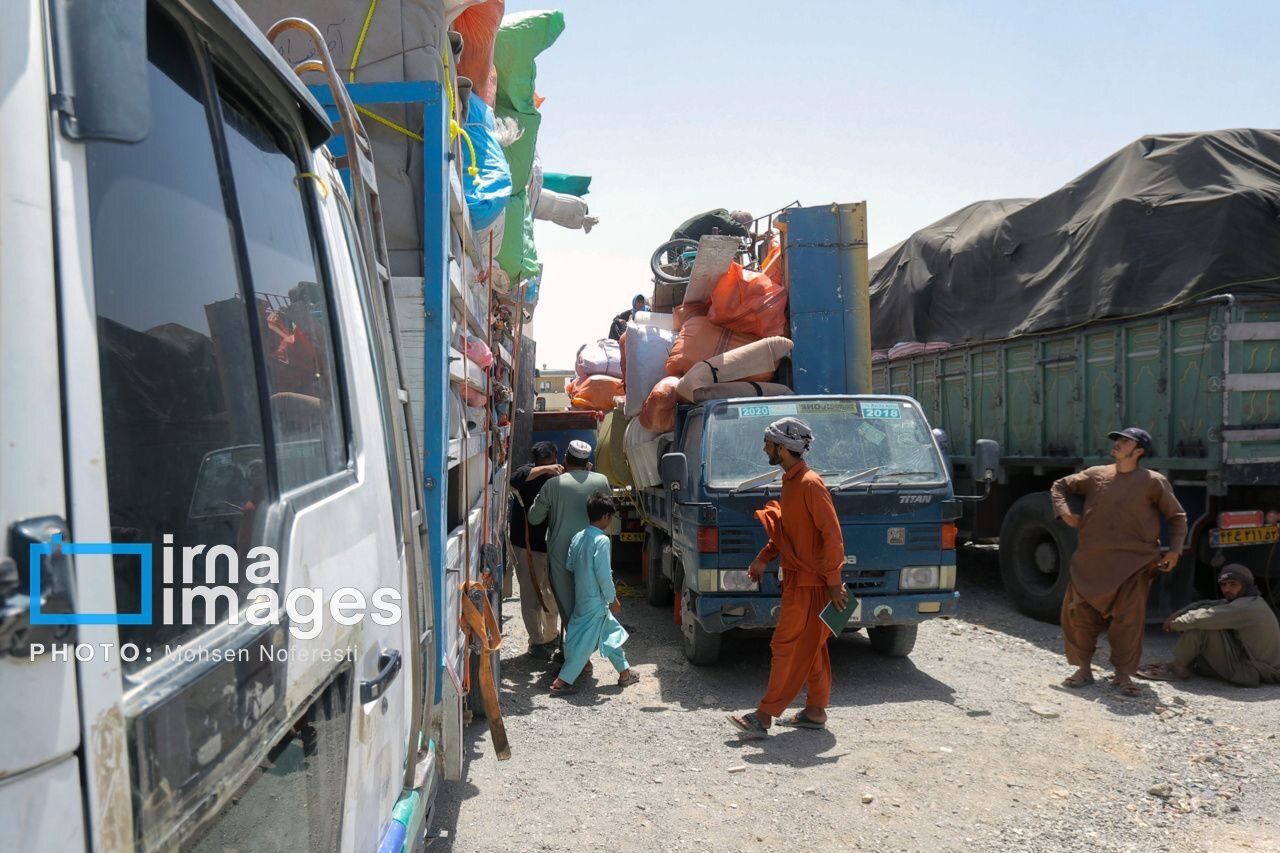
TEHRAN – Ali Baqeri, an official at the Ministry of Cooperatives, Labor and Social Welfare, said that around 400,000 foreigners are working legally in the country, while the rest are working without permits.
Referring to the employment situation of foreigners, Foreign Minister Baqeri said that Iran’s foreign workers include individuals of various nationalities, the majority of whom are Afghans, IRNA reported.
“If Iranian employers are interested in hiring foreign workers, they need to apply for legal permission,” he added.
Baqeri said that foreigners who have returned to their home countries can apply for passports and work visas to return to Iran if their Iranian employers request them to be rehired. They can work in Iran for nine months and then return home for three months. If necessary, obtain a work visa through a special online platform.
All refugees employed in Iran are covered by health insurance. Employers undertake to take responsibility for the employment and lawful presence of their employees and their safety at work, so that they can be held accountable to the relevant authorities if necessary.
The plan will contribute to the organization of the labor market and “will definitely help foreign workers switch from the informal to the formal job market,” he said.
The Comprehensive Refugee Registration Plan (known as Amayesh), the Family Passport Plan, and the Refugee Program are still available in the country, and their families also receive annual residence and work permits.
IOM praises Iran’s services to refugees
On October 7, Kim Erin, Senior Advisor to the Director-General of the International Organization for Migration (IOM), praised the country’s efforts in hosting and providing services to Afghan refugees.
On October 6, IOM officials met with Iran’s Deputy Interior Minister Mohammad Batai on the sidelines of the 76th Annual General Meeting of the Office of the United Nations High Commissioner for Refugees, which was held from October 6 to 10 in Geneva, Switzerland.
Mr. Elling praised the country’s efforts in hosting the Afghan nationals and said reduced aid from donor countries was the main challenge for the United Nations in moving the project forward.
Iranian officials stressed that “despite unilateral mandatory sanctions, Iran has been providing important services to foreign nationals.”
Iran wants donor countries to take on some of the responsibility by allocating appropriate aid to projects being implemented in the country, the official added.
Iranian officials’ plans include speaking and meeting with Filippo Grandi, the High Commissioner for Refugees, and Kamal Kishore, the UN Secretary-General’s Special Representative for Disaster Risk Reduction.
The Executive Committee of the High Commission Program (ExCom) meets annually in Geneva to review and approve the High Commission’s programs and budget, advise on international protection, and discuss a variety of other issues with UNHCR and intergovernmental and non-governmental partners.
In August, Interior Minister Eskandar Momeni announced that more than 1.2 million Afghans, most of them illegal immigrants, had left Iran in the past year, with the highest number of departures recorded at the eastern border in Khorasan Razavi province.
Momeni said the country has no plans to deport documented and recognized refugees.
“We are only deporting the two million Afghans who are in Iran illegally,” he said.
“Iran hosts 6 million foreigners and is not an anti-immigration country. Since the beginning of this Iranian year (March 21), around 800,000 of the 2 million illegal refugees have left the country,” ISNA quoted Momeni as saying on July 18.
“They are honorable people who have contributed to the country’s production. Based on regulations, unauthorized refugees have to leave the country. If they want to live here, they have to follow legal procedures,” the official further said.
MT/MG