
TEHRAN – Iranian Foreign Minister Abbas Araghchi and Pakistani Foreign Minister Mohammad Ishaq Dar held a telephone conversation and discussed key regional and international developments, emphasizing the need to strengthen bilateral cooperation and expand regional engagement.
According to Iran’s Ministry of Foreign Affairs, the two diplomats emphasized leveraging all available capabilities in the field of trade and transportation and reaffirmed the importance of strengthening both bilateral and multilateral cooperation to promote regional stability and prosperity.
The leaders also emphasized the role of active diplomacy, information exchange and regional coordination in promoting peace and stability across West and South Asia.
At the end of the meeting, both sides welcomed the end to the genocide in Gaza and exchanged views on the possibility of joint efforts to support the Palestinian people and consolidate peace in the region.
Iran expresses concern over clashes on Pakistan-Afghanistan border
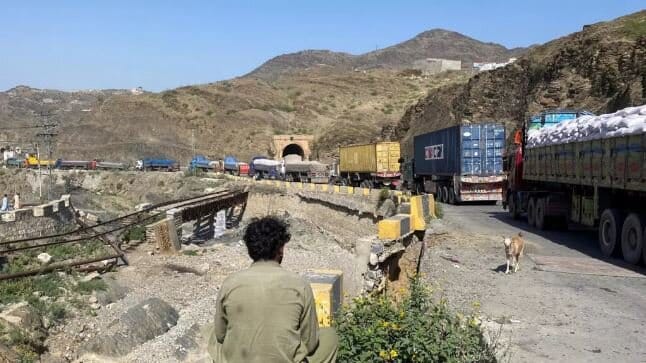
The latest phone call between Iran and Pakistan’s foreign ministers comes amid heightened tensions along the Pakistan-Afghanistan border, with violent clashes reportedly breaking out between the two countries overnight.
On Saturday, Iranian Foreign Ministry Spokesman Esmail Bakaei expressed concern over the situation and called on both Afghanistan and Pakistan to exercise restraint and respect each other’s territorial integrity and national sovereignty.
He reiterated that the Islamic Republic attaches great importance to maintaining peace and stability in the surrounding region and stands ready to assist in easing tensions between the two neighboring Islamic countries.
On Thursday, Kabul was rocked by two explosions and another at a market in Paktika province on the Afghan border, further escalating tensions between Kabul and Islamabad.
The Taliban government has accused Pakistan of violating Afghanistan’s sovereignty and denounced the cross-border attacks as a violation of international norms. Islamabad stopped short of denying involvement in the blast, but urged the Taliban to rein in the militant group, the Pakistan Taliban (TTP), which has long been blamed for carrying out deadly violence in Pakistan.
Once close allies with shared strategic interests, relations between Pakistan and the Taliban government have sharply deteriorated following Islamabad’s accusation that TTP militants, responsible for years of cross-border attacks, are hiding in Kabul. At least 2,414 people died in violent incidents in the first three quarters of this year alone, according to data from the Center for Research and Security Studies, an Islamabad-based think tank.
According to reports, Islamabad has accused Kabul of allowing insurgents to attack from mainland Afghanistan, while the Taliban have accused Pakistan of carrying out airstrikes inside Afghanistan. Taliban sources claimed to have captured two Pakistani border crossings in Helmand province, and Pakistani officials said there were “heavy gun battles” at several locations along the border.
The two neighbors share a 2,600-kilometer (1,600-mile) rugged mountainous border known as the Durand Line, drawn in 1893 under British rule. This border is officially recognized by Pakistan, but Afghanistan rejects it, insisting that any activity along this line requires mutual consent.
The Durand Line cuts through historic tribal territory that divides Pashtun ethnic communities and has been a source of deep political tensions for decades.
In February 2024, Afghanistan’s Deputy Foreign Minister Sher Mohammad Abbas Stanikzai reiterated Kabul’s position, declaring: “We will never recognize the Durand Line. Currently, half of Afghanistan is separated and lies on the other side of it.”
The Taliban government has repeatedly referred to the border as an “imaginary line,” suggesting that disputes over its legitimacy continue to exacerbate tensions between the two countries.
Afghanistan has reported killing 58 Pakistani soldiers in the clashes, although Pakistan has so far claimed to have killed more than 200 Afghan fighters.
Given the deterioration of the situation, Iran may again offer to mediate between Afghanistan and Pakistan, similar to its previous proposal to help foster dialogue between India and Pakistan after the Kashmir crisis.
In previous statements dating back to May, Iranian President Masoud Pezeshkian and Foreign Minister Aragushi emphasized Tehran’s principled policy of de-escalating tensions and regional peacebuilding, especially among neighboring Islamic countries.
Earlier this year, amid rising tensions in Kashmir, Araghchi said, “The Iranian government is ready to take advantage of the goodwill in Islamabad and New Delhi to foster deeper understanding during this difficult time.” President Pezeshkian similarly stressed that Iran “welcomes all efforts aimed at achieving lasting peace between Pakistan and India” and stressed that Iran’s foreign policy is rooted in dialogue, balance and cooperation.