
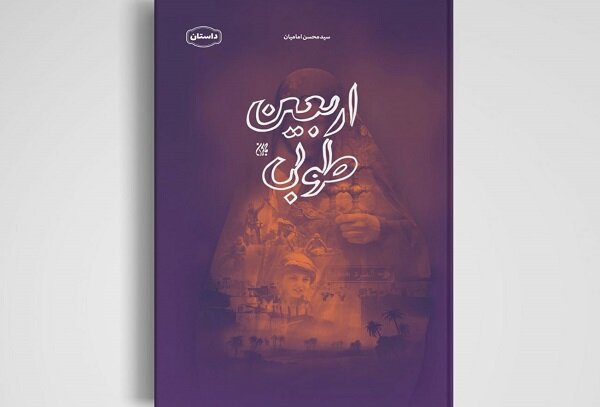
Emmamian’s prose combines lyrical storytelling with historical grit, immers readers in Torba’s emotional and geopolitical journey.
The nonlinear story enriches the plot and draws out similarities between her physical pilgrimage and the ordeals of life.
The novel’s basis for actual events adds depth to make it both personal and collective memoirs.
The protagonist of the Orphan and Vulnerable Book, Touba marries an Iraqi merchant and moves to Basra, where he suffers from the challenges of loneliness, cultural alienation and being a co-wife on a foreign land.
Despite the difficulties, Touba chooses resilience over escape and is dedicated to raising an honorable child for her husband, Abdullah.
Characterized by both joy and suffering, her life undergoes a dramatic transformation when Saddam Hussein’s Baasist forces invade Iran.
Faced with the draft of her son, Tuba bans the fight against Imam Khomeini (RA) and declares it Haram (ban).
The story unfolds as an elderly Torba tells her grandson the story of her life during the pilgrimage of Albain, walking from Basra to Karbara.
The novel consists of 40 stages, reflecting Albain’s iconic journey. Each step alternates between Torba’s current pilgrimage and flashbacks to her youth, marriage and motherhood, interweaving the personal and historical struggles of Iran and Iraq as a whole.
Key themes in the book include resilience, sacrifice, identity, motherhood, morality, and historical intersections.
The book discusses the unshakable strength of Tuba in the face of loss and war, the tensions between Iranian roots and Iraqi life, the mother’s rebellion against war and oppression, the 1953 coup, the Iran-Iraq war, and the impact of the Shia pilgrimage culture.

The fragmented timeline may challenge some readers, but it effectively reflects the Touba’s reflective state.
The main character’s moral dilemma, particularly his refusal to fight his sons, provides a fresh perspective on the story of war.
However, some historical contexts may benefit from deeper exploration for non-Iranian/Iraqi audiences.
Arbaeen Touba is a moving tribute to motherly love, faith and endurance. Emmamian creates a powerful, transgenerational story that humanizes the turbulent history of two countries. Highly recommended to fans of historical fiction and diaspora literature.
Arbaeen Touba resonates deeply with the conflict-characterized areas and offers a nuanced view of the effects of war on ordinary families.
It highlights the shared cultural and religious ties between Iran and Iraq, often hidden by political tensions.
The novel also sheds light on women’s experiences in war-torn society, highlighting their agency and moral compass.
The story focused on Arbaeen Pilgrimage provides insight into important Shiite traditions and provides a window into spiritual life for millions.
The pilgrimage itself becomes a symbol of collective memory and shared suffering, uniting individuals across borders and generations.
Arbaeen Touba’s layered story and compelling characters will be useful enough for film and television adaptations.
The visual possibilities of Arbaeen Pilgrimage combined with the emotional depth of Touba’s story can create a powerful cinematic experience.
Stage adaptations can also capture the intimate and reflective tone of the novel.
Arbaeen Touba is more than just a novel. It is an immersive journey through history, culture and human minds.
Mohsen Emmamian created a memorable story that will last a long time long after the final page, urging reflection on the enduring power of love, faith and resilience in the face of adversity.
It is a story worthy of a wide audience, offering valuable insight into the often misunderstood region and the region that certifies the strength of the human mind.
Reported by Tohid Mahmoudpour.