

Every year, the month of Safa (the second month of the Islamic calendar) transforms the barren desert of Iraq into the greatest stage of human love and solidarity. Marked 40 days after the Martian anniversary of Imam Hussein Ibn Ali (AS), Abainian pilgrimage has drawn tens of millions of people from around the world and has become the world’s largest peaceful assembly.
Imam Hussein, the third Shiite Imam, grandson of the prophet Muhammad (Pbuh), martyr at the Battle of Karbara, was martyred in 680. Refusing to pledge allegiance to Yazid, the ruler of the time, Imam Hussein confronted the tyranny, despite facing an army of 40,000 people with his small family and loyal companions alone. His martialism, along with his young son and his loved ones, has become a timeless symbol of courage, justice and sacrifice.
From Najaf to Karbara: A Walk of Faith
Albain’s journeys often begin in the sacred city of Najaf, with pilgrims visiting the shrine of Imam Ali (AS), the father of Imam Hussein, and the first Imam of Shia Muslims. From there, they embark on a 50-mile (80-kilometer) trek towards Kalbara. The walk takes a few days and cuts through the open desert under the fierce sun of Iraq. But regardless of age, health, or nationality, pilgrims are united by their devotion.

Along the route, thousands of Mawkibs (volunteer service stations) line the roads, offering free food, water, medical assistance and rest areas. Hospitality doesn’t know the boundaries. Even the poorest give you what you can do, from homemade meals to simple foot massages for tired travelers. People from Iraqis, Iranians and dozens of other countries host these stations, embodying the generosity and selflessness of Imam Hussein.
The meaning behind Aaaaaaaaaaaaaaaaaaaaaaaaaaaaaaaaaaaaaaaaaaaaaaaaaaaaaaaaaaaaaaaaaaaaaaaaaaaaaaaaaaaaaaaaaaaaaaaaaaaaaaaaaaaaaaaaaaaaaaaaaaaa
In Arabic, “Arbaeen” means “40”, meaning the end of the traditional 40-day mourning era. For Shia Muslims, pilgrimage is more than a religious ritual. It is a pledge to protect the values that Imam Hussein has passed away. The chant “Labaik Ya Hussein” (“I’m Here, Hussein”) echoes along the path, symbolizing the preparation for the pilgrims to continue their mission of truth and justice.
The global message of unity
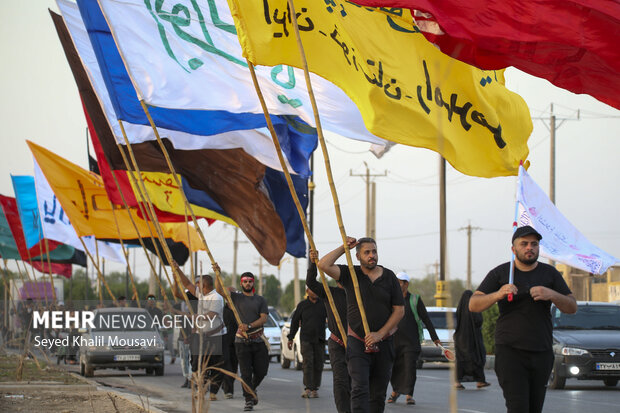
What sets Arbaeen apart is its inclusiveness. Visitors of all faiths, including Shiites, Sunnis, Christians, and even atheists, walk together to share food and stories. Flags from all continental waves send a powerful message at once. Imam Hussein’s legacy belongs to all humanity.
For many, Albain is also an era of learning and dialogue. Pilgrims exchange ideas, discuss social and political issues, and strengthen ties across cultures. It is a living example of peaceful coexistence in today’s world.
Arrival to Kalbara
For exhausted travelers, the view of the golden dome of Kalbala is overwhelming. Tears flow as they enter Bin al-Haramain, the space between Imam Hussein and his brother Hazrat Abbas (AS). Here they take part in a massive mourning ceremony, chanting prayers and performing charity. Each one deepens its spiritual connection.

Why is it important?
The Arbaeen Pilgrimage is not the world’s largest annual meeting, but a moving display of selflessness, unity and resistance to oppression. In the words of the Prophet Muhammad (pbuh): “Hussein is from me, I am from Hussein. Allah loves those who love him.”
As millions return, they bring not only memories of their sacred journeys, but also new commitment to living by the principles that Imam Hussein gave him his life to protect.
By Mohaddeseh Pakravan