
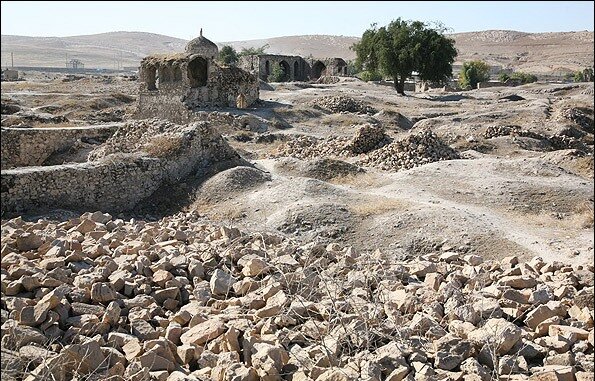
TEHRAN – Iranian archaeologists have discovered evidence of a prehistoric settlement dating back up to 7,000 years beneath the historic city of Dehadasht in Kogiliyeh and Boyer Ahmad provinces, the lead researcher announced on Saturday.
Zabihora Masdinia, head of the excavation team, told reporters that the find includes traces of a late Neolithic and early Chalcolithic village discovered during the first archaeological survey in the city, also known as Belad Shahpur.
He said several test trenches were opened on the site after the necessary permits were issued. Upper layers revealed remains of the Middle and Late Islamic period, while deeper layers exposed prehistoric deposits.
Masoudiniya said the discovery indicates that the area was inhabited between the 5th and 6th millennia BC, a period not previously documented in Dehadasht. He added that the discovery could significantly increase the historical importance of the site.
Archaeologists said most of the surface structures and ruins seen today date from the late Islamic century. A small excavation unit was opened to investigate the lower layers of Safavid and possibly Seljuk architecture, and pottery shards and cultural materials dating back to the 6th and 5th millennia BC were recovered.
Masoudinia said the team also found heat-denatured stones, suggesting a technique used by ancient inhabitants to heat stones over fire and place them in containers of water or milk to warm liquids.
He said the results show that the cultural history of Devdasht dates back to at least the late 6th to early 5th millennia BC.
He said a 1956 aerial photograph showed an ancient mound near the Dehadasht caravanserai, but it had since been destroyed by urban development. However, newly discovered evidence points to the remains of the same Neolithic village.
Masdinia said the excavation helped researchers better understand the layout of the historic area, revealing that many of the modern streets, houses and alleys were built directly on top of ancient mounds. The research team also identified the remains of a traditional water transport qanat north of the city.
In early October, Minister of Culture and Heritage Seyed Reza Salehi-Amiri stressed that Dehadasht’s historical features will be fully restored for tourism. “The restoration of this historic center cannot rely solely on government spending,” Salehi-Amiri said. “With the participation of investors, we can transform Dehadasht into a hub for domestic and international tourists.”
Dehadasht, also known as Belad Shahpur, was founded on the orders of Shahpur I (241-272 AD), the second king of the Sasanian dynasty. During Shahpur’s reign, the Sassanids spread from Sogdiana and Iberia (modern-day Georgia) in the north to the Mazun region of Arabia in the south, reaching the Indus River in the east and the upper Tigris and Euphrates rivers in the west.
The Sasanian period marked a revival of Persian art and architecture, characterized by monumental palaces such as Ctesiphon, Firzabad, and Sarvestan. Crafts such as metalworking and jewelry carving became increasingly sophisticated, and scholarship advanced as Eastern and Western works were translated into Pahlavi, the language of the Sassanids. Rock-carved carvings and bas-reliefs carved into limestone cliffs are one of the most famous features of Sasanian art, with notable examples at Bishapur, Naqsh-e Rustam, and Naqsh-e Rajab in southern Iran. In 2018, UNESCO inscribed the Sassanian Archaeological Landscape of Fars on its World Heritage List.
morning