
TEHRAN – Ferdowsi’s masterpiece “Shahnameh” has many cities and geographical regions that could serve as starting points for archaeological research, said Mohammad Rasouli, an Iranian scholar and Shahnameh expert.
Questions about the origin and significance of this masterpiece of Persian literature have long persisted. For example, consider the following:
Is Shahnameh a legend or a reality? Did Mr. Ferdowsi tell the history of Iran in his book, or did he present a legendary story of Iran and its characters based on his own ideas? The answers to these questions are very difficult, and Shahnameh scholars do not agree on the answers.
Are there any historical or ancient ruins in Shahnameh that could help archaeologists look for historical signs?
Rassouli is also the author of 20 books on the Shahnameh, the latest of which was recently published titled “The Complete History of Iran Based on the Shahnameh and Ancient Documents.”
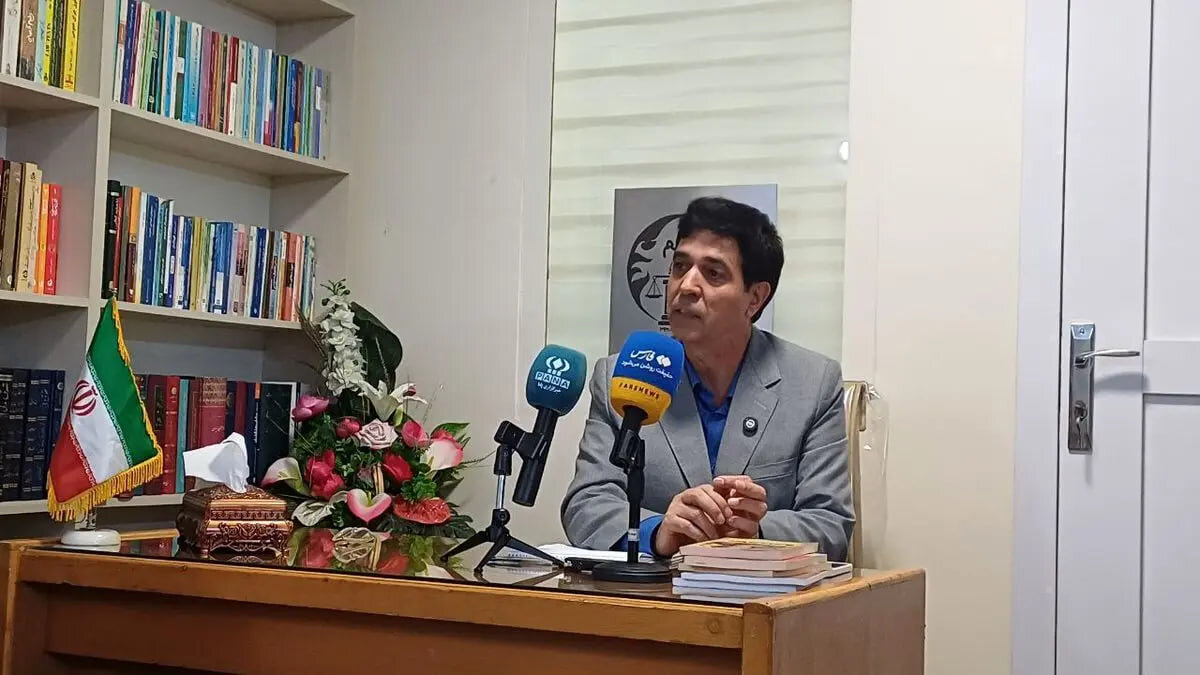
At a press conference on the theme of Shahnameh held at the Bozorgmehr Hakim Cultural Institute in Tehran, he said that Shahnameh is a completely historical document, in which Ferdowsi wrote the story of Iranian history in his native language.
In response to ILNA’s question about whether Ferdowsi’s Shahnameh, as well as the recitation of the Achaemenid tablets by experts in ancient languages and the translation of these tablets by Professor Abdulmadjid Alfai, led to the discovery of hundreds of ancient ruins, cities and villages of the Achaemenid period in Iran, of which no trace remains and which can now be investigated by archaeologists as ancient sites, do they contain any traces? What historical cities and ruins in Iran can be used to identify the unknowns in this book? He said, “This definitely applies to Ferdowsi’s Shahnameh.”
When Ferdowsi talks about Iranovitch, or when he refers to earthquake-prone areas in Iran, he is talking about areas that have experienced continuous earthquakes, and archaeologists can find and study these areas from Ferdowsi’s Shahnameh.
Mohammad Rasouli said that one of the main issues that would be very beneficial for a detailed archaeological study of the Shahnameh of Ferdowsi is that once archaeologists are convinced that the Shahnameh tells the history of Iran rather than a collection of stories derived from legends, we will be able to witness the beginning of detailed research in the field of Shahnameh archeology.
The Iranian university professor pointed out that the Shahnameh was written by Ferdowsi at about the same time as the Hindu Rig Veda and the Zoroastrian Avesta.
He added that the Avesta also mentions an area called the Var, which was an underground city, and even describes how it was built.
“This problem also exists in the Shahnameh, and it is within the scope of an archaeologist’s work to discover the cities and historical regions where the events of the Shahnameh took place, and which incidentally are part of the cities and historical regions included in the Shahnameh. After all, a prerequisite for carrying out archaeological work on the Shahnameh documents is that the archaeologist is convinced that the Shahnameh is history; not a myth or a fictional story.”
He added: “Some of the cities whose names are mentioned in the Shahnameh, such as the place where Jamshid, one of the characters in the Shahnameh, speaks of the flying throne on the plain of Hamun, and where the addresses of Damavand and Sabaran are listed, may no longer exist, but based on the existence of these cities and regions mentioned in the Shahnameh, it is clear that they are the places mentioned by Ferdowsi.” Shahnameh. ”
Therefore, archaeologists can begin archaeological research to find lost history based on Ferdowsi’s Shahnameh by carefully studying Ferdowsi’s Shahnameh and extracting the addresses that he specifically published in this book, Rasouli pointed out.
The historian announced that it was the task of archaeologists to survey and study some of the geographical points specified in Ferdowsi’s Shahnameh.
He added that if archaeologists take seriously the subject of Shahnameh archeology, they will take an important step in proving the theory that Ferdowsi’s Shahnameh is a historical book and not a document based on legend or imagination.
KD