
TEHRAN – On Monday, Armenia and Azerbaijan’s Foreign Ministry released the full text of the peace treaty agreed by the two countries in March 2025.
17 The article agreement sets out principles for normalizing relationships after decades of hostility, including mutual recognition of borders, abandoning territorial claims, pledging to non-attack and initiating means for economic, transport and cultural cooperation.
Armenia – What is the Azabaijan Peace Treaty and why is it important?
The treaty is a comprehensive agreement aimed at establishing “a fair, inclusive and lasting peace in the region” between Armenia and Azerbaijan. We commit to both countries to establish “interstate relations” based on sovereignty, territorial integrity and respect for international law. As stated in the preamble, the parties express their “mutual will to establish mutual will” reflecting the importance of ending decades of hostility and conflict.
How did the treaty reach?
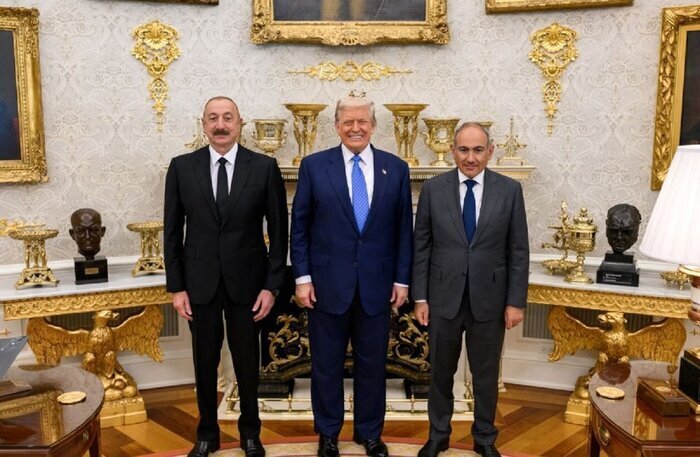
The treaty text was agreed in early March 2025 and was initialized by both sides at a joint meeting in Washington after the visit of Armenian Prime Minister Nikol Pashinyan and Azerbaijani President Ilham Aliyev. The treaty is not yet legally binding, but “officially confirmed the acceptance of both the wording of the contract and their commitment not to change it.”
Is the treaty already in effect?
No, the treaty is not yet in effect. Clause XVI states that the contract will “introduce the exchange of means to notify each party of the completion of the internal proceedings in accordance with the national laws of the respective parties.”
What are the main commitments of the treaty?
The treaty includes several important commitments, including:
– Recognition of each other’s “sovereignty, territorial integrity, inviolability of international borders, and political independence” (Article 1).
– Neither party “has territorial claims against each other and must not file such claims in the future” (Article 2).
– refrain from “the use of force or threat of using force” against others (Article III).
– “Do not allow third parties to use their respective territories for the use of force against others that contradict the UN Charter” (Article 3).
– refrain from intervening in each other’s internal problems (Article IV).
– Establishment of diplomatic relations after ratification (Article 5).
– Enforce “honest negotiations” regarding border boundaries and boundaries (Article 6)
– No third party troops are deployed along the border and no trust property measures are implemented (Article VII).
– The fight against “intolerance, racial hatred and discrimination, separatism, violent extremism and terrorism” (Article VIII).
– Address cases of missing persons from conflict (Article IX).
– Potential cooperation in economic, transport, environmental, humanitarian and cultural fields (Article X).
How does the contract address transportation and transportation routes?
The treaty does not expressly mention any particular transport routes, but Article X allows cooperation in the “economic, transport, transport” field, subject to future agreements. This means that the transport corridors will be negotiated further, but as highlighted in I and VI on borders, the sovereignty of each country must be respected.
What do you say about boundary line boundaries?
Article VI states that the parties “convictate a good-hearted negotiation between their respective border committees… to enter into agreements regarding the boundaries and boundaries between them.” This negotiation must comply with Article 1, which confirms recognition and respect for sovereignty and boundaries. Furthermore, Article VII prohibits the deployment of third-party troops along mutual borders, requiring reliability building measures for border security until the boundary is complete.
Is there any third party involvement like the US?
Article III states, “They do not allow third parties to use their respective territories for the use of force against the other in a manner that is inconsistent with the UN Charter,” which prohibits the military involvement of third parties with either party from within each other’s territories.
How will the peace agreement affect Iran’s position in the South Caucasus?
The treaty text does not directly refer to Iran. However, by requiring respect for sovereignty and political independence (Article 1) and promising cooperation in transport and transport based on mutual agreement (Article X), the treaty implies that the transport corridor must respect the territorial integrity of all relevant countries that indirectly affect regional dynamics, including Iranian ties.
What happens next?
According to Article XVI, the treaty will only be legally bound after the parties have completed their internal ratification procedures and exchange notification means. Until then, the treaty is a formal but non-binding contract. The final signing date remains uncertain as Azerbaijan awaits Armenian constitutional reforms related to Nagorno-Karabakh.