
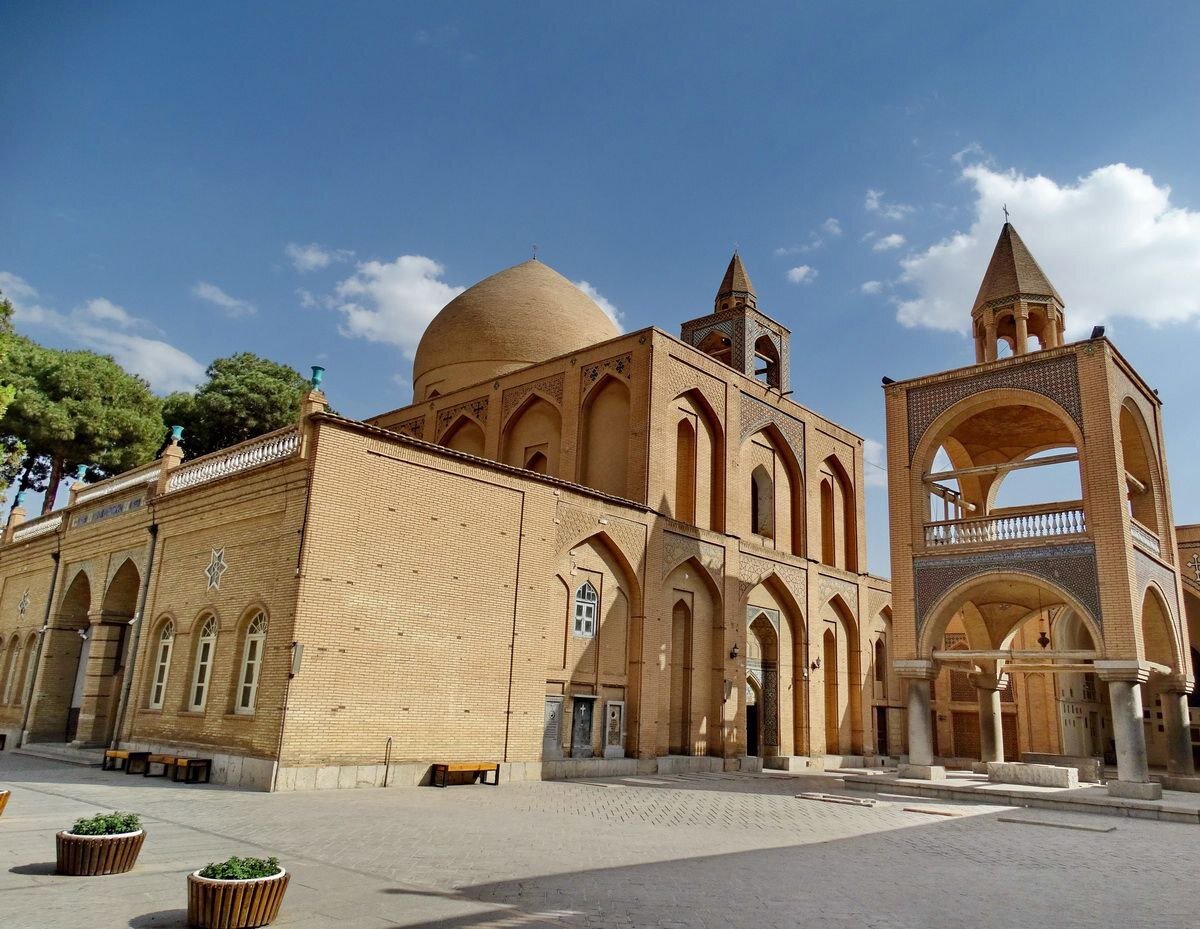
TEHRAN – An Armenian expert on Iran said Sunday that Armenia’s cultural heritage is preserved and respected in Iran, but inaccurate media reports are distorting the country’s image.
Vartan Voskanyan, an Iranian scholar of Armenian origin, spoke at the International Iranian Studies Conference held at the University of Science and Culture. He said much of Christendom is unaware that Iranian authorities are protecting Armenian heritage and seeking UNESCO recognition of important sites, ISNA reported.
“Inaccurate media information has created a false image of Iran as an extremist country,” Voskanyan said.
He said Armenians have had a continuous presence in Iran since ancient times, especially in the northwestern regions such as East Azarbaijan province. He added that the history of Armenian settlement in the region dates back to before the birth of Christ.
Elsewhere in his remarks, the expert said that after Shah Abbas migrated Armenians from eastern Armenia during the Safavid era, a second Armenian community developed in central Iran, particularly in Isfahan. He noted that the two groups have different linguistic and cultural histories.
He said Armenians are mentioned in ancient Persian inscriptions, including the Behistun Inscription, and remain one of the few ethnic groups to have existed continuously since ancient times.
Voskanyan also emphasized the common cultural roots between Iran and Armenia, which predate the history of Indo-European languages. He cited archaeological evidence such as finds from Hasanlu and Urartian ruins in northwestern Iran, which he said could support cultural tourism.
He said Iran’s record on Christian Armenian heritage contrasts with that of some regional countries. He pointed out that the Iranian government had secured UNESCO recognition for the Church of St. Stephanos near Jolfa, preserving an Armenian church in Isfahan dating back to the Safavid era.
“In Iran, this heritage site is kept with great respect and we are taking steps to inscribe it as a World Heritage Site,” he said.
The Iranian scholar further pointed out that the coexistence of Islamic, pre-Islamic and Christian traditions in Iran offers possibilities for religious tourism rarely seen in other parts of the Middle East (West Asia).
A glimpse of Iran’s Armenian cultural heritage
The Armenian heritage in Iran reflects over 1000 years of cultural exchange, coexistence, and contributions. Armenians have lived in the Iranian plateau since ancient times, but their presence became especially important in the 17th century when Shah Abbas I moved thousands of Armenian families from the Jolfa region to Isfahan. These communities established New Jolfa. New Jolfa remains the cultural center of Iranian-Armenian people and a symbol of their resilience and creativity.
In New Jolfa, Armenians built fine churches, schools, and charitable institutions. One of the most famous landmarks is the Vank Cathedral, known for its fusion of Armenian architectural traditions and Persian decorative styles. Its frescoes, tilework, and manuscripts highlight a unique blend of Christian iconography and Iranian artistic influences. The cathedral’s museum houses valuable artifacts such as early printed books and historical documents documenting Armenian life in Iran.
Armenians have also played an influential role in Iran’s commercial, craft, and intellectual life. They pioneered the country’s early printing industry, contributed to music and visual arts, and served as intermediaries between Iran and Europe in trade and diplomacy. Despite maintaining their own language, beliefs, and customs, Armenians were deeply integrated into Iranian society and recognized as a constitutionally protected religious minority.
Moreover, the main evidence of their historical existence is the UNESCO-listed Armenian monastic ensemble of northwestern Iran. This World Heritage Site includes the Monastery of St. Thaddeus, the Monastery of St. Stepanos and the Djorzor Chapel. These ancient structures, some of which date back to the early Christian centuries, demonstrate Armenia’s unique architectural form, shaped by regional influences. They remain pilgrimage sites and powerful symbols of the continuity of Armenian identity in Iran.
Today, Armenian heritage can be seen not only in monuments but also in living traditions throughout Isfahan, Tehran and Tabriz. Festivals, cuisine, and the persistent use of the Armenian language testify to a vibrant community that continues to enrich Iran’s multicultural landscape.
morning