
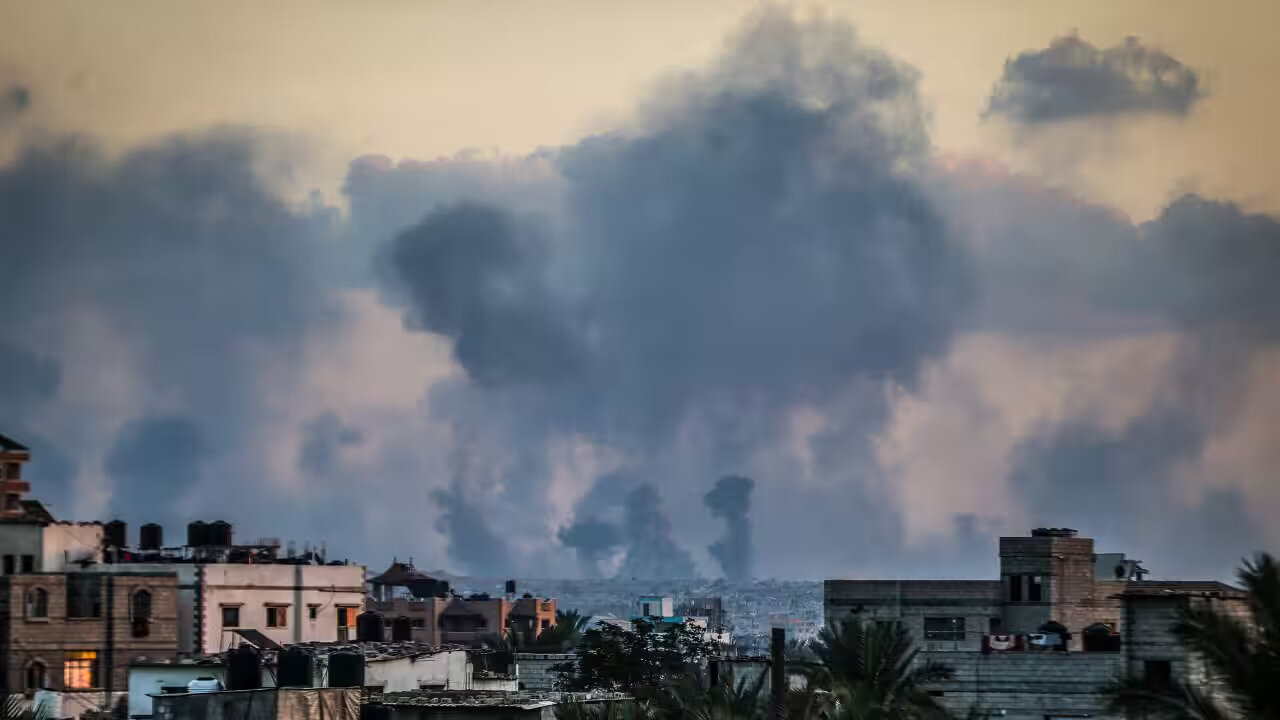
Since the cease-fire took effect in October, the Gaza Health Authority and government press office say at least 97 Palestinians have been killed, about 230 injured, and Israeli forces have been accused of about 80 violations of the agreement.
Victims, including many civilians, underline that this “pause” has only provided Gazans with precarious respite amid devastated areas and overwhelmed hospitals.
The new violence was centered on an explosion in Rafah, which Tel Aviv initially presented as a Hamas attack, but used this as justification to halt crossings and launch retaliatory attacks.
But multiple news threads reach different conclusions, and sources contacted by Drop Site News and other journalists say U.S. officials at the White House and the Pentagon have concluded that the explosion was caused by Israeli heavy equipment (a settler-operated bulldozer and an Israeli tank being demolished) striking an unexploded bomb or an IED that may have been in the ground for months.
Kurt Mills of the American Conservative quoted a senior U.S. official as saying, “Hamas did nothing. An Israeli tank hit an unexploded ordnance.”
These explanations directly contradict initial Israeli claims and expose how quickly misattribution can be used to justify new shelling.
President Donald Trump publicly insisted that the ceasefire was “still in effect” and called for calm even as a US envoy scrambled to quell the aftermath. Behind closed doors, Washington’s assessment appears to have prompted Israel to reopen the checkpoint hours after it was closed.
The background is harsh. More than two years of war have left Gaza in ruins, with United Nations agencies warning of widespread hunger and tens of thousands of deaths.
Even when the gunfire subsides, unexploded ordnance and crumbling infrastructure make reconstruction and humanitarian relief a deadly task. This is a reminder that without a durable and enforceable ceasefire, civilian suffering will continue, regardless of public rhetoric.