
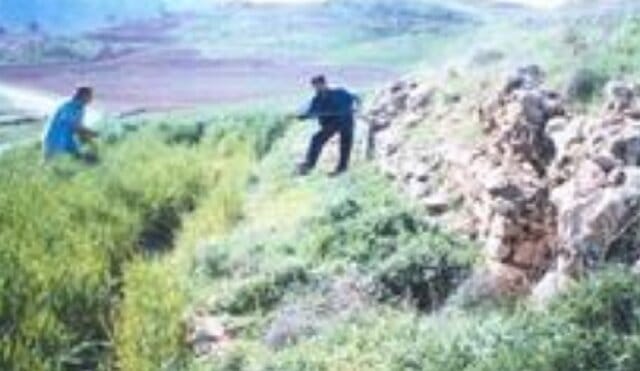
Tehran – According to prehistoric archaeological expert Habibora Mahmoudian, scattered pieces of pottery from the Karzan River near the Karzan River on Baba Shams Hill, on the western edge of the village of the same name, the historic aqueduct and the proximity of the Karzan River.
He told Isna that the archaeological site, which covers an area of about 93,000 square meters, is east of Ilam Rumah Road, located within the farmland of Baba Shams village.
To the west of this hill is the ruins of a building known as Valibas, and to the south is the Chegakomi location, he said.
He pointed out that the area’s building dimensions are measured at 2.3 x 9 x 33 meters, and that on the Eastern Front, the central layer of the hill can be seen as agricultural water pipes are made. The hill is approximately 33 meters long and the west east width is 9 meters.
The soil on this hill is clay, and unfortunately, the illicit excavations have destroyed some of it, he said.
“Archeologists explained that the water sources of this site include springs and aqueducts, and that access is possible via the asphalt road from Ilam to Luma. The site is on the connection route to a nearby location, and the closest monument to it is a real estate office building, 303 meters away.”
He continued that the cultural relics on the surface of the hill contain scattered pieces of pottery related to the Islamic period.
Mahmoudian also described the ancient site of Baba Shams. “The site is located on the western outskirts of Baba Shams village in the area of approximately 93,333 square meters and is surrounded by farmland.
He said: The site is about 323 meters long to the west east, and its north-north width is 303 meters. The site’s water sources include Baba Shams Spring and Kanat, whose closest monument is a four-person building in Valmian, located 233 meters west.
The archaeology professor continued that the hills were scattered with various types of pottery, including simple, rough ceramics from historic times. “The ceramic colour is mainly red and pea coloured, with additional patterns being seen. Samples of glass and glass-walled ceramics from the Islamic era were also found on the surface of the site.”
He said that the ancient location of Baba Shams, on the height of the western outskirts of the village, was very large. “The ceramics on this site are very abundant and scattered at a considerable distance. While there are no architectural ruins on the site, farmers in the area have gathered stones from the site and focused on several points suitable for agricultural activities.”
Regarding the topography of the area, he said: “The small Baba Shams Plain is located at the northern tip of the Kalzan River, which created the fertile Baba Shams Valley. The lateral height of the area and the presence of forest cover has affected the environment of the Baba Shams Intermontan Plain, which has had permanent settlements in the past.
KD