
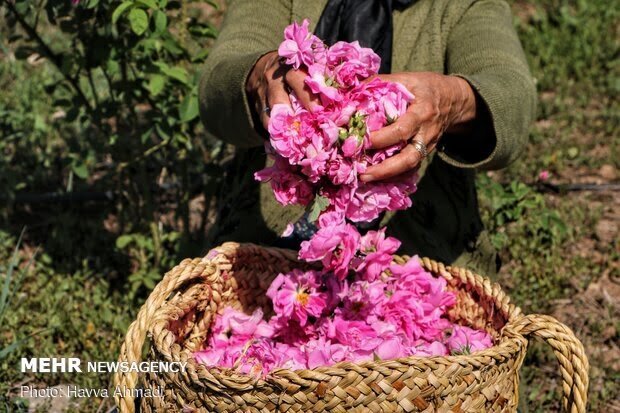
TEHRAN – The annual Rose Water Festival held in the border city of Baneh in western Iran has been officially registered on the country’s national tourism event calendar, becoming the 10th registered tourism event in Kordestan province, the provincial tourism director announced on Monday.
Pouya Talebunia told local reporters that the registration was confirmed by an official certificate issued by the Ministry of Cultural Heritage, Tourism and Handicrafts. The festival is registered at local level with registration number 104191109 as part of the country’s efforts to professionalize and organize tourism events across the country.
Talebnia pointed out that the Spring Rosewater Festival is held every year around June 1, coinciding with the traditional rose harvesting period. “With the official participation of this event, the number of registered tourist festivals and ceremonies in Kordestan province has reached 10,” he said, adding that the city of Bane also joins other cities in the province and strengthens its position in Iran’s cultural tourism landscape.
He said the registration was an important step in demonstrating the state’s ceremonial and cultural competency. “This assessment will help promote culture-based tourism and revive valuable local traditions,” Talebnia said.
Tourism events currently registered in Kordestan include Pir Shahryar wedding, Komsa ceremony, Sanandaj Nowruz festival, Tangisar Nowruz, Winter Nowruz, Strawberry Festival, Palangan Hesar Daf Ceremony, and Grape Festival.
Local culture observers say the festival opens a new chapter in Spring’s agricultural sector, merging the scent of Mohammadibala with the promise of economic growth and sustainable rural development.
Iran’s rosewater-making tradition, known as Golabgiri, is historically rooted in the central city of Kashan and its surrounding villages, where purple roses have been cultivated and distilled for centuries. Every May and June, communities across the region celebrate the harvest with the Rosewater Festival, paying homage to the time-honored craft that continues to thrive across the country, including in Spring City.
In this regard, Iran plans to submit its own nomination file to UNESCO for the inscription of the country’s centuries-old tradition of rosewater distillation as an element of intangible cultural heritage. Alireza Izadi, head of the Department of Cultural Heritage Registration and Preservation at the Ministry of Cultural Heritage, said Iran’s file was submitted separately and revealed recent reports suggesting the possibility of joint registration with other countries.
“Iran has its own rituals and traditions related to the distillation of rosewater, and ‘golab’ is a Persian word,” Izadi said on Sunday. “Iran’s inscription of Ghorabgiri will proceed independently,” he said, apparently referring to speculation about possible cooperation with Saudi Arabia, which inscribed the practice of Taif Rose on UNESCO’s Representative List of the Intangible Cultural Heritage of Humanity in 2024.
The Golabgiri festival begins with a procession of local residents carrying baskets of roses to the local distillery. The flowers are then sorted and placed in large copper pots where they are boiled to produce oil. Pots are made from brick, stone and mud. Apart from the actual production of rosewater, participants will also stroll through the lively bazaar where local vendors sell all kinds of rose-infused products such as perfumes, soaps, and even teas. In fact, rosewater is an essential ingredient in Persian cuisine. In addition, various musical and cultural events will be held, including folk dances and traditional performing arts.
The flower harvest is almost finished in the early morning. Rumor has it that delays in harvesting and transporting the essential oil to the distillery will reduce the quantity and quality of the essential oil. As part of the process, about 80 liters of water and almost 30 kilograms of rose petals are added to each pot, which is connected to a metal pipe to pass steam through to create a hydrosol. Distillation waste can be fed to animals or composted.
Locals believe that rose oil and rose water have therapeutic properties. Some say rose oil is calming and relieves depression, sadness, stress, and tension, while others add that rosewater products can help improve skin health, colds, and digestive issues.
morning