
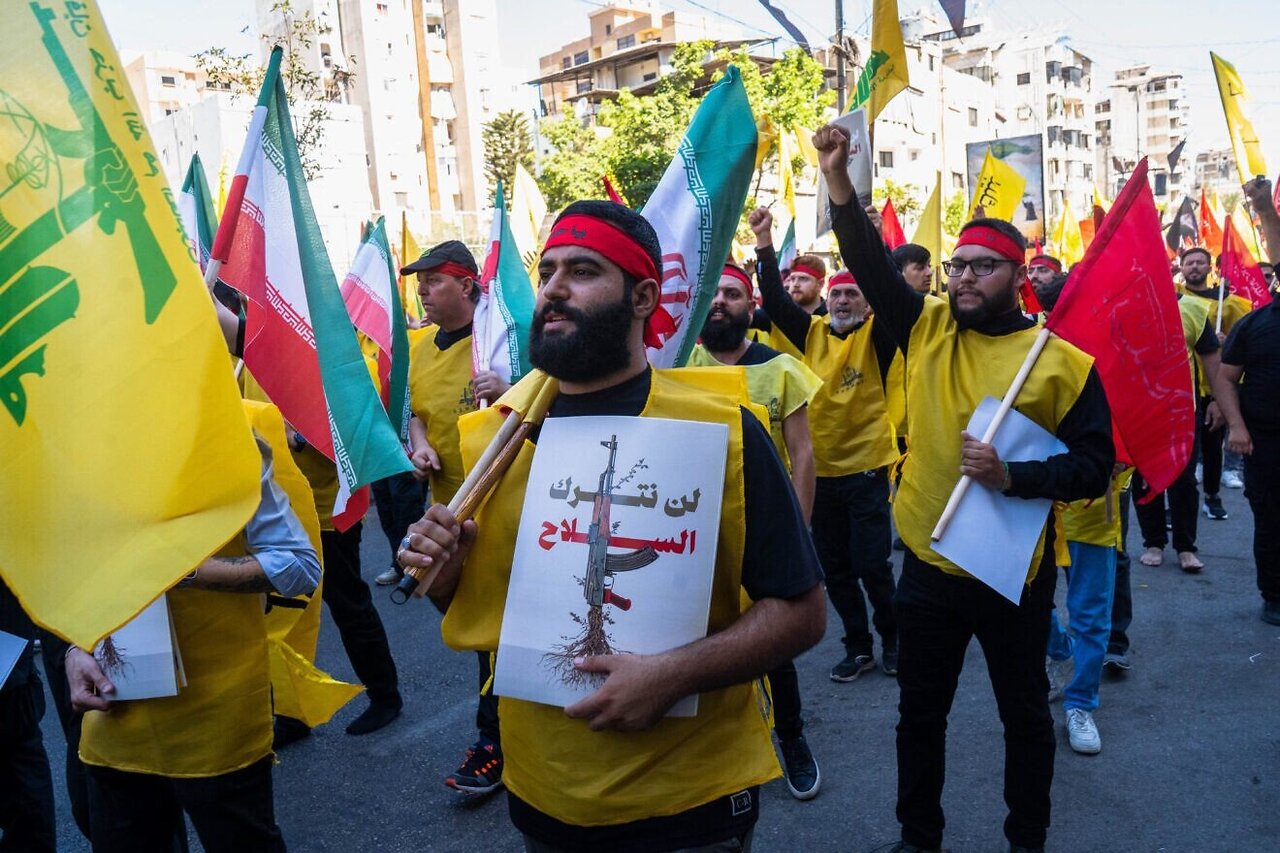
BEIRUT – After more than five hours of “extraordinary” talks, Prime Minister Nawaf Salam managed to block President Joseph Orn’s agreement with Hezbollah amid the chaos surrounding what the Lebanese government had hidden on Tuesday.
Prime Minister Nawaf Salam came out to announce his decision to appoint the Army by bypassing his promise to rely on dialogue as a way to reach the Hezbollah Arms consensus and formulating an implementation plan to restrict weapons.
Salam, who appears to be pleased, said, “The Council has decided to continue discussing American papers at a government session on Thursday, August 7th, and to create a plan to contain weapons by the end of this year, leaving it to present it to the Pastor’s Council before 31 years this month.”
Following the decision, Hezbollah issued a statement saying, “We will deal with it as if it were not present in this decision.”
Analysts say the decision puts Lebanese forces on a potential course in a clash with Hezbollah, which could lead to a civil war.
Hezbollah said the decision was decided by the US and would serve only Israeli interests.
“This decision will plunder Lebanon’s sovereignty, release Israel’s hand and destroy its security, geography, politics and future existence,” the group said.
Hezbollah added that he would be willing to discuss a defense strategy that would end the “Israel invasion” in Lebanon, free the land, release the state’s prisoners in Israel, and build a Lebanese state, but not while under Israeli attack.
Israel first said it must comply with the ceasefire contract reached last November.
Observers believe that such methods of disarming Hezbollah are part of a broader programme across the region and will not be confined to Lebanon or Hezbollah.
“This decision will plunder Lebanon’s sovereignty, release Israel’s hand and destroy its security, geography, politics and future existence,” Hezbollah says.
The current situation in Syria shows that even a complete surrender will not stop Israel’s attacks. They will continue until the country’s military and defensive capabilities are completely destroyed.
The US is trying to pit the governments and segments of its population against resistance movements in various countries, aiming to achieve its targets through internal conflicts (e.g., Hezbollah in Lebanon or Hash al-Shaabi in Iraq) – of course, the natural American and Israeli goals.
However, analysts argue that the region’s resistance groups did not ask us for permission to take the weapons, and therefore would not abandon the weapons under US pressure.
Ministers of Hezbollah and Amal refuse to support the Cabinet’s decision
President Aoun met with Hezbollah officials and emphasized that the session was not provocative to the sectarian elements, but that it was about reaching a consensus decision without setting a time frame, even if several sessions were needed to be held.
These positive signals encouraged the Hezbollah and the Amal Movement to join the session, but Nawaf Salam informed AOUN that he was subject to external pressure and insisted on approving the proposal of American envoy Thomas Barrack within a specific schedule.
This has suggested that Speaker of the Congress, Nabi Beli, will refrain from voting for such resolutions by Shia Hezbollah and ministers of the Amal Movement.
However, Hezbollah preferred to withdraw from the session and threatened to withdraw from the government altogether. Therefore, the withdrawal option has been agreed.
Prior to the session, the report showed the possibility of reaching a compromise. However, political tensions were evident, particularly by insisting on affirming the promotion of tensions between the Lebanese military pastors and the Kataeb Party.
The “neutral” camp minister was wary of being dragged into the vote to avoid exposing Lebanon to political and sectarian turmoil, as happened in 2005.
Sources close to President AOUN justified that they were unable to postpone the session by insisting they did not want to engage in a clash with the Prime Minister.
The reality is that Aoun places very little importance on Salam’s opinion, but he is reluctant to oppose Washington and Riyadh.
During the session, Hezbollah Minister Lakan Nasser Al-Din said, “Are we discussing now? Is it a draft agreement or is there Israeli approval for this paper? Is there an American decision to ensure implementation on the part of Israel?” Who will bear the brunt of Israeli attacks, Lebanon’s exposure to Israeli enemies and occupation of Lebanon’s territory? ”
The government decided to set a deadline for weapons forfeiture without setting a deadline to end occupation of southern territory, halt Israeli attacks, release prisoners and begin the reconstruction process.
Lebanese military ministers and the Katayeb movement have promoted a major victory in the government, but talks have begun between Shia duo to decide on Thursday’s session and response to the decision.
Meanwhile, in a speech concurrent with the government session, Hezbollah Secretary Sheikh Naim Qassem emphasized that Israel’s attacks continued and refused to commit to the schedule without discussing the defense strategy.
“We cannot agree to the proposed timetable for implementation under the shadow of the Israeli attack. The timetable means committing to something while the attack continues,” Qassem said.
Secretary-General Hezbollah emphasized that handing over weapons without discussing defence strategies is “wrong because it is impossible to accept Lebanon accepting gradually abandoning its power while maintaining all power in the hands of Israel’s enemy.”
What happened before, during or after the cabinet session was not a normal event.
The danger is not in the characterization of the action itself, but in what Lebanon is revealing about the path he is heading. Those who agreed to advance their decision to disarm Hezbollah listened to the sentiment of the majority of those allied to the resistance when they decided to waste Lebanon’s strength, and decided to bring security and military institutions to American scientists who operate exclusively in the service of Israel’s enemy.