
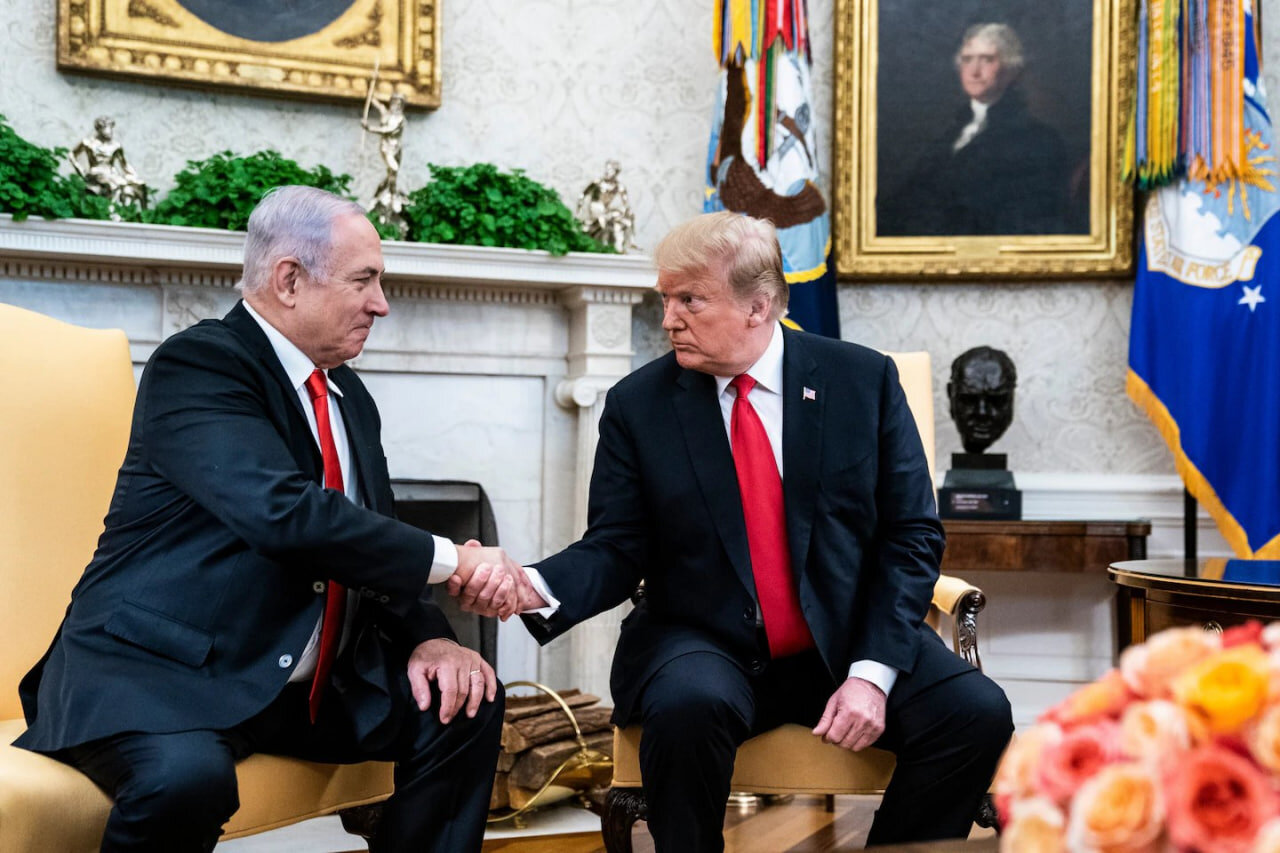
TEHRAN – Israeli fighter jets that violated Saudi airspace on Tuesday and rained missiles on a residential building in Qatar’s capital Doha reminded me of how the Israeli regime has become brave over the past two years. It also highlighted the fact that, like Qatar, it hosts the largest regional US base, gives the US president a $400 million aircraft, and has spent billions of dollars on the US economy over the years, but no country can segregate the region’s states from regime violence.
These are facts that Iranians have repeatedly emphasized over the past two years. Israel seeks rule and believes that Western Asian countries should not have sovereign rights. However, Qatar Prime Minister and Foreign Minister Mohammed Al-Thani may have truly grasped this reality as they attended a UN Security Council session the day after the attack. There he heard Israeli representatives threaten another strike against Qatar if the political wings exist in Doha and did not expel members of Hamas, the main military force that has fought the Israelis in Gaza since the outbreak of war in October 2023.
Al Thani grins violently as Zionist representatives threatened not only Qatar but also “any country” in the region that had chosen to establish ties with Palestinian groups. Arab officials later appeared calmly as they joined President Donald Trump for dinner with his Foreign Secretary and Vice President. Doha was hit on the day Trump expressed his dissatisfaction with Israel’s attacks and claimed he was unaware of the impending attack. He repeated that it was likely that he had repeated dinner with Qatar’s prime minister. But whether Kataris chose to believe the US president would make most of a difference, according to North American affairs expert Amir Ali Abulfas.
“There are two possible scenarios: whether the US knew and approved of Israel’s planned attack on Qatar, Prime Minister Benjamin Netanyahu felt the need to notify Americans. “In either case, the message received by the American Arab allies is that their alliance with Washington does not protect them from Israel.”
Whether accomplice or helpless, American politicians’ relationship with Israel is widely believed that American politicians’ relationship with Israel will ultimately cost the United States, particularly in their relationship with the wealthy Persian Gulf, which creates jobs through American investment and purchases billions of dollars worth of weapons from American manufacturers each year. “The Arabs are not going to make dramatic decisions regarding their relationship with Washington, but they are now trying to solidify their ties with US rivals, particularly China, to ensure their long-term security.
However, there are concerns that the rapid pace of development in the region will outweigh the Arab countries’ ability to build new security assurances. Over the past two years, Israel has taken control over attacking seven countries, occupying new territory in Syria and Lebanon, and integrating the West Bank. These actions have killed at least 60,000 Palestinians, more than 1,000 Iranians, around 6,000 Lebanese people, and hundreds of people in the region.
The upcoming Arab-Islamic Summit in Doha is widely hoping to be the first step towards creating a plan to prevent further Israeli violence. Iranian security guard Ali Larijani visits X on Saturday to warn that another session filled with Muslims with only “speech and condemnation” will no longer cut it.
“If there are no actual consequences (as in the case of a Security Council meeting), it would actually be equivalent to issuing permission for Zionist groups to carry out more attacks!” the veteran politician wrote. “I’ve done nothing for the hungry, oppressed Muslims of Palestinians, so I’ll make a modest decision to at least avoid your own extinction!”
Larijani urged local rulers to “form at least a joint operational committee” to stand up to Israel.
Since the outbreak of the Gaza War, Iran has repeatedly urged regional countries to cut off economic, diplomatic and political ties with Israel. Leaders of the Islamic Revolution say that even a temporary suspension of relations would force the Israeli regime to change its actions. In his remarks to the Tehran Times, Iranian Hamas representative Khaled Kadmi said this time there is more to be in crisis than Gaza and Palestine.
Qadomi said, “No one expects Arab countries to take military action against Israel, but it may be worthwhile to threaten them to have all the options at the table. Still, there are important and costly measures that will prove effective by putting pressure on Israelis.” His vision is similar to Iran’s proposal. “The fewest countries in the region are to remember ambassadors from the occupying regions. Boycotting the regime economically and politically is part of the other actions that can be taken.”
A Hamas representative warned that without solid and decisive action, the nations participating in the upcoming summit could become Israel’s next target, adding, “The International Court of Justice (ICJ) declared Netanyahu a war criminal over a year ago, but in reality, genocide is still being carried out by him and his army.”
In fact, Arab countries have a history of adopting non-military tactics against Israel, Qdomi noted. Following the Arab-Israel War in 1973, the Arab-Israeli War, the Arab Oil Exporting Countries (OAPEC) imposed oil embargoes on the US, Canada, Japan, the Netherlands and the UK in response to Israel’s support. This action sparked an oil crisis in the West, leading to an economic decline and a recession. Although long-term changes in Western policies towards Western Asia were limited, the unified decisions made by Arab countries that year demonstrated the ability to influence Israel and its patronage through non-military measures, even in the face of military disadvantage.