
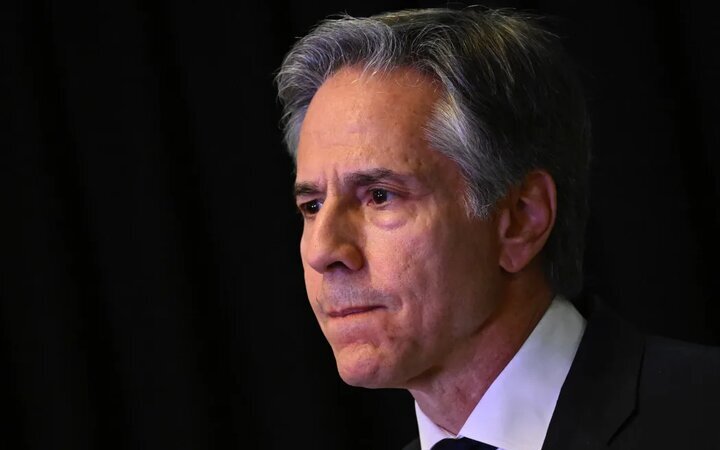
TEHRAN – Former US Secretary of State Antony Blinken acknowledged that Iran was fully compliant with the 2015 nuclear agreement prior to a unilateral violation of US deals under President Donald Trump during his previous term.
He also acknowledged that military options would not create sustainable solutions to the nuclear issue, and instead called for new diplomacy.
Speaking on a podcast hosted by CNN’s Christian Amanpur on Tuesday, Blinken alleged that Iran had agreed to limit nuclear activities, including uranium enrichment in coordination with European signatories, prior to the latest round of Israeli attacks.
Blinken confirmed that the Joint Comprehensive Action Plan (JCPOA) was working effectively before Washington left. “Iran respected its commitment under this deal, confirmed not only by international inspectors, but also by our own sources,” he said.
According to the deal, Iran was allowed to enrich uranium to 3.67% using its proprietary centrifugal technology. Blinken pointed out that Iran respected these limitations. However, he warned that if Iran fully resumes its nuclear program, it could develop capabilities “beyond traditional targeting in facilities buried deeper than ever.”
Blinken emphasized that the United States cannot rely on power. “Military options cannot have lasting consequences. All we need is diplomacy that leads to long-term, verifiable, sustainable agreements.”
He also acknowledged that Israeli Prime Minister Benjamin Netanyahu had never agreed with the JCPOA and was unlikely to support future diplomatic initiatives. At the same time, Blinken recognized that Iran’s nuclear program has become a symbol of national pride due to decades of investment and technology development.
Blinken’s comments follow the 12-day Iran-Israel conflict that began on June 13th, after the Zionist regime launched a provocative and illegal strike against residential areas, military bases and nuclear facilities in Iran. Iran responded with a sustained campaign of precision reporting attacks across the occupied region.
The US entered the conflict 10 days later, targeting nuclear sites previously attacked by Israel. On June 24, a combat suspension was introduced after Iran struck West Asia’s most strategic American base with missiles. The truce proposal was communicated to Tehran via Qatar mediation.
Despite continued provocation, Iran continues to commit to the JCPOA, claiming that partial halt of its obligations is a direct response to repeated violations by the US and European parties.
In the wake of the attack on the nuclear site, Iran’s parliament passed a law to suspend cooperation with the International Atomic Energy Agency (IAEA). Nevertheless, Iranian officials have said that as a member of the Non-Proliferation Treaty (NPT), Iran will continue to interact with the agency, but under a revised framework.
Tehran said all future nuclear cooperation will be administered by the Supreme National Security Council (SNSC).