
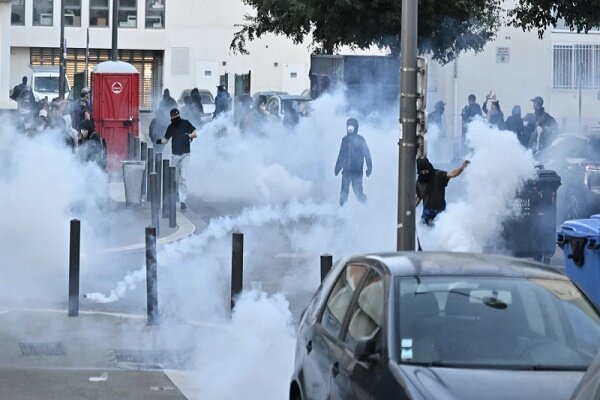
The nationwide “Block Everything” campaign presented President Emmanuel Macron with the challenge and turned Sebastian Recorne’s first day into a baptism of fire as prime minister, the Associated Press reported.
Though it is not enough for the self-declared intention of total disruption, protests still paralyzed parts of everyday life and managed to set fire to hundreds of hot spots around the country.
The deployment of 80,000 police officers disbanded barricades and dragged hundreds of protesters into custody, but flashpoints increased. At Rennes, the bus was torched. In the southwest, electrical cables were cut, train services were stopped and traffic was wandering.
By evening, Home Minister Bruno Letterou said that nearly 200,000 people had taken to the streets across the country to the streets, while the CGT Union, one of France’s largest labor unions, was close to 250,000.
His ministry reported that more than 450 arrests, hundreds were detained, more than dozens of police officers were injured, and more than 800 protests (from rally to street fires) reported protests across the country. Retaillo called the day “a defeat of those who want to stop the country.” However, the government’s own tally spoke a different story.
“Bloquons Tout” or “Block Everything” did not match the scale of France’s 2018 Yellowvest rebellion, but highlighted the cycle of anxiety that saw President Macron’s presidency, bursts of violence and repeated clashes between the government and the roads.
After his re-election in 2022, Macron faced an angry fire over unpopular pension reform and national anxiety and riots in 2023 after a fatal police shooting of a teenager in a Paris suburb.
Still, demonstrations and sporadic clashes with riot police in Paris and elsewhere increased the sense of crisis that led to the recapture of France once again following the latest collapse of the government on Monday, when Prime Minister François Beyloux lost his vote of confidence in Parliament.
MNA