
TEHRAN – A new report shows the rather ballyhooed decision that Prime Minister Benjamin Netanyahu dragged Israel into a direct war with Iran at the expense of partial or complete closures of countless companies and dents in consumer spending, exports and investment.
Israel’s GDP has shrunk by 3.5% due to the war with Iran, and according to the Israeli era, 20.8% fell 20.8% in the last quarter of 2023 after the regime’s economy plummeted 20.8% in the last quarter of 2023.
Online newspapers quoted analysts saying it was unclear whether Israel could recover from the loss.
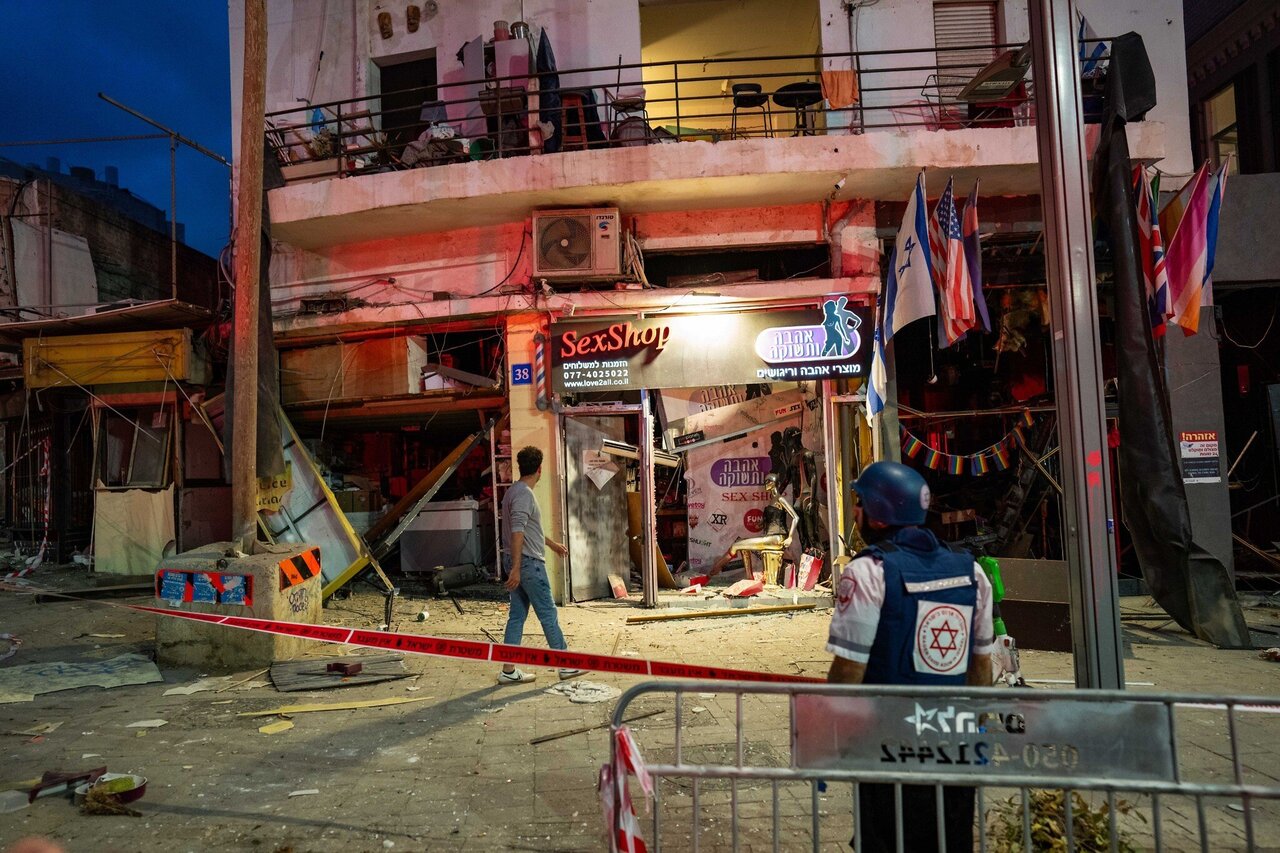
Israel also lost much money using expensive air defense missiles against Iranian projectiles, penetrating occupied territory, leaving the large range of Israeli cities in abandoned. Hebrew media previously reported that at least 35,000 buildings had been damaged in the aftermath of the Iranian attack. Residents claim that Israeli authorities have largely failed to compensate for these losses, begin repairs, and provide adequate shelter to the thousands of homeless people today.
The full extent of the damage that Israel suffered during the 12-day war is unknown to international audiences, but France 24 recently reported that the Israeli regime is hiding targets of several important Iranian sites. Among these is Camp Moshe Dayan, the leading IDF management camp in Tel Aviv, houses the intelligence reporting agency and the Israeli Ministry of Defense. Hebrew media reported that they caused damage to nearby buildings when the attack took place, but hid the fact that these two important sites were attacked.
Israel was said to launch airstrikes on Iran’s nuclear, civilian and military infrastructure on June 13, and later escaped from the shadows and directly attacked three Iranian nuclear sites. However, analysts have evaluated Israel as failing to achieve most of its objectives, including dismantling Iran’s military capabilities early in the war following the assassination of Iranian generals, causing public unrest over the Iranian government and completely destroying Iran’s nuclear capabilities.
Iran quickly replaced military officials assassinated on the first day of the war, and the new commander soon launched a retaliatory operation, including 22 missile attacks and a drone attack. Iran’s population gathered behind the government and presented a unified front against Israel. Lastly, despite the major damage to nuclear sites, Iran claims to continue its nuclear program and resume future uranium enrichment.
The war halted on June 24th after Iran agreed to Israel and Washington’s proposals. No official ceasefire contract was signed between the two fighting sides.
Despite the backfire of the war against Israel, Iranian military and political authorities predict that Netanyahu will try to attack Iran again in the future. Major General Rahim Safavi, senior adviser to leader Ali Khamenei, the leader of the Islamic Revolution, stressed on Monday that Iran was effectively in war and the situation could collapse at any time.
“I want to say that a new war may be ahead of me. Perhaps there will be no further wars after that,” the former head of the Islamic Revolutionary Guard (IRGC) told reporters. Since peace between Israel and Washington can only be reached through force, Safabi added what Iran needs to remain vigilant.
IRGC Deputy Commander Brigadier Ali Fadabi said at an event on Monday that Iran is ready to respond to new attacks by Israel and the United States.
Tehran is expected to exercise control during the war and refrain from deploying more advanced missiles and drones. This suggests that future conflicts with Iran are likely to be more destructive and deadly for Israel. Iranian military officials have previously said that Iran has spent decades preparing the equipment needed to maintain the war for at least two years in a row. Israel had exhausted 75% of its air defense missiles by the end of the 12-day war in June.