
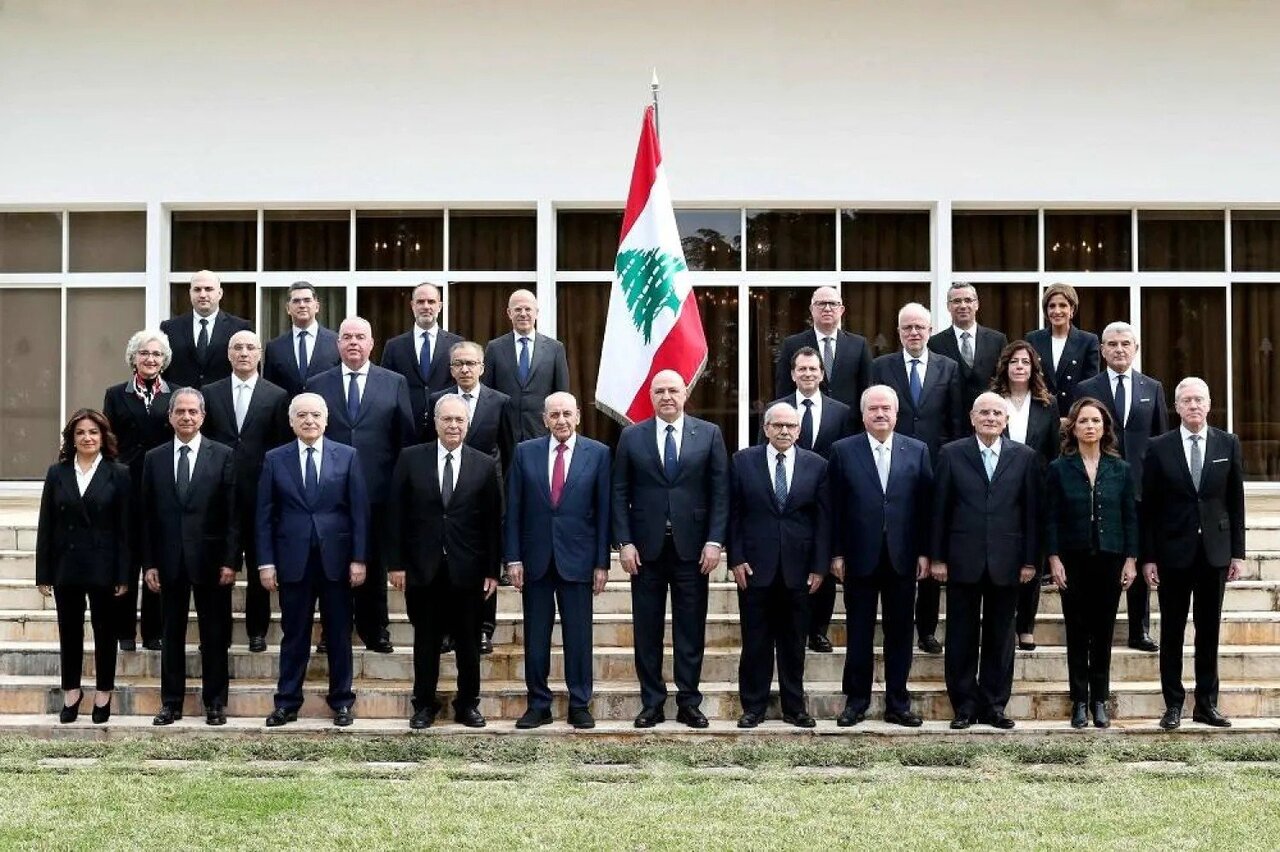
BEIRUT — Intensive political negotiations pave the way for a lucrative outcome at Lebanon’s cabinet session on Tuesday, according to Kuwait newspaper Al-Anbaa. This effort was led by the Amal Movement and the Hazbollah Alliance under the effective leadership of Congress President Navi Beli.
Amid Saudi pressure on the presidency and government, the Minister’s session is expected to discuss the issue of “expanding national sovereignty through only its own military forces” within the government to promote disarmament of the Hezbollah Resistance.
Meanwhile, Justice Minister Adel Nassar, a member of the Lebanese Kataeb Party, warned that “If Hezbollah chooses to commit suicide by refusing to abandon his weapons, he will not be allowed to drag the Lebanese and the people of Lebanese.”
In light of these pressures, the resistance team believes that the story of disarming Hezbollah under these circumstances will serve only the interests of the enemy, as its weapon constitutes a fundamental deterrence against new attacks.
Ali Feiyad, a senior Hezbollah MP, stressed the need for Lebanese to stick to the hierarchy outlined in President Joseph Own’s statement.
The Al-Anba Kuwaiti newspaper said that the Lebanese government’s decision will be issued unanimously to avoid division and fragmentation among Lebanese political forces at this delicate stage.
Official sources have confirmed in the Kuwait newspaper that “negotiations and exchanges of answers about what Lebanon needs and responses about what Lebanon wants in exchange for disarmament have reached the end of the road. Timetables for disarmament, implementations can be monitored by American diplomats.”
Sources have shown that Beirut’s new ambassador (of Lebanese origins) Michel Issa, “expressing great enthusiasm to undertake this disarmament-related task at a hearing before the US Congressional Foreign Relations Committee last week.
Since the end of the Lebanese civil war and the adoption of the TAIF agreement in 1989, debates have been furious over arms restrictions on the state.
The debate focused primarily on armed militias, and until Israel’s defeat in 2000, Hazbollah’s weapons were treated as weapons of resistance to Lebanon’s occupation in a statement by Israel’s future government ministers.
After the publication of UN Resolution 1559 in 2004, and despite the Lebanese state’s weak ability to confront Israel’s threat, this issue constantly challenged the republic’s successors of presidents.
The most prominent national stance was President Emile Rahhod’s attitude. Despite all external pressure, President Emil Rahhod was a critical stance that fully embraced the option of resistance and described it as “the need to defend Lebanon’s sovereignty in light of the ongoing Israeli occupation and threat.”
Lahoud was what became known as the “military, people, resistance” equation.
During his presidency, he considered attempts to expose Lebanon to Lebanon as an infringement of his sovereignty, and therefore refused to allow discussion of the status of the weapon of resistance.