
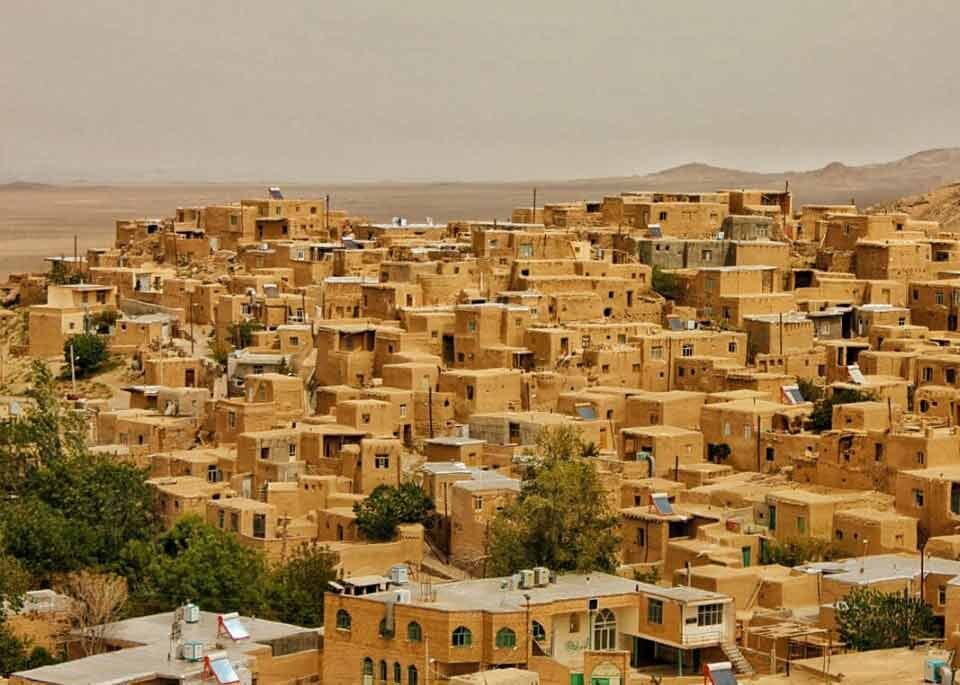
TEHRAN – Kaare Bala, a village located on the southern slopes of Mount Shavar, where expanses of arid desert blend into the wind-shaped hills of the Khalturan buffer zone, is one of the most notable examples of community-based rural development in Iran. After years of suffering from drought, isolation, and lack of infrastructure, people have relied on social cohesion and a series of small but ongoing innovations to transform what were once sparse settlements into community-driven ecotourism destinations.
The turning point came when a group of local youth and families, rather than waiting for outside projects, decided to restore adobe houses, organize ecolodges, and design nature trails with the participation of residents so that tourism income remained in the village itself. This grassroots decision revived the micro-economy and strengthened young villagers’ incentives to stay in their villages.
Qaleh Bala’s transformation is primarily based on social capital: mutual trust, consultative planning, and fair distribution of benefits. Village councils, local administrators and environmental volunteers have established clear and simple rules through regular dialogue, from defining visitor capacity limits during ecologically sensitive periods to preventing construction that disrupts the rural landscape. The accommodation spaces were renovated using the same adobe and timber pattern to maintain the visual integrity of the village, instead of adding floors or a modern facade. At the same time, a visitor “code of conduct” drawn up by residents is posted at the entrance to the guesthouse, including respecting privacy, not allowing cars into narrow alleys, reducing water usage and maintaining tranquility at night. These subtle but consistent measures provided a sense of discipline that ensured peace for both villagers and visitors.
Calais Barra’s economic regeneration was born out of tradition itself. Women use their local knowledge of herbs and foods to produce cultural and profitable products, from homemade stews and traditional breads to herbal spirits. These products are introduced to tourists in small village markets and guesthouses, forming short and transparent value chains managed mainly by the families themselves. Simple handicrafts such as straw weaving and clay ornaments made using locally available materials have become souvenirs that directly contribute to household income, bypassing intermediaries and imports.
Rather than relying on traditional school buildings, community learning takes place through nature guides and field commentary. Using their first-hand knowledge of desert edges and rugged terrain, village youth guide visitors in small, time-limited groups to minimize pressure on the fragile habitat. Nighttime stargazing sessions featuring traditional methods of celestial orientation, explanations of constellations and local stories are one of Kaleha Bara’s signature attractions. Daytime walks along marked trails include an introduction to drought-tolerant plant species and an explanation of how wind erosion and seasonal rainfall shape the landscape. Such field-based education does not replace formal schooling, but serves the same purpose of raising awareness in keeping with the size and resources of the village.
Environmental sustainability here is more than just a slogan. At the home and accommodation scale, small solar panels and water heaters are being installed to reduce the use of fossil fuels. Separation of dry and wet waste at the waste source is now a routine practice, and tourism-related waste is systematically collected by local governments. Water management follows two strategies. The idea is to encourage off-season visits to save domestic consumption and stabilize water pressure in the summer, while ensuring tourists are evenly distributed throughout the year. These small but consistent actions created a cumulative and meaningful impact on the village’s resilience.
Cultural identity stands as another pillar of Curry Barra’s success. In the ecolodge, seasonal rituals, folk music related to the nomadic route, and elders’ stories are performed at night. Local youth began recording these stories in audio and video format to preserve the oral memory of the village. This interaction between culture and nature diverts visitors from a consumerist mindset and transforms them into more sensitive participants in the environment.
The story of Calais Barra shows that, even within constraints, a new development paradigm can emerge that protects landscapes, respects the carrying capacity of ecosystems, and redistributes benefits to residents. Neither huge buildings nor large budgets played a leading role in the path taken by this village. What really made the difference was daily collaboration, adherence to simple rules of our own invention, and the courage to modernize our traditions without compromising its backbone. Today, when travelers take the dirt road to Calais Borough and see its adobe walls and clay roofs glistening in the sun at dusk, they encounter not just a tourist destination, but a place of living where people have chosen to shape their future in their own hands and care for the land as it deserves.
morning