
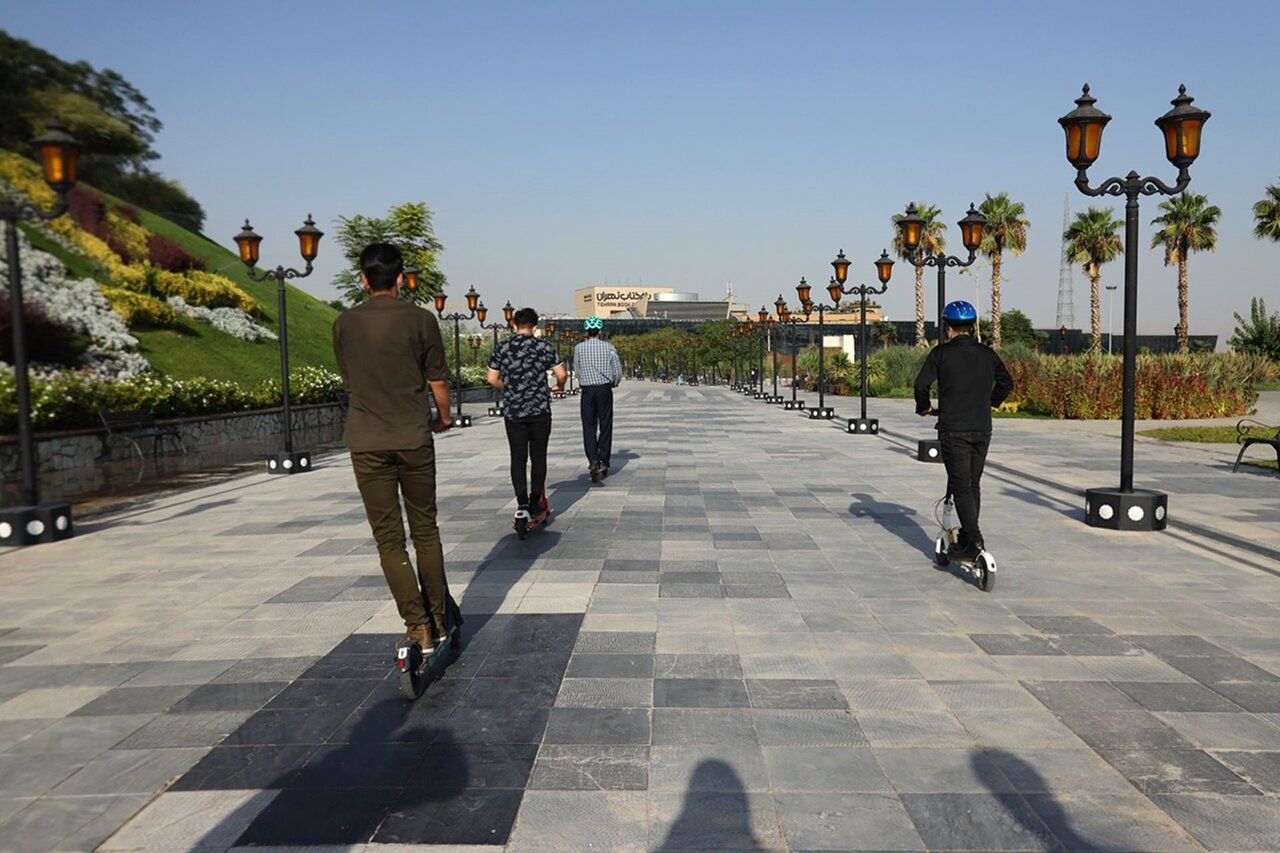
Tehran – A study conducted by the Urban Research Planning Center (TURPC) in Tehran highlighted the economic potential of smart tourism (using new technologies to enhance travel experiences and improve efficiency) in Tehran, providing evidence and documentation to clarify the basis for implementing smart tourism projects in the Metropolitan region.
According to ISNA, the tourism industry has become one of the most important sectors of today’s global economy, and smart tourism is one of the new forms of tourism that has emerged in the wake of information technology and has attracted the attention of global tourism stakeholders.
Smart tourism tools refer to a combination of mobile hardware, software and networks, allowing interactions between tourists, stakeholders and physical objects. Communications should be able to provide personalized services and real-time information for smart decision making. Three specific smart tourism tools are mobile applications, augmented reality, and near-range communication.
Currently, the benefits of this type of tourism make countries like Spain, Singapore, the United Arab Emirates and Saudi Arabia work on projects to realize smart destinations.
A study conducted by TURPC to examine the economic capabilities of smart tourism in Tehran, includes creation and revenue generation from digital assets, raising investments, increasing fees and taxes, advertising, direct sales of tourism services and products, attracting experts, selling data and information, saving public transport, benefiting from the benefits of maximum parking pay in the sales and smart tourism.
It was subsequently determined that the costs and revenue generated as a result of these capabilities are consistent with the spending and resources included in the latest local government budget plans, and that allocation of some of the credit available on the relevant rows will encourage the realization of Tehran’s smart tourism destinations, and that economic benefits can be enjoyed by municipal resources.
The results of the study show that local governments should play their role in this field and that they need to promote the process of achieving smart tourism so that sustainability, tourists, citizens, stakeholders and managers can benefit from benefits in a variety of aspects, including economic aspects.
KD