
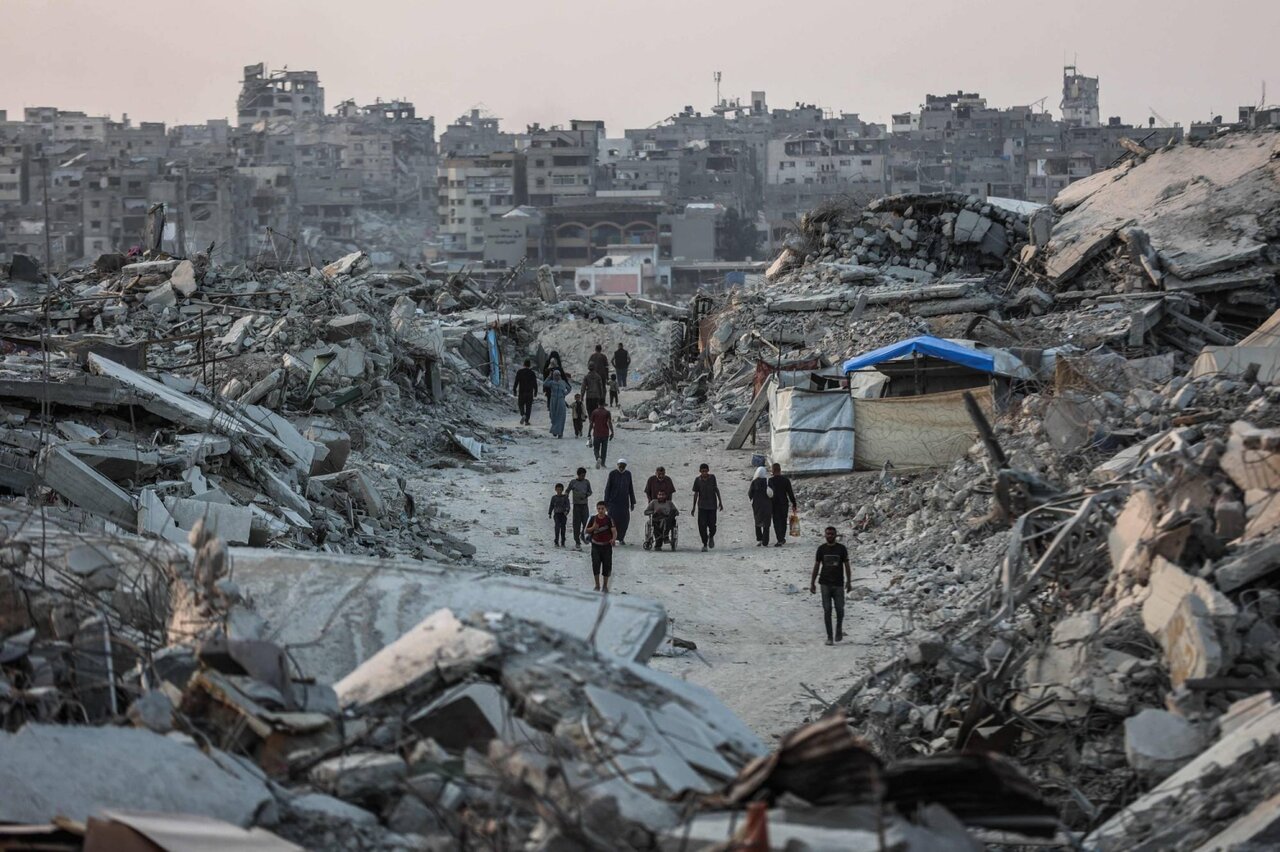
TEHRAN – The US-brokered ceasefire between Israel and Hamas, which officially took effect on October 10, was aimed at pausing the violence in Gaza. However, recent developments suggest that the ceasefire may have served as a strategic cover for Israel to continue its military operations while reducing international oversight.
Since the start of the ceasefire, Israeli forces have killed more than 240 Palestinians. The Gaza Ministry of Health, which is staffed by medical experts, reported on Saturday that the total number of people killed in Gaza since the start of the war had exceeded 69,000. This increase includes 284 victims who were identified after their bodies were recovered from the rubble.
The increase in the death toll is due to both continued attacks and the continued discovery of bodies buried under rubble. On Sunday, one Palestinian was killed in an Israeli drone strike in Bani Suheira, a town near Khan Yunis in southern Gaza.
Israel is also accused of trying to control the press by blocking independent journalists from entering Gaza. Maha Hussaini, a journalist and human rights defender, told Al Jazeera that Israel is not only targeting journalists, but also restricting media access to limit public awareness of the situation.
Palestinian journalists who remain in Gaza are in constant danger. Hussaini explained how drones are disrupting work and how the trauma of ongoing attacks is making reporting difficult. Despite these risks, journalists feel an obligation to document what they witness, including potential war crimes, she said.
One of the journalists, Saleh al-Jafarawi, was killed in Gaza City just days after the ceasefire was announced.
The ceasefire appears to have functioned more as a tactic to protect Israel from global criticism than as a humanitarian measure. Hamas has largely complied with these conditions, but Israel continues to operate with impunity. This imbalance reinforces the perception that ceasefires are often structured to benefit Israeli military strategy rather than protect Palestinian lives. Despite being maligned in Western media, Hamas remains the only organized force resisting the occupation and defending Gaza residents. The continued targeting of civilians and journalists highlights the need for global responsibility and a reassessment of how ceasefires are negotiated and enforced.
The ongoing violence and media restrictions raise serious questions about the true purpose of the ceasefire. Far from bringing peace, it appears to have enabled Israel to continue its operations while diverting international attention. This situation calls for a closer look at how ceasefires are used and abused in conflict zones.