
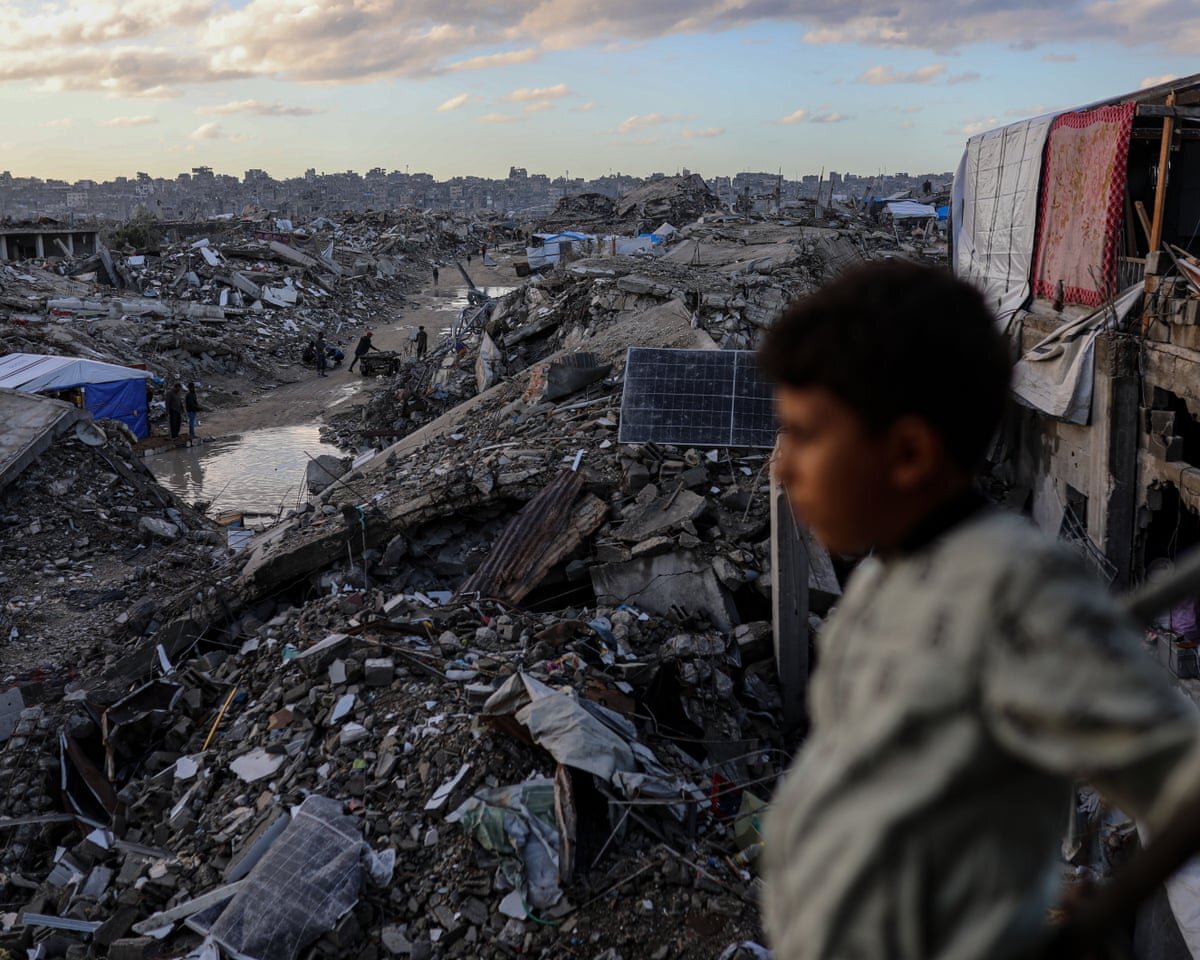
TEHRAN – Despite the October 11 ceasefire, the occupying Israeli regime continues to expand its military presence and carry out attacks across Gaza, worsening the suffering of Palestinians.
The Israeli Occupation Forces (IOF) carried out heavy land, sea, and air strikes in large parts of the Gaza Strip. East Gaza City, Beit Rahiya, the eastern part of al-Bureij refugee camp, Rafah, and the towns of al-Qalara and Bani Suheila east of Khan Younis were all affected.
In Gaza City, warplanes bombed the districts of Shujaya and Al-Tufa, and IOF armored forces fired shells and live ammunition into the eastern edge of Zeitoun. At sea, Israeli regime warships conducted heavy artillery and artillery fire on the coast of Gaza City.
More than 350 Palestinians have been killed and about 1,000 injured since a ceasefire was declared in October. This clearly shows that the ceasefire agreement has not stopped the Israeli regime’s campaign of genocide.
Instead, it turned into a slower, harsher attack. The regime maintains military control over vast tracts of Palestinian land within Gaza, expanding its occupation under the guise of a ceasefire.
One of the core issues surrounding the October 10 agreement is simple. It sets no limits on the Israeli regime’s invasion and occupation and calls for the disarmament of the Palestinian people.
International law recognizes the right of people under foreign occupation to resist occupation. This principle has been confirmed in several UN resolutions. However, while this ceasefire puts pressure on the Palestinians to give up their rights, IOF has been allowed to remain in Gaza and is actually advancing further into Gaza.
This imbalance has made US President Donald Trump’s ceasefire an instrument of pressure rather than peace. The Israeli regime uses it to justify ongoing military operations as “security measures,” even if these operations mean continued indiscriminate bombing and illegal land grabbing.
IOF attacks have also repeatedly forced the displacement of Palestinians in eastern Gaza, restructured the area, and torn apart families.
For Palestinians, the line between genocidal war and ceasefire has all but disappeared. Families who have already been displaced multiple times by IOF attacks are being forced out again as their neighborhoods come under repeated gunfire.
Gaza’s health system is collapsing, and the situation worsens with each new attack. Hospitals are operating without adequate electricity, medical supplies continue to face strict lockdowns, and doctors continue to operate in unsafe and chaotic conditions.
Although the Israeli regime insists that the ceasefire is still in place, Palestinian life shows the opposite. They continue to live under shelling, occupation, and conditions that prevent real recovery. Rights groups warn that these patterns are consistent with ongoing genocide, one that will not end with a written ceasefire.
In Gaza, promises of a ceasefire were dashed by IOF attacks. The ceasefire did not end the violence of the occupation. It just allowed it to continue in a different form.