
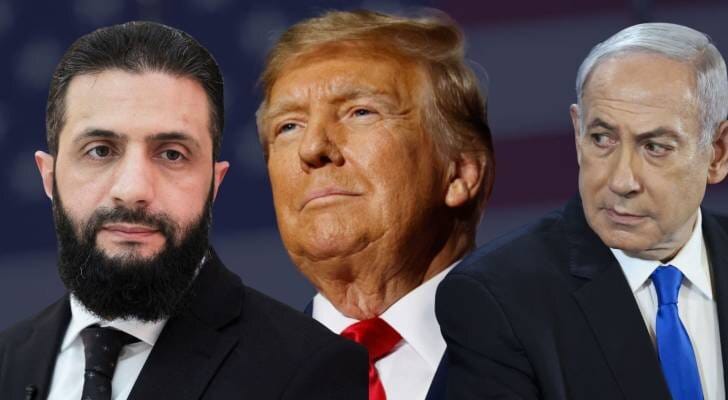
Tehran, a newly announced ceasefire between Syria and Israel, was mediated in the aftermath of Israeli military escalation – sharply saved the Tel Aviv regime’s ruthless pursuit of regional domination in Western Asia.
Syrian leader Ahmed al-Sharaa and Israeli Prime Minister Benjamin Netanyahu confirmed the armistice on Saturday following intense Israeli air strikes in southern Syria and the capital Damascus earlier this week. Israel claimed that bombings were carried out to “protect” minorities amid spiral violence in southern Sweida province.
However, critics argue that this justification is merely an excuse for deeper interference in the Syrian issue.
The clashes that erupted between the armed Druze group, Bedouins and Syrian forces on July 13 have killed hundreds of lives. Following the announcement of the ceasefire, Alshara accused Israel of deliberately governing tensions in the region through its “Fragrant attacks,” particularly through its bombings in Damascus and the south.
In a statement saturated with militaristic bravery, Netanyahu declared that the ceasefire was achieved “through strength, not through gging, not pleading.” His comments highlight Israel’s continued threatening strategy, not diplomacy.
Israel constitutes intervention as a humanitarian act, but the reality on earth suggests that this is not the case. Netanyahu’s actions reflect a calculated effort to entrench Israeli hegemony in Syria under the guise of protecting minorities. Despite agreeing to a ceasefire, Israel is aware of the territory it already occupies in Syrian. It is widely recognized as being under illegal occupation under international law.
Adding more complexity to the situation, Alshara, who maintains strategic ties with Washington, has publicly thanked the US for President Donald Trump’s administration for his role in mediating the ceasefire. This approval raises awkward questions. Can Israeli aggressive campaigns be separated from the US geopolitical objectives of the region? Washington plays the role of a silent accomplice, but does Netanyahu implement a militarized order through unilateral violence?
The contradiction is obvious. Meanwhile, Alshara condemns Israel’s attacks. On the other hand, he is very grateful for the power that is widely seen as making it possible. The dynamic dynamics of good cop and Budd between the US and Israel is on display again. Netanyahu leads with force, and Washington continues with a diplomatic stance working towards the same endgame.
The Israeli call to the Druze issue has emerged in part from a broader strategy scripted by prozionist lobby to justify the flexion of military power and normalize its existence deep within Syrian territory. The ceasefire is not a gesture of peace, but a tactical pause, a calculated move of Israel’s long-term territorial expansion and political control in Western Asia.
Past precedents from Gaza to Lebanon show that Israel’s ceasefires are often merely tools of propaganda, and were quickly violated when they stopped achieving their strategic goals. Expansionism, militarism, and profession remain pillars of Israeli policy.
This ceasefire, like everyone before it, cannot hide the essence of Tel Aviv’s ambitions. It is a smokescreen designed to hide a more ominous plan to redraw a map of West Asia (Middle East) for Israel’s interests. Only sustainable unity and strategic cooperation between Muslims and Arab countries can challenge the power to resist this agenda and destabilize the region under the pretense of peace.