
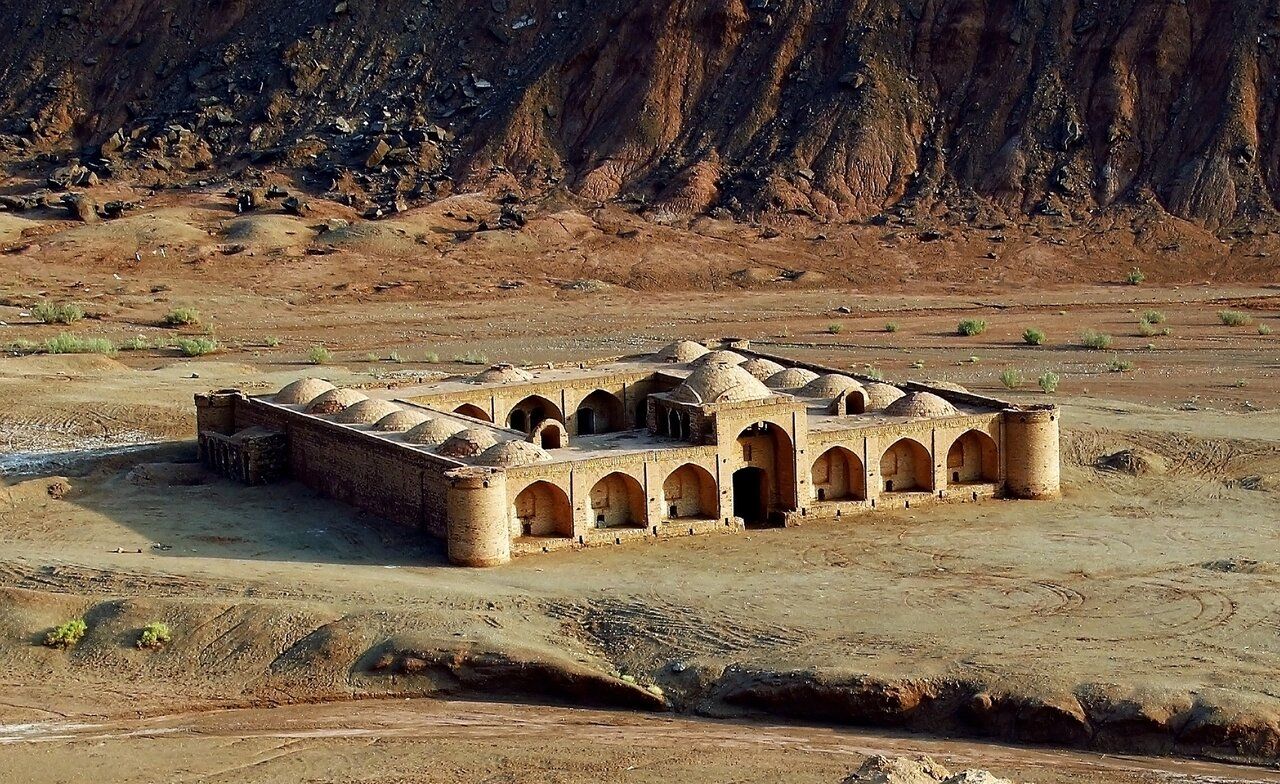
TEHRAN – Restoration work has begun on the Char Kouran caravanserai, a UNESCO world heritage site in Raval district of Kerman province, the province’s cultural authorities announced on Sunday.
Kerman Cultural Heritage, Tourism and Handicrafts Director-General Morteza Nikrou told reporters that funds have been allocated to start the project, which aims to preserve one of the important historical buildings in northern Kerman.
Mr Niclou said the current stages include traditional waterproofing, plastering, grouting and structural reinforcement. He added that Raval is one of Kerman’s main cultural heritage centers and protecting its historical buildings is essential to preserve the county’s identity.
He said continued and principled restoration could strengthen Laval’s cultural profile at national and international levels. Mr. Niclou said the use of historic sites is part of Kerman Province’s strategy for sustainable tourism development and is in line with the province’s “Smile to the World 1405” tourism program.
He said the Char Kouran caravanserai could support Lavar’s tourism economy, adding that standard restoration could increase visitor numbers and improve Kerman’s global profile.
Char Quran is one of 54 Iranian caravanserais to be collectively inscribed on UNESCO’s World Heritage List in 2023. This centuries-old structure once stood along the old road leading to Mashhad, where the mausoleum of Imam Reza (AS), the eighth Shiite imam, is located.
Caravanserais were roadside inns built along ancient trade routes and pilgrimage routes to provide shelter, food, and water for caravans, pilgrims, and other travelers. This set of properties includes 54 caravanserais, which are considered some of the most important and representative examples of this architectural type in Iran. Together they demonstrate the evolution and diversity of caravanserais over different historical periods, reflecting a wide range of architectural styles, adaptations to climatic conditions (particularly desert areas), and the use of different building materials.
The development of this land from the Achaemenid period (559-330 BC) to the Qajar period (1794-1925) demonstrates the enduring role and importance of caravanserais in Iranian history. Persian caravanserais reflect a pre-industrial tradition of travel before the advent of modern roads and railways. Caravanserais not only provided necessary services for travelers, but also served as social gathering places where people of different ethnicities, languages, and religions could interact, even if only for short periods of time. For centuries they have contributed to the exchange of ideas, knowledge and cultural values.
Caravanserai or caravansary is a compound word combining “caravan” and “sala”. The former represents a group of travelers, the latter a building. Often there were huge portals supported by high load-bearing walls. The guest rooms were built around a courtyard and stables behind it, with a door in the corner of the garden.
For many travelers, staying in or visiting a centuries-old caravanserai can be a wide-ranging experience. They have the opportunity to experience the past – time travel to forgotten eras. Cozy rooms meticulously arranged around a vast courtyard may easily evoke the spirit of the past. It’s not hard to imagine the hustle and bustle of camels chewing hay, merchants haggling over prices, and stories of each other’s arduous journeys. You can also get an idea of local architectural styles and materials from their heyday.
morning