
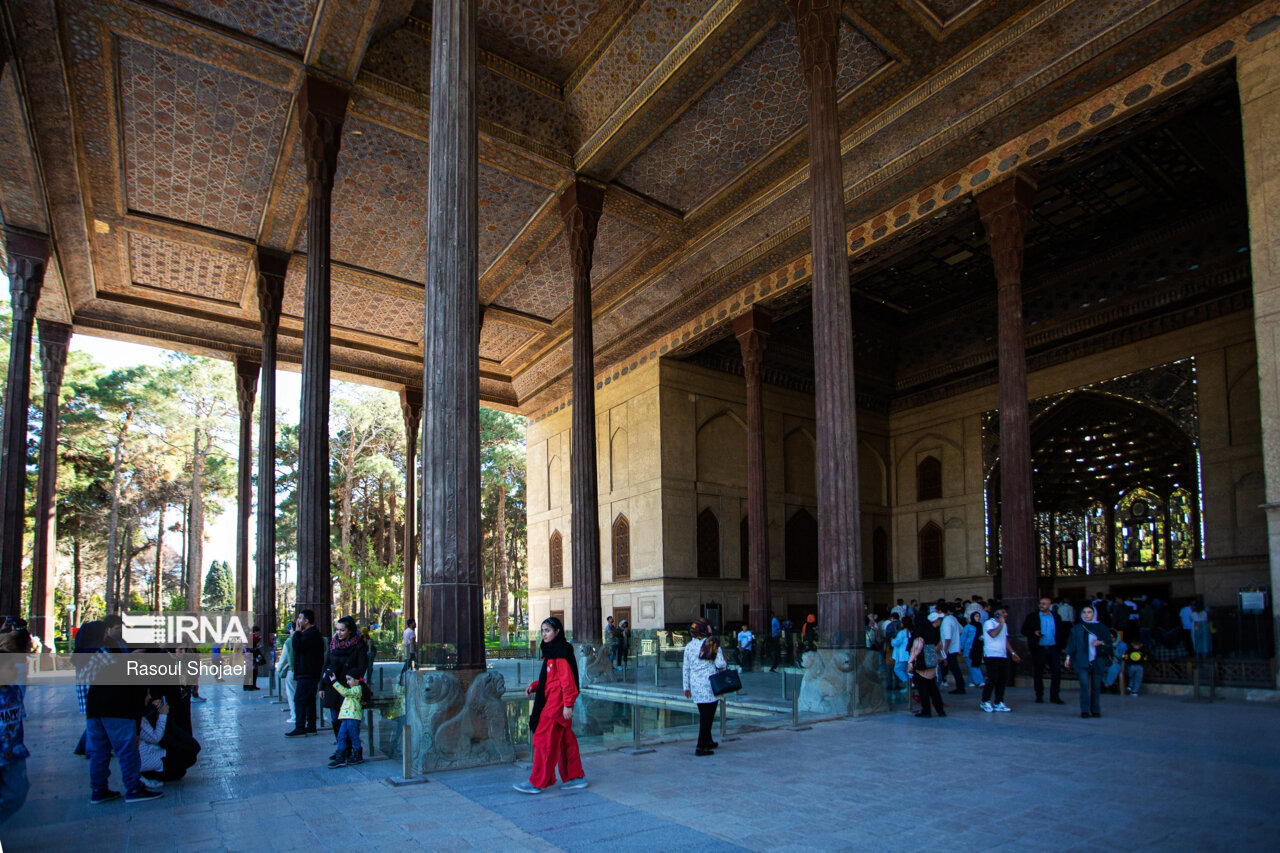
Tehran – A restoration, cleaning and lighting projects have begun at the main portico of Chehersoton, a 17th century royal pavilion in Isfahan.
Isfahan Cultural Heritage Department Amir Kalamza reported on Sunday that the pillars of the rock (portico) at Shell Sotoon have not been cleaned for the past few years and their appearance and protection conditions have not been very good, so Irna reported that the first phase of cleaning and dusting of the pillars has begun.
Karamzadeh added that after washing, the columns will be oiled and strengthened to achieve the desired structural and external conditions.
Referring to the implementation of the porch lighting project, he also said that around 10 billion rials ($10,000) have been spent on the project, improving all porch lighting systems and internal burnout lighting.
In addition to lighting, Karamzadeh has also featured on the agenda, as well as restoring the work of mirrors, strengthening historic tiles and paintings of porches, and continues that these measures are being implemented in stages.
Before the repair work began, issues such as termite collapse and water effects were examined in detailed structural pathology, and spray operations were carried out to prevent further destruction, he said.
Karamzadeh said plans to sort out the green space, planting flowers and revitalizing the fountains and ponds at the complex are also on the agenda.
He said the restoration work will not hinder visits to the complex, adding that cleaning of the queues will take place in about two months, and once these measures are complete, Chehel Sotoun Complex will welcome domestic and foreign tourists with a fresher appearance.
Cheher Sotoon, meaning “40 rows,” is a Persian pavilion from the Safavid era, built by Shah Abbas II. The palace was historically used to host entertainment and high-ranking officials and ambassadors in its terraces and spectacular reception halls.
The pavilion’s name comes from 40 wooden pillars, as reflected in the pool in front of the building.
The palace features intricate architectural and decorative designs, including wall and ceiling patterns known as the Ratchak Transi, combining paintings, tiles and other elements. This is considered a prime example of the Safavid Persian Architecture.
Today, the site serves as a museum displaying works from various periods of Iranian history.
Lighting upgrades are part of an ongoing effort to preserve and enhance the site for cultural and tourist purposes.
KD