
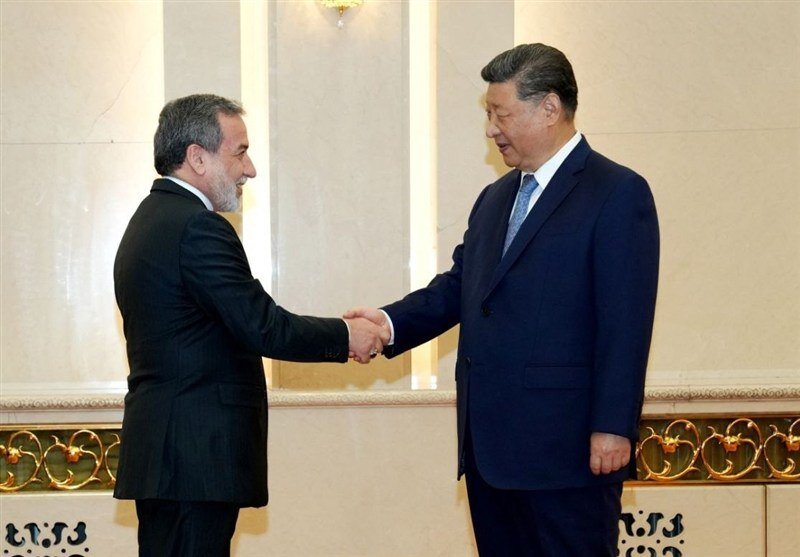
Shanghai-China-Iran relations have been steadily developing over the past few years in terms of high levels of engagement, economic cooperation and strategic consultation. The region and the world are seeing new dynamics, and the two see new momentum in integrating comprehensive strategic partnerships.
First, mutual political trust between China and Iran has reached new and higher levels. On October 23, 2025, Chinese President Xi Jinping met with Iranian President Pezeshkian in Kazan Russia on a side job at the Brick Summit. President XI said the strategic significance of China-Iran relations is becoming more pronounced as the world’s transformation unseen in the century unfolds at a faster pace. No matter how international and regional circumstances evolve, China will unshakable friendly cooperation with Iran.
And President Pezeshkian has reciprocated between China being Iran’s most important partner for cooperation and the comprehensive strategic partnership and cooperation between Iran and China in various sectors maintaining a sound momentum in development.
The Kazan Conference pointed out the direction of the relationship between the two. Both sides were strongly committed to building economic relations and supporting key political and strategic agendas on the other side.
When Iran was attacked in June 2025, China had expressed its solidarity with Iran in various ways, categorically. The Chinese president has issued four-point proposals to resolve the crisis immediately. China’s foreign minister Wang Idi had called twice with Iranian Foreign Minister Araguchi within 12 days. China, together with Lucia and Pakistan, proposed a resolution to the UN Security Council, calling for an immediate ceasefire.
Mutual political trust will help strengthen relations between countries, as was the case with Araguchi when Wang Yi met with Aragut on July 16, 2025 that China was prepared to deepen mutual trust, strengthen cooperation, expand exchange and promote stable and long-term growth of China-Iran relations.
Second, the national consensus has become stronger to develop relations with others on both sides. China and Iran are both great nations with ancient civilizations and know how to survive in a number of difficulties and crises throughout history. This somehow created a kind of deep desire for independence of our national characters.
However, China and Iran are both diverse countries. Both countries once had an illusion about so-called Western liberal democracy, which took for granted that human rights were protected and humanitarianism was truly a concern. Some even had the illusion that non-Western countries like China and Iran could be treated fairly, their legitimate rights could be taken into consideration, and the dignity of their people could be respected.
It fully reveals the hypocritical nature of Western policy, among other issues, including the US support for Israeli genocide in Palestine and the silence of European countries. Even the opposition to Western liberal approaches, the sanctions and instrumentalization of tariffs and tariffs proved to be a complete wild robbery.
Neither China nor Iran were affected by Western sanctions. Neither China nor Iran were respected for their sovereignty and territorial integrity. The recent 12-day war has spoken more. Despite the flagrants of aggression, few Western countries denounced the invaders.
While both China and Iran remained rational and expected inclusiveness in their respective foreign policies as two civilizations, the two fantasies were by no means mainstream as the West had been crushed through previous complaints.
The illusion always remained there, and had a more or less influence on building consensus for relations with others in both China and Iran. As they return to more and more reality, both China and Iran will be more resolved in the development of relationships between the two, as both have a stronger national consensus in promoting relations with the other side.
Third, the relationship between the two is more institutionalized. The SCO and BRICS are two institutions characterized by equal and orderly multilateralism and rising global South. Iranian membership of the two institutions has significantly strengthened the legitimacy of the two institutions.
Within the two frameworks, member states were able to have intensive interactions, improving diplomatic manipulation for their members. The two most important actors, both China and Iran, can play a role in global governance by collaborating with other members on common concerns about the institution. The two can more regular meetings from the two great countries, allowing them to deal more efficiently with issues related to bilateral relations. And operational level government officials may have more opportunities to communicate with each other, and the two facility directives could be implemented more efficiently.
Finally, mutual aspirations for economic cooperation are growing stronger. As a result of the financial crisis that began in 2008 and various trade barriers and tariffs, the world economy is seeing depression. As Donald Trump continues his irrational tariff war, the future will grasp the even more intense economic crisis, and geopolitical tensions will grow as the global transformation of order enters a new, deeper stage.
Despite the resilient nature of the economy, China and Iran must jointly overcome difficulties and seek new opportunities for cooperation. China is a huge market and sees fierce internal competition, making Chinese businessmen more enthusiastic about the international market and Iran has great potential, making it one of the ideal destinations.
China’s economic foundation is solid, with multiple strengths, strong resilience, great potential, and a continuous accumulation of positive factors supporting the development of high quality. Iranian businessmen have reason to turn to China for opportunities for investment, trade and technological advancement. Despite the sanctions, China has remained Iran’s main trading partner for years in a row.
What is worthy of special mention is that China is much more mature and confident in resisting American political and economic pressures. China and the US held three negotiations on tariff issues in Geneva, London and Stockholm from May to July 2025. China’s confidence in a showdown with the US certainly is good news in short and long terms for China-Iran’s trade relations.
Overall, 2025 could be another year’s milestone in bilateral relations. China and Iran will see new dynamics in their relationships in the context of global order change and will see new momentum in their bilateral relations as a result of international, regional and internal changes.
Dr. Jin Liansiang, Senior Fellow of Shanghai International Institute (SII).