
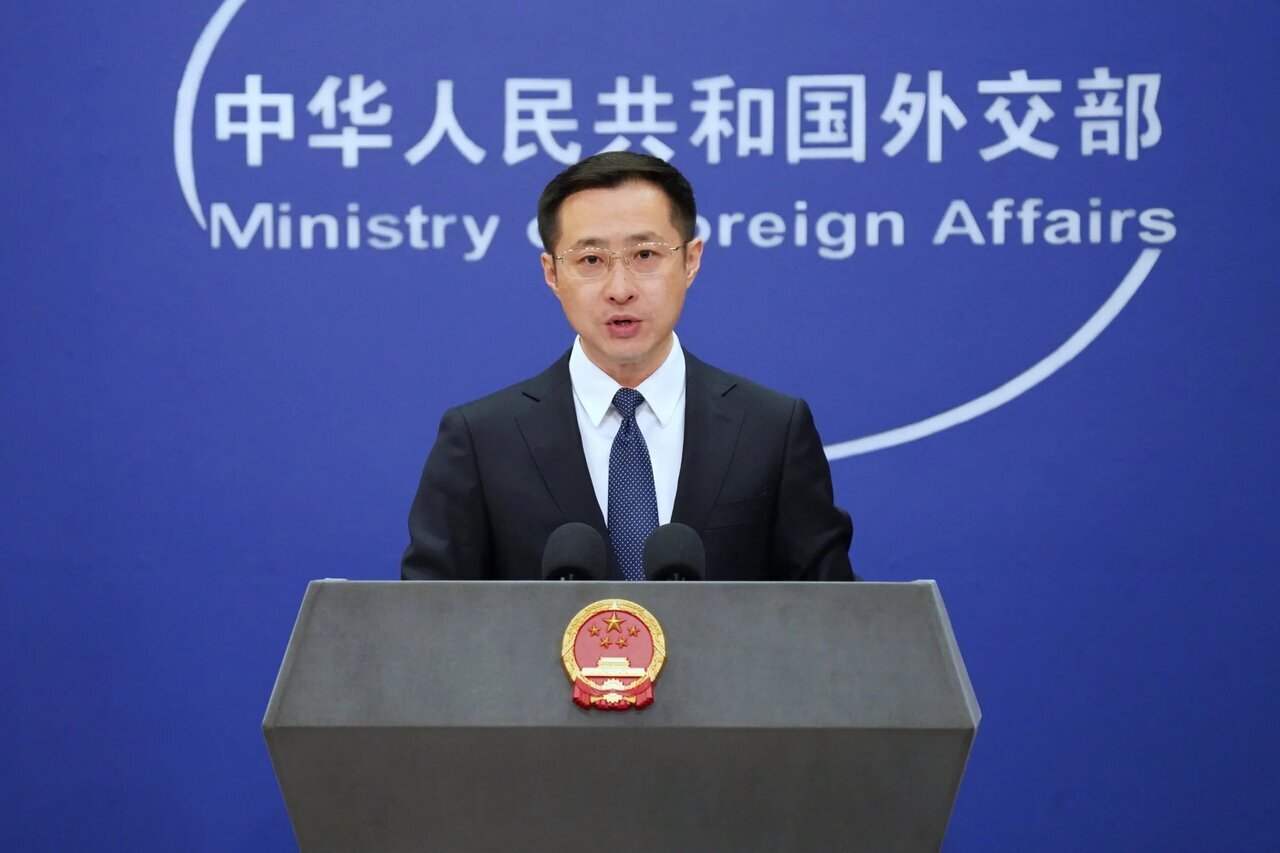
China’s Foreign Ministry spokesman Lynn issued a statement on Friday in response to a European Troika warning that sanctions will be reimposed if diplomatic resolution is not achieved by the end of August.
“China has pledged to peacefully resolve Iran’s nuclear issue through political and diplomatic means and is opposed to calling snapback sanctions on the Security Council,” Lin said.
He argued that redressing sanctions against Iran would not promote differences in trust or bridge between the parties, and would hamper diplomatic efforts to quickly resume consultations.
Lynn emphasized that actions taken by the Security Council should not undermine the negotiation process, but encourage the achievement of new contracts.
Chinese diplomats reiterated that China is working to maintain an objective and fair stance, continue to promote conversations aimed at peace, and play a constructive role in bringing Iran’s nuclear issue back to diplomatic negotiations at the earliest opportunity.
He also highlighted Beijing’s intention to protect the international nuclear non-proliferation regime and promote peace and stability in the region.
Iranian Foreign Minister Abbas Aragut on Thursday said the country would work actively with China and Russia to prevent the reinvigoration of UN sanctions through so-called “snapback” mechanisms.
“We’re working with China and Russia to stop it. If this doesn’t work and they apply it, there’s a tool to respond.
The snapback mechanism built into the 2015 nuclear deal known as the Joint Comprehensive Plan of Action (JCPOA) allows for the automatic recovery of UN Security Council sanctions that have been terminated under the contract. The transaction will close in October.
However, Iran challenges the legitimacy of the efforts of European powers to trigger regulations.
In a joint letter to Antonio Guterres and the UN Secretary-General on Wednesday and the UN Security Council, the European troika (France, Germany and the UK) said that “we are committed to using all diplomatic tools at our disposal to ensure that Iran does not develop nuclear weapons” unless Tearan meets the deadline for speaking to them.
“If Iran is willing to reach a diplomatic solution by the end of August 2025 or is unable to seize an opportunity for expansion, E3 has made it clear that it is ready to trigger a snapback mechanism,” the minister wrote.
Last month, in a detailed letter to the UN Security Council, Iran took its position, claiming that Britain, France and Germany are no longer legitimate JCPOA participants with the authority to revive sanctions through snapbacks. This position is supported by China and Russia, who share Tehran’s views on the issue.
China and Russia’s support plays a key role in Iran’s diplomatic efforts to counter the threat of snapbacks. The two countries are permanent members of the UN Security Council and have a veto resolutions, including those related to Iran’s nuclear program.
MNA