
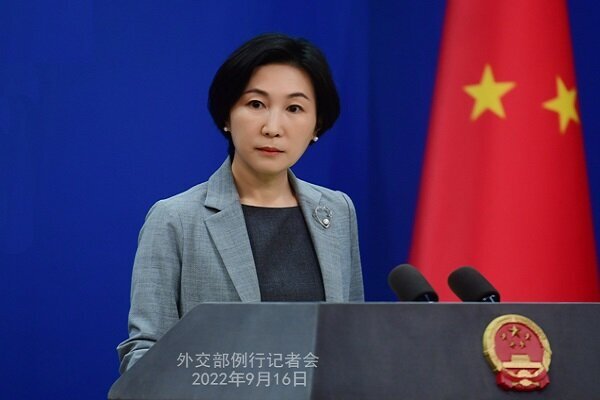
According to the Chinese English website Global Times, a spokesman for the Chinese Ministry of Foreign Affairs (FM) on Monday emphasized that BRICS is not targeting the country, focusing on openness and victory cooperation, and in response to media questions about the media’s threat of imposing an additional 10% tariff on what President Donald Trump claims is an anti-American policy.
According to CNBC, Trump said in a social media post Monday that “countries that are in line with BRICS’ anti-American policies will be charged an additional 10% tariff.”
Asked to comment on the US President’s claims and threats, FM spokesperson Mao Ning said the BRICS mechanism is an important platform for cooperation between emerging markets and developing countries. It advocates openness, inclusiveness, cooperation that is beneficial to both parties, and does not target any country.
With regard to the imposition of tariffs, China has repeatedly made clear that there are no winners in trade and tariff wars and that protectionism is not connected anywhere, Mao said.
When asked further what China would do when the US attempts to impose additional tariffs on China, Mao Zedong said, “I have always opposed tariffs and trade wars, and opposed the use of tariffs as a tool for tariffs and pressure.
The latest US tariff threats demonstrate the continued reliance on the belief that tariffs are an omnipotent tool. This is a widely criticised approach because it could disrupt global economic cooperation, says Zhou Mi, a senior researcher at International Trade and Economic Cooperation in China.
“This protectionist policy is not only counterproductive, but also contradicts the global trends in economic integration,” Zhou told the Global Times on Monday.
The 17th BRICS Summit, held in Rio de Janeiro, Brazil from July 6th to 7th, adopted the Rio de Janeiro Declaration.
The declaration also expressed “serious concerns about the rise of unilateral tariffs and secular measures that distort trade and violate WTO rules,” warning that “surges in trade regulatory actions” are threatening to destroy the global economy and exacerbate existing economic disparities.
Zhou said that the BRICS cooperation framework, built on the basis of common interests and mutual respect, aims to promote inclusive and sustainable development. It attracted a growing interest from other developing countries that view it as a platform to contribute to and profit from global economic growth.
“The US appears to think that cooperation between the BRICS countries is growing,” Zhou said. “But the BRICS mechanism is essentially to promote cooperation among developing countries, particularly among major emerging market economies, achieving mutual development and prosperity. It is not an exclusive bloc targeted at a particular country.”
MNA