
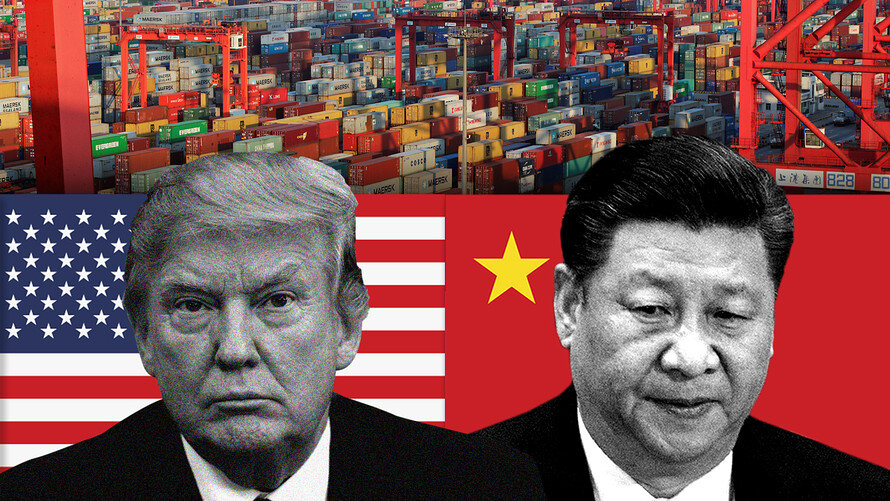
In a statement released on Tuesday, China’s Ministry of Commerce called on the United States to “correct its wrongdoings” and show good faith in trade negotiations.
“If you want to fight, we will fight to the end. If you want to negotiate, our door remains open,” the statement said.
He added: “The United States cannot seek dialogue while threatening to impose new restrictions. This is no way to engage in dialogue with China.”
The ministry further said that the United States has repeatedly introduced new restrictions that harm China’s interests and undermine the atmosphere of bilateral talks.
In retaliation, China imposed sanctions on five U.S. subsidiaries of South Korea-based Hanwha Marine Corporation.
The sanctions include a ban on doing business or collaborating within China with five subsidiaries: Hanwha Shipyards LLC, Hanwha Philadelphia Shipyards, Hanwha Ocean USA International LLC, Hanwha Shipping Holding LLC, and USA Holding Corporation.
The Chinese government accused these companies of being responsible for “contributing to and assisting” the U.S. investigation into China’s shipbuilding sector.
It added that these actions “undermine China’s sovereignty, security and development.”
The two economic giants also imposed additional port fees on each other’s shipping companies.
The Chinese government said it has already begun collecting special port fees from U.S.-owned, operated, built or flagged vessels.
Last week, China also expanded export restrictions on rare earth minerals, which are vital to the production of defense materials for the U.S. military industry, including fighter jets, submarines and radars.
For the first time, China also applied the Foreign Direct Product Regulation (FDPR), a mechanism established in 1959 and used by the United States to restrict semiconductor exports to China.
Under the measure, foreign companies will need approval from the Chinese government to export magnets and other Chinese rare earth minerals.
According to an analysis by the Peterson Institute for International Economics, as of September 25, the average U.S. tariff on imports from China reached 58%, while China’s tariffs reached 33%.
President Trump is scheduled to meet with Chinese President Xi Jinping later this month at the Asia-Pacific Economic Cooperation Conference in Seoul.
MNA/