
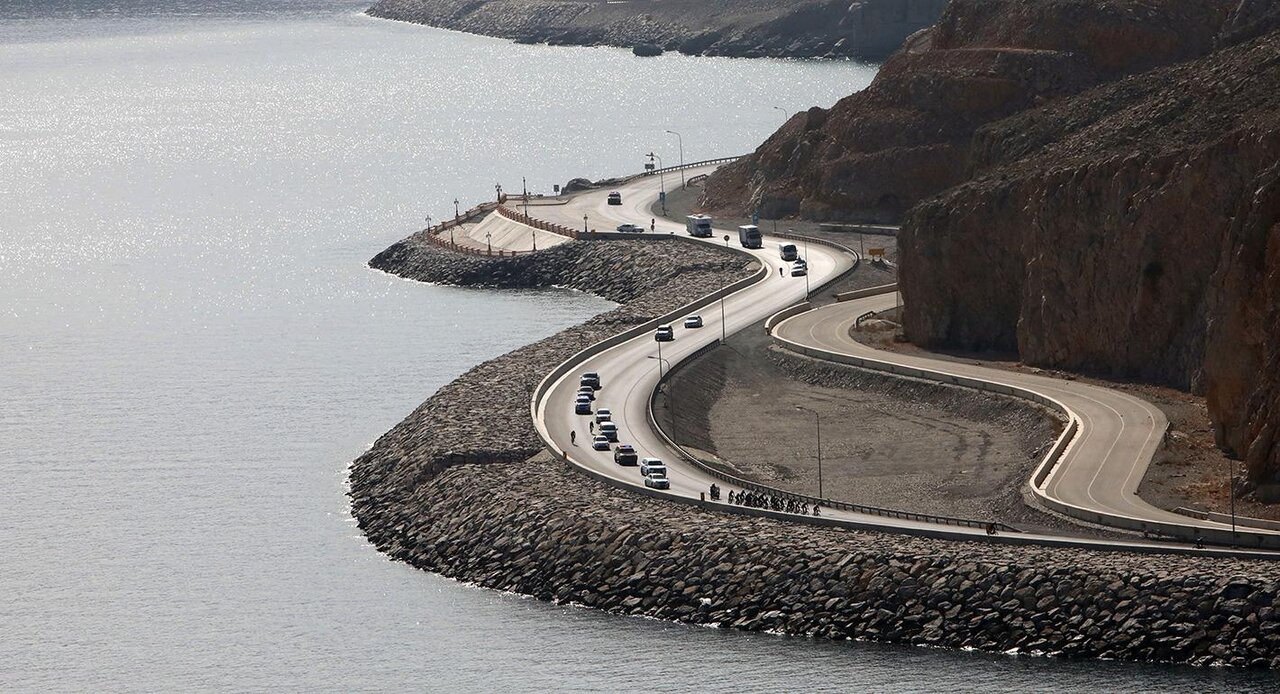
Tehran – Beijing’s dependence on Persian Gulf oil and his desire to play a mediator in the conflict in West Asia clashes in the narrow waters of the Strait of Hormuz. With over 40% of China’s rough shipments flowing through this chokepoint, how China manipulates its ambitions without causing a direct conflict has become a key barometer of its evolving global role.
China’s crude imports have made the strait a key artery for this economy, while Beijing is trying to throw itself as a neutral broker in the region, demanding distance from the US-led security framework.
China’s oil cravings make the strait a national security sign, and disruptions such as conflicts, sanctions, miscalculations and other disruptions will overcome China’s domestic market, raising fuel prices, tensions in transport networks, and narrowing down industrial output. Beijing avoids visible military stances and instead chooses back-channel diplomacy, infrastructure investment and quiet security cooperation, as it could trigger countermeasures or intensify tensions. By avoiding a massive naval deployment, China tries to maintain two important issues.
China avoids intertwining in regional power struggles and reduces the possibility of direct conflict with the US Navy and other local actors. Beijing maintains equal reliability for Persian Gulf producers and Tehran, ensuring long-term contracts and stable supplies without appearing biased or offensive. In this way, Beijing is using economic interdependence as a shield. This promotes influence through ports, pipelines and purchase agreements rather than showing strong display.
However, Beijing’s suppressed approach in the Strait of Hormuz may seem more responsible than stabilizing forces. By maintaining limited naval joint exercises, sparse official statements and preferences for modest diplomatic channels, we maintain the question of how far we can go to maintain stability when tensions burn. This hesitation creates uncertainty among Persian Gulf actors about Beijing’s true willingness to intervene during the crisis.
China’s quiet security cooperation and reliance on back-channel diplomacy can be read as an implicit acknowledgement of existing electricity structures. Persian Gulf countries may either reluctant to carry out Chinese naval deployments or interpret this as issuing a solid public declaration as a tribute to US leadership in regional security. Such perceptions prevent Beijing from undermining his efforts in presenting his position as an equal interlocutor who can recalibrate the strategic environment of the Persian Gulf.
The truly robust Chinese partnership in the region goes beyond the preferred oil agreement and involves clear deterrence measures. The public’s commitment to oppose unilateral sanctions or regular joint naval exercises indicates that China intends to share its true responsibility for security in the Persian Gulf. These steps will reassure partners that Beijing is ready to counter attempts to impose mandatory measures against players in key regions.
By avoiding obvious naval deployments and highly visible deterrent efforts, China risks being seen as implicitly side by side with a US-led security framework. That recognition lacks its negotiating power as local governments may question China’s capabilities or their resolve to protect their interests. Without demonstrable military support, Beijing’s diplomatic leverage and reliability in the Persian Gulf remained significantly weaker.
Recent flare-ups in the region highlight how fragile this balance is. The 12-day war between Iran and Israel was the first direct military conflict of its size, with Israel and the US troops struck Iranian troops and nuclear locations, and Tehran retaliated with missiles and drones volleys. The brief conflict has since subsided, but the ghosts of new hostilities still loom on the Western Asia region.
If the escalation recurs when a single miscalculation (stray missile or failed drone intercept) it could ignite a much wider fire, drawing the US and its Persian Gulf partners into open combat. In the final escalation, Washington moved swiftly to support Israel and protect its own military force.
US warships fired down detained Iranian missiles at Israeli targets, while American fighters coordinated strikes over Iran’s nuclear infrastructure. These operations relied on the vast US footprint of the Persian Gulf. A forward separation of air force bases in Qatar and Bahrain, naval squadrons at sea, Kuwait, the United Arab Emirates and Saudi Arabia.
Meanwhile, Iranian officials and state media have repeatedly warned that the escalation could include the closure of the Strait of Hormuz. A shutdown will send shockwaves well beyond the gasoline pump, even if it is short. Petrochemical plants scrambled for naphtha and increased the price of ethylene. Plastic manufacturers relying on polypropylene sold in the Persian Gulf Coast face tight inventory and rising spot rates. Fertilizer traders in India and Brazil were tackling delays in ammonia shipments and surges in freight costs. And rerouting supertankers around Africa will earn you a huge extra voyage fee that will run through the entire energy chain. All of this clearly affects China, to prevent Beijing from taking more practical steps to stop the conflict from re-inciting. China’s low-visibility strategy has kept tankers moving up until now, but Beijing is at a crossroads. They either maintain a cautious attitude or support economic impacts with visible deterrence.