
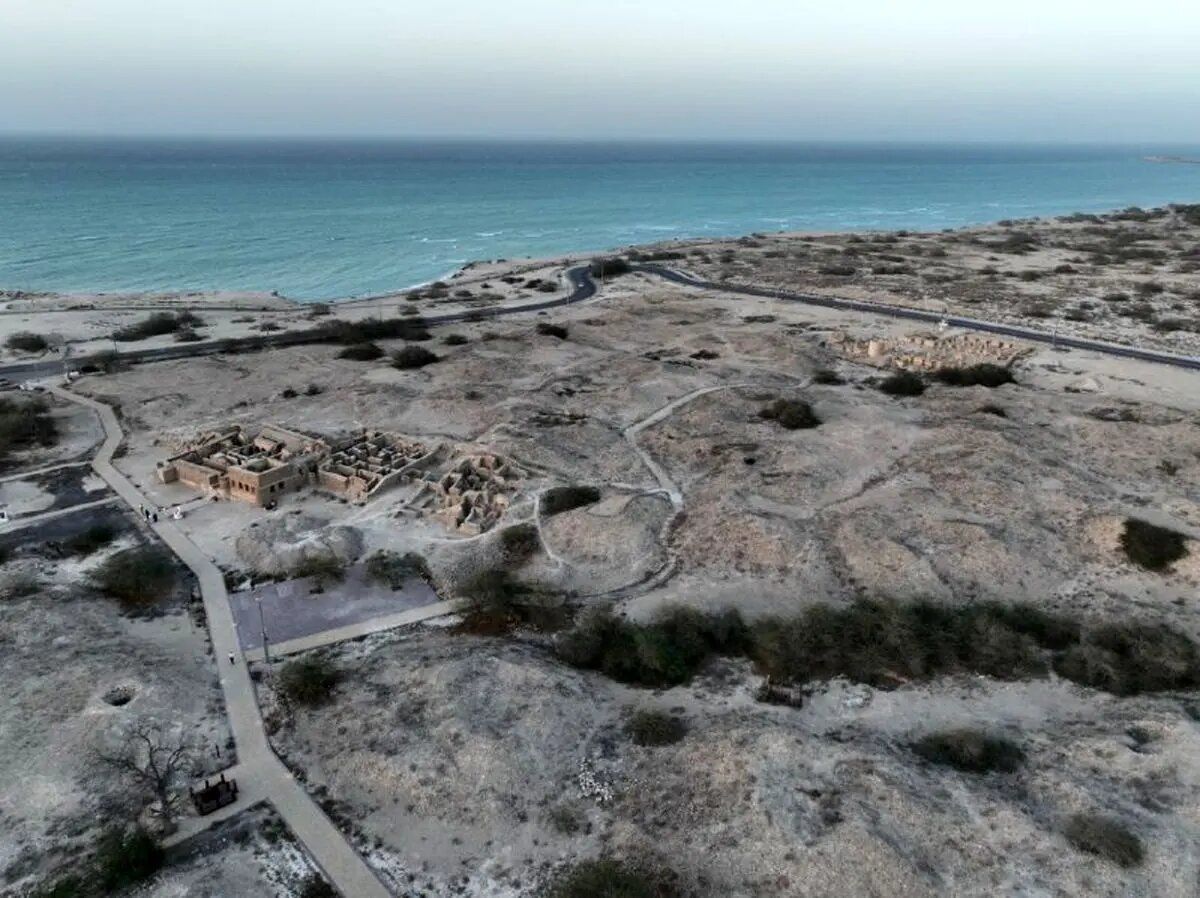
TEHRAN — Archaeologists have discovered imported Chinese ceramics during the seventh season of excavations in the ancient city of Harireh on Kish Island, reaffirming historic trade ties between China and southern Iran, researchers announced Saturday.
The new excavation season began after a 14-year hiatus and was carried out under the approval of the Iranian Institute of Cultural Heritage and Tourism and with the support of the Kish Free Zone Organization. The study focused on the ruined structures, where archaeologists found pottery, shells, animal bones, plaster architectural elements, stone tools, metal objects, fragments of glassware, and illegible bronze coins.
The purpose of this excavation was to document previous excavations, prepare the site for tourism development, and study the historical evolution of regional power from the Iranian port of Siraf to Kish and its role in long-distance maritime trade.
Researchers said one of the main urban axes connects Harire’s central mosque and glass workshops with elite housing, historic baths and the port district. This includes areas used for date syrup production, storage, and port-related architecture.
Mohammad Mortezai, head of the seventh excavation season, said a large quantity of Chinese celadon (13 types in total) was discovered at the site. He said the findings demonstrate the importance of Kish in trade with China and the Far East.
“These pottery are imported and include both low-quality and high-quality pottery,” Mortezaei said. “Some examples appear to be Iranian counterfeits.”
Mortezaei said the excavated building was built of coral stone, had two floors and was adapted to the local topography. He said these included residential rooms and spaces potentially associated with pearl mining, which was supported by the discovery of a 9-metre-deep well with extensive shell deposits, associated tools and interconnected water channels.
Archaeologists also found turquoise glazed tiles and damaged star-shaped glossy tiles. The inscriptions on the tiles cannot be read until conservation work is completed. The researchers said the presence of such tiles suggests that the structure belonged to an important lineage and was used over multiple eras.
The research team hopes that the site will be restored after the excavations are completed, so that it can be added to the list of tourist attractions in Kish.
morning