
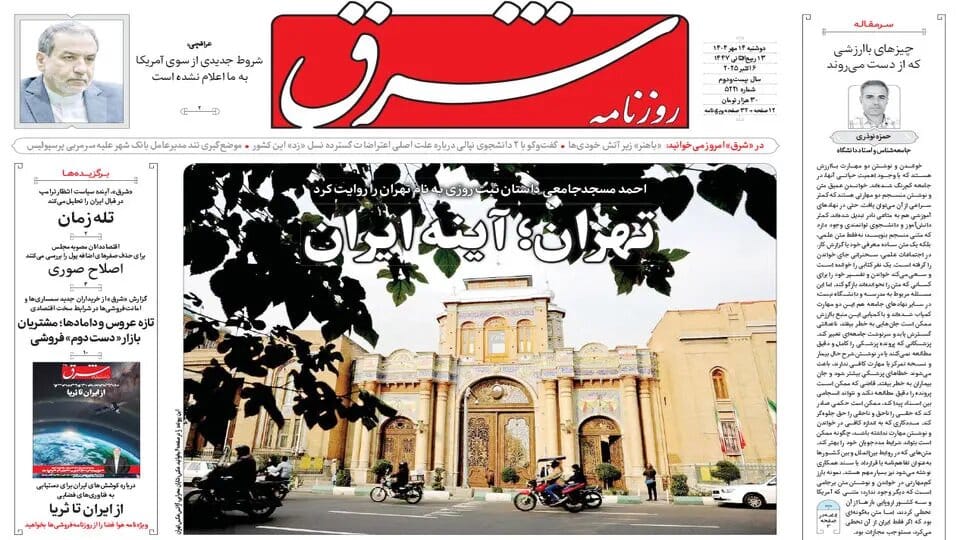
In Tehran-analysis, Shargh discussed how Iran will withdraw from the FATF blacklist.
It said: To leave the FATF blacklist, Iran has to go through a multi-stage process. First, extensive structural reforms must be made in domestic laws and regulations in line with FATF standards. Afterwards, FATF’s regular reports on the country’s progress will be reviewed and if approved, Iran will be transferred to a gray list. At the same time, FATF testing teams will be sent to the state to conduct field assessments. Ultimately, by continuing to fully implement that commitment, Iran will be able to leave the grey list and return to normal. This is a challenging path that requires strong political will, deep reform and comprehensive national and international cooperation. To achieve this goal, we must wait for a global FATF assessment and political and economic response. However, progress in the region can draw new prospects for Iran’s economy and its international status.
Iran: America is not serious about negotiations
The Iranian newspaper spoke with Hossein Gharibi, an international affairs expert, about the process of negotiations between Iran and the US. He states: In a situation where Iranian foreign policy is under the shadow of the outcome of rapid nuclear development and the activation of snapback sanctions, Tehran is trying to put strategic patience on the agenda. Tehran is redefineing its position in the new global equation. Meanwhile, the Trump administration has adopted a silent policy against Tehran. This is still unknown as part of a tactic to test the erosion of American diplomacy during the simultaneous crises in Ukraine, Gaza, and East Asia, or Iran’s response. You should prioritize solving sanction-related issues and get in touch with all actors who have the ability to play a role in this field. The scope of interaction and diplomacy should not be limited, and all capabilities should be used appropriately. Take additional steps to increase your chances of achieving your intended goal.
Ham Mihan: Iran’s role in the future equations of Palestine
In an interview with Ham Mihan, local issues expert Saba Zangene analyzed Hamas’ response to Trump’s peace plan to end the Israeli war with Gaza. He said: The end of the Gaza War will mark a new chapter in the equations of the region. These first steps could be considered positive and the war was expected to end in the end. But soon, Yemenis announced that they would remain defenders and supporters of the Palestinian and Palestinian causes. This means that if Palestine encounters problems in the future, they can expect a Houssis response and response. This indicates that some parts of the area’s atmosphere are changing. Now we must observe the reactions of Iran, other countries in the region, and other Palestinian groups. We must also consider our neighbouring countries, including Lebanon, Syria, Iraq, Egypt, Jordan and even Saudi Arabia. Iran must weigh all these dimensions and should not be targeted by Netanyahu and Trump. Just as Hamas acted with caution and vigilance, Iran must also prepare an accurate response with vigilance, while maintaining its principle of value.
Khorasan: Snapback is activated, but there’s still no way to counter it
In the article, Khorasan addresses the lack of appropriate policies by the Iranian government on how to tackle the revitalization of snapback sanctions. It wrote: It’s been a week since snapback became active. A mechanism that has far exceeded the actual scale of the psychological impact on the Iranian market and economy. But what has been felt and understood so far from the country’s policy-making bodies is a response that is less proportional to this economic attack, with its main roots being in the Treasury, not the US Department of War. Experience over the past few years has shown that sanctions not only put pressure on the economy, but also test decision-making and policy making. Countries that have managed to overcome sanctions usually have clear alternative paths in the first few weeks. However, in Iran, no clear plans are yet visible. If the government wants to reduce the psychological pressure of snapbacks, it must speak to people and the market very quickly and clearly, not a slogan, but a real, transparent program based on structural reform. Today’s markets need more signs of unity and courageous decision-making than ever before.