
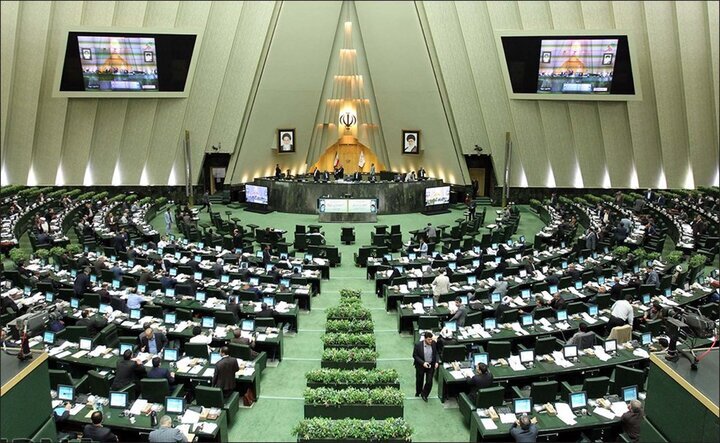
TEHRAN – Iranian lawmakers in Congress on Wednesday approved a bill that suspends all cooperation with the International Atomic Energy Agency (IAEA) following the resolution of politically motivated and silence against the recent US Israel attack on Iran’s nuclear facilities.
According to Alireza Salimi, a member of the Congressional Speaker Committee, the bill has provided overwhelming support, but IAEA inspectors will prevent entry into Iran’s nuclear sites unless national security guarantees are explicitly provided and confirmed by the Supreme National Security Council.
The bill has come in response to a series of escalating moves by the Western government and the IAEA, particularly the passing of anti-Iran resolutions by the IAEA Committee, which falsely accused Iran of a violation of safeguards. The resolution, introduced by the European troika and supported by the US, voted in favor with 19 votes despite strong opposition from Iran, Russia, China and other countries.
Prior to the vote, Congress President Mohammad Bakar Kalibahu submitted a strong responsibilities for the agency’s recent actions. He said the IAEA’s failure to condemn the Zionist regime’s terrorist attacks on Iran’s nuclear sites did not condemn the US’s attack on Iran’s nuclear sites.
“The IAEA sold its reliability and independence by staying silent in the face of military attacks between us and Israel,” Karibah said. “Thus, cooperation will be suspended and Iran’s peaceful nuclear program will move forward with greater force.”
Karibah reaffirmed that Iran would not allow Western deceptions or military threats to undermine the national interests. “With our fingers in the trigger and full preparation, we’ll respond well to further attacks,” he said.
He added that the Zionist regime not only prevented Iran from enriching and restricted missile programs, but also had a major blow during Iran’s recent defensive operations. “The myth of the invincible Zionist and the iron dome have collapsed,” he said. “Iran’s attack capabilities have shattered the enemy’s sense of security.”
Alongside the suspension bill, senior lawmakers proposed banning IAEA Director Rafael Grossi from entering the country. MP Esmail Kowsari said it officially urged the highest national security council to implement such measures, citing Grossi’s instrumental role in enabling hostile actions against Iran.
Based on his biased report, the IAEA passed a recent resolution just days before the attack on Zionist-Americans on June 13th, leading to Iranian nuclear scientists and high-ranking military officers martial arts. Despite these clear violations of international law, Grossi has not yet condemned the attack.
Iran’s Deputy Minister Kazem Galibabadi described Grossi as “a tool in the hands of the Zionist regime and the US,” and accused Esmail Bagiei, a spokesman for the Ministry of Foreign Affairs of Betrayal the Treaty of Proliferation and participating in illegal wars.
Mohammad Eslami, chief of Iran’s Atomic Energy Organization (AEOI), also dealt with a letter to Grossi, condemning the silence of illegal assaults at nuclear sites in Natanz, Fordaw and Isfahan, carried out using US B-2 bombers and cruise missiles.
In response to Western provocations, Iran has announced plans to build a new nuclear facility and enhance uranium enrichment through sophisticated centrifuges at the Fordau plant. These measures highlight Iran’s unwavering commitment to its peaceful nuclear program despite threats, sabotages and coercions.
Congress is pushing comprehensive private drone regulations to protect security
Iran’s parliament also passed another important legislation on Wednesday: a general overview of the bill regarding the organization of remote pilot aircraft (civilian drones).
With strong support from lawmakers, the bill is taking an important step towards dealing with the rapid growth of Iran’s drone industry, ensuring comprehensive surveillance to protect national security and public safety.
The bill, originally drafted in 2023, was shaped under the guidance of a former military general general general general general general general general general general general general.
During the session, a Ministry of Defense spokesman and government representative Brigadier General Talaei-Nik described the law as a future-looking necessity, explaining it to support technology development and balance it with preventing potential threats from unregulated drone activities.
According to the bill, imports or exports of non-military drones and related equipment without an official license will be treated as smuggling, subject to legal penalties under the National Customs and Security Act.
The law also prohibits the sale, transport, storage or operation of private drones that lack valid certificates of ownership. Individuals and entities that own unregistered drones must submit proof of ownership and obtain certification within three months of the enactment of the law. Drones that do not meet this requirement after the deadline will be classified as illegal and subject to confiscation, fines or other penalties.