
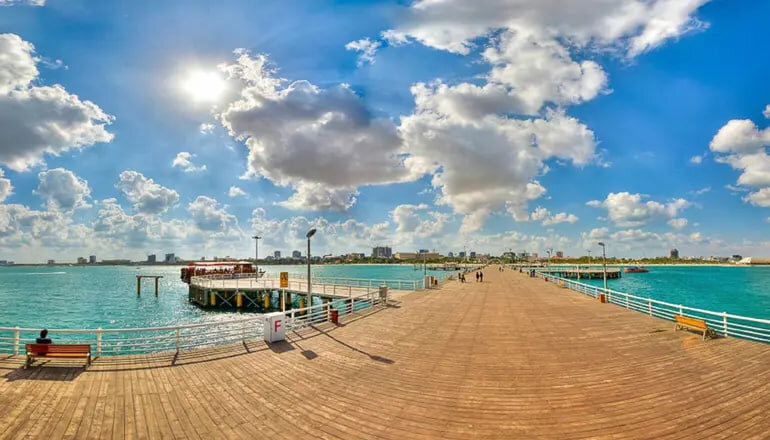
TEHRAN – Deputy Minister of Tourism Anushirvan Mohseni Bandpei called for the need to create a comprehensive map of marine tourism.
According to Mehr News Agency, at the Coordination Meeting for the Implementation of Marine Development Policy held on Tuesday in the presence of the Minister of Cultural Heritage, Tourism and Handicrafts, Special Representative of the President of Iran, and Governors of Coastal Provinces, he said that Iran, with its 5,800 kilometers of coastline and maritime relations with 11 neighboring countries, has the capacity to become a regional marine tourism hub.
He explained the Ministry of Cultural Heritage’s new initiatives in the field of coastal and marine tourism and emphasized the need for cooperation between government agencies to realize ocean-oriented economic policies.
Pointing to the country’s unique potential on the coasts of the Caspian Sea, Persian Gulf and Sea of Oman, he said balanced infrastructure development and sustainable investments on the country’s southern and northern coasts are key factors in realizing a maritime economy and creating sustainable jobs in local communities.
Referring to the activities carried out by the Department of Tourism, he said that in accordance with the implementation of Article 83 of the Seventh Five-Year Development Plan Act, the National Marine Tourism Conference was held three times and an executive manual for coastal and marine tourism development was compiled and notified to the provincial assemblies.
Measures taken by the agency also include identifying coastal villages that could be included in the World Heritage List, launching a national birdwatching office, and working with Iran’s Ports and Maritime Organization (PMO) to define tourism routes between the islands.
He stressed the need to look at successful global models in this field, adding that comparative studies show that marine tourism makes a significant contribution to the European Union’s economic growth. This will bring the sector’s added value to €82 billion in 2023. “By leveraging these experiences, Iran can also pave the way for job development, green investment, and increasing the share of tourism in GDP, while conserving the coastal environment and biodiversity.”
He said that a long investment process, a large number of decision-making bodies, a lack of specific authority to issue subsea permits, a lack of standard docks and vessels, and weak coordination between government agencies are among the most important obstacles. These problems can only be solved with an integrated approach and true participation of the private sector, he added.
Mr. Mohseni-Bampei concluded by stressing the need to develop a comprehensive plan for marine tourism development. “Preparing domestic and international routes for marine tourism, jointly organizing coastal events, easing license conditions for recreational vessels, developing tourist piers, and creating a handicraft market in coastal areas are the mainstays of this plan.Marine tourism not only leads to the prosperity of tourism and the livelihood of coastal residents, but also plays an effective role in strengthening Iran’s cultural diplomacy and regional relations.”
KD